Cor Unum Abbey

Marketplace Monasticism … How to Live in a Downtown Abbey

  • About
  • July 9 – Sacred Simplicity

Day Eighteen – The Colobium Sidonis

Posted by Cor Unum Abbey on May 21, 2013
Posted in: "Dieu et Mon Droit", devotional material, personal monasticism, Spiritual disciplines, The Coronation of Elizabeth II. Tagged: anointing, Colobium Sidonis, Regalia, Supertunica. Leave a comment

Image

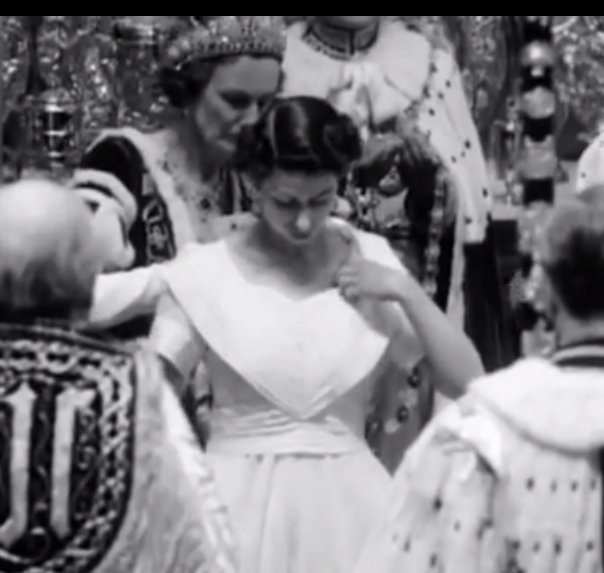
         After the “disrobing” and the plain gown of purity and sacred anointing, the Investiture began.  This was not haute couture as we think of it, but it was very “high” fashion for those few on earth ever called to wear it.

The first piece was as simple as the anointing gown that had just been removed.  A white linen-lawn garment, the Colobium Sidonis, was the under-tunic.  It calls to mind King David’s dance of joy before the Lord God.  Sovereigns are most often clothed with humility before the cloth of gold and ermine and jeweled robes.  Thus was the case with Her Majesty.  Like a funeral sheath, it went on over the ornate Coronation Gown, a symbol that this Queen had been made ready to receive all the garments and royal instruments to come.

Whatever we wear of glory, of majesty, of the reflection on this earth of the love and mercy and the very Person of Jesus Christ, we are anointed beforehand by the Holy Spirit: He Himself is our new life, and we wear humility beneath every honor and all power.  In baptism we are buried with Christ before our works of faith begin, and this garment symbolized the burial beneath the beauties and the brilliance to come.

We are told to “put on Christ” (Romans 13:14,) and to “clothe ourselves with humility” (1 Peter 5:5.)  The priests of the Lord are clothed with salvation.

Beneath garments that would weigh close to forty-five pounds when they were all in place, Elizabeth knew with certainty that she wore a humble linen shift; she wore purity of heart, and the utter end of life as she had known it.

White anointing gown,

Wikipedia

Day Seventeen – Shining Like the Sun

Posted by Cor Unum Abbey on May 20, 2013
Posted in: "Dieu et Mon Droit", devotional material, personal monasticism, Spiritual disciplines, The Coronation of Elizabeth II. Tagged: Coronation of Elizabeth II, majesty, Regalia, royal authority. Leave a comment

Image

As the Scriptures have promised, those who humble themselves will be exalted.

The crown-less Elizabeth, in a gown of monastic simplicity, hidden from view, was anointed to care for others in the power and ministry of the Holy Ghost.  She was about to receive the emblems of her authority, and “put on” the adornments of her new life.

The canopy was removed, and now, bare-headed, a vision of ancient and distant splendor and majesty, what shone through was royal “right.”  The symbols of power were about to come to her in succession, but without crown or diadem.  She received them as the one to whom they belonged in sacred honor and privilege.  The surpassing majesty of the next part of the ceremony was encapsulated in the royal motto, “Dieu et Mon Droit” . . . God is My Right.

Is there a correlation between Elizabeth on that day and us, the at-home, on-the-job members of the royal family of the Lord Jesus Christ?  Not at all that we may walk back in front of a mirror for the rest of our days, but, as Elizabeth would have to do the very next morning, to get down to the business of majesty, to understand at long last that majesty isn’t wealth or special benefits.  Majesty is the recognition and the honoring of God’s choice.

There are stories, not a few, of royal families, of kings and queens that have fled from overthrow with little or nothing more than their lives.  In a land that honors royal bloodlines, they are honored and protected.  In a land that does not, they are sometimes despised and sought out because of that distinction.  Either way, majesty sets them apart.

How much more true and enduring is the majesty that has come to us? Heirs of God and co-heirs with Jesus Christ, guardians of those who know Him and of those who need Him, defenders of the Faith in all our appearance at His throne in worship and intercession, there is a job to be done.  We claim no earthly throne.  We spend our riches on those in need.  Our authority is against unseen enemies, those who come but to steal, kill, and destroy, nothing attractive but for the person who has lived in abject fear or grief or bondage. We are cloaked in humility and crowned with compassion, but we are the real thing.  We have been given power to become the sons of God, to live free from fear, to put on bowels of mercy, to obtain the promises of God, to own the mind of Christ.

Now by anointing and by proclamation, by the authority of the Church and the consent of the people, by her own Oath and Promises, Elizabeth was standing rightfully at the head of a nation, clothed in humility and about to be rightfully clothed in ancient and royal splendor, in the perfection of both humility and honor together, and she was about to receive every token of her rightful “highness” as their Guardian and Defender.

It is shining, golden imagery for us, certainly, but if we will heed it, the presentation of the Regalia may it be an abiding reminder, that we reign in the splendor and the majesty of the Holy Spirit of God, to protect, to defend, to lift up and to deliver by the Word of God and by our prayers and our love.

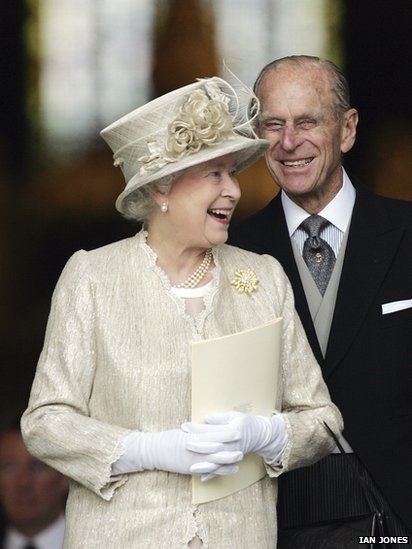
Sixty Years Later . . . Ian Jones photo

Windsor Friends

Posted by Cor Unum Abbey on May 19, 2013
Posted in: Uncategorized. Leave a comment


Image 

The Royal Family leads a very quiet life, when it isn’t going non-stop.  Friends are treasured, and loyal ones are hard to find … imagine . . .

They must be:

discreet

unpretentious

without jealousy

discreet

able to laugh and play (the Windsors LOVE play of all sorts,) and

able to observe invisible boundaries with ease

discreet

devoid of ulterior motives and personal agendas

wise, very wise

able to come last quite often

willing to serve or be silent for the joy of friendship

and discreet.


It does rather sound like a recipe for every top-notch friendship … may God bless the Windsors … and you … with a lovely Lord’s Day.

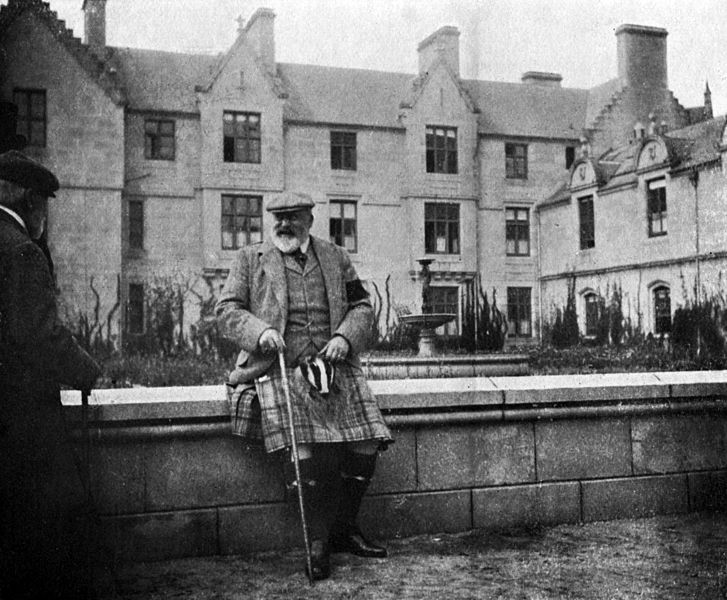
Edward VII (Elizabeth’s Grandfather)

relaxing at Balmoral, public domain, expired copyright

Day Sixteen – A Canopy Over Us

Posted by Cor Unum Abbey on May 18, 2013
Posted in: Uncategorized. Tagged: anointing, consecration, prayer, Queen Elizabeth II. Leave a comment

??????????????????????????????????????????????????????

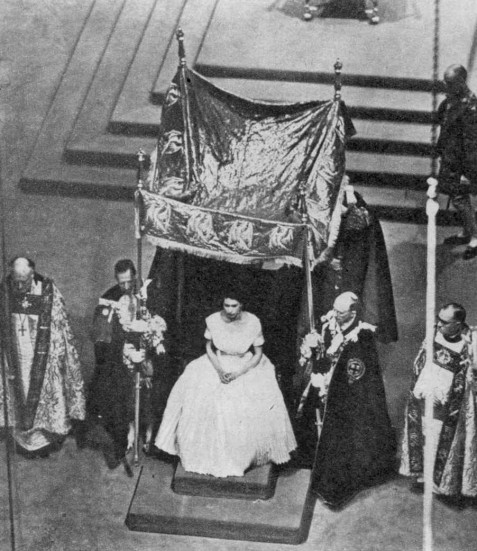
As the canopy was removed, Elizabeth arose, the anointed Queen of her peoples, lands, and dominions.  She knelt at the Faldstool placed before St. Edward’s Chair. Archbishop Fisher lifted his hand and voice to bless the young Queen, now consecrated through his own faith and obedience.  He spoke the words St. Dunstan had spoken over Edgar, the first King of All England, and very distant relative of the woman before him . . .

“by his holy Anointing pour down upon your Head and Heart the blessing of the Holy Ghost, and prosper the works of your Hands: that . . . you may govern and preserve the Peoples committed to your charge in wealth, peace and godliness.”

Whatever had gone before, all the pageantry of the processional, and of all that was yet to come, the Investiture, Crowning, and the Homage, none could have, none did so visibly, move the soul of the minister than the Anointing.

We know that it is the “anointing which destroys the yoke”  (Isaiah 10:27.)  We know it, but do we remember it and hold that truth as sacred to our lives?

Elizabeth must wake up and be a monarch every morning?  We may wake up to our own anointing, if we will.

She reigns as Queen over millions of people; we may walk in the majesty of an Anointing that can relieve and release those around us from bondage.  Hers is a great calling; ours is greater.  She has received hers in good conscience and born the burden.  Sometimes we forget that ours is more than just the Gospel of our own redemption … Jesus went about, “preaching the Gospel of the Kingdom (Matthew 4:23 and 9:35,)” and so may we extol the glories of our God and bring to light the mercies and the power of God wherever loss and destruction have ruled.

For those who have not known love or truth or purity or hope or joy or purpose or strength or peace in their lives, we have an unction of truth and ministry.           Elizabeth must be the lawful and consecrated Queen of her realm; we must be the lawful and consecrated servants of God, co-heirs with Jesus Christ and witnesses with Him of the Majesty and the power of God.  Jesus, King of kings, is our lawful and not-at-all distant relative.  This is our birthright, here in the sanctity of the Kingdom of God, under the canopy of our new lives in Christ.

photo courtesy, the ridgewoodblog.com

Day Fifteen – The Anointing

Posted by Cor Unum Abbey on May 17, 2013
Posted in: "Dieu et Mon Droit", devotional material, personal monasticism, Spiritual disciplines, The Coronation of Elizabeth II. Tagged: consecrated to God, Queen Elizabeth II, The Anointing. Leave a comment

Image

We have never awakened to a Coronation Day; no one has ever spoken over us the words of majesty and consecration that Elizabeth heard that day.  No one has ever prayed for us quite the way the Archbishop prayed for the new Queen … but … the Word of the Lord is full of  proclamations like this:

“I have put my words in your mouth and covered you with the shadow of my hand– I who set the heavens in place, who laid the foundations of the earth, and who say to Zion, ‘You are my people.’”  (Isaiah 51:16)


And I will put my spirit within you, and cause you to walk in my statutes, and ye shall keep my judgments, and do them. (Ezekial 36:27)


And the very God of peace sanctify you wholly; and I pray God your whole spirit and soul and body be preserved blameless unto the coming of our Lord Jesus Christ.  (Thessalonians 5:23)


No ruler, no priest, no hero ever received more or better than this!

Now the music of Handel’s “Zadok the Priest” took the participants and guests to another place, to that time on earth when kings and priests were anointed by God to the service of His people. “And all the people rejoiced . . . rejoiced, and all the people rejoiced!”  To her people’s, this was another day like those.

The Archbishop had invoked the sevenfold gifts of the Holy Spirit, and now, when he had prayed over Her Majesty, Elizabeth rose from her knees and the voices of the choir rose, as from the top of a high mountain, as though filling the national valleys that remained following two World Wars and the death of two monarchs and the abdication of one, flooding the dry tributaries of despair and deprivation . . . in the eyes of her subjects, at home and around the world, God had given a Queen, and He was about to anoint her to her most high calling.

The volume was intense and the chorus began to echo into “Amens” as only Handel can do!  The trappings of Coronation bowed with the tide of those “Amens” to the austerity of anointing . . . Elizabeth removed her glittering diadem with her own hands.

The Lord Great Chamberlain did for Elizabeth that which every Lord Great Chamberlain before him had done and assisted in the removal of the Royal Robe as it was folded in perfect symmetry by the Maids of honor; the precious Collar of the Garter and all its symbolic protection was removed, and the glimmering Coronation Gown was covered by a nun-like garment, plain and white, special and superb only in its design and Elizabeth’s delicate figure.

At last Elizabeth was seated on the Chair of King Edward, not yet enthroned but sitting where monarchs had sat for a thousand years for the same purpose, the Anointing. The Garter King of Arms summoned the four knights of the order who took the silver staves of the cloth of gold canopy and bore it over her, the twenty-five year old Queen.  Suddenly, she was gone, invisible to all but a very few.  One who was able to see her face thought she looked more withdrawn from earthly things than even the canopy could make her.  The cameras were turned off.

The “Coronation” might well be called “the Anointing.”  It is the Anointing that supports the crown.  Unadorned, “uncovered,” Elizabeth was sanctified to her Majesty.

“Be thy Hands anointed with holy Oil.  Be thy Breast anointed with holy Oil. Be thy Head anointed with holy Oil., as kings, priests and prophets were anointed.  And as Solomon as anointed king by Zadok the priest and Nathan the prophet, so be thou anointed, blessed and consecrated Queen over the Peoples whom the Lord thy God hath given thee to rule and govern.”  

         There was nothing given to Her Majesty that is not ours in Christ Jesus.  We lift up holy hands; He lives within our Breast; we have the mind of Christ (1 Corinthians 2:16.)  We reign in love and watchful prayer over those given to us by God.

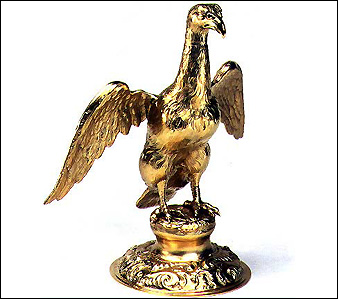
From the beak of the tiny Ampula, drops of anointing oil fell into the Spoon.  This, the Ampula, was a tiny golden vessel, in the shape of an eagle, its Spoon believed to be one of the only relics to have survived Cromwell’s purge of all things royal.  Alone with the Archbishop, alone before the Lord, Elizabeth was anointed, blessed, and consecrated to rule and govern under God – exactly as have been our service, our love, and our wisdom in Christ Jesus.  The Anointing was the reason for it all; Elizabeth was anointed to be crowned.

If Members of Parliament forget the people in their struggles for power and position, she would not.  They might strive for position; she was anointed in it.  If the whole world collapsed in a heap, Great Britain would still have a Queen whom God had given.  This, as best an outsider can relate, was the joy and hope and exaltation in the Realm and Commonwealth that day.

The Anointing

Rotherham Web

Day 14 – “Veni, Creator, Spiritus”

Posted by Cor Unum Abbey on May 16, 2013
Posted in: Uncategorized. Tagged: The Ampula, The Anointing of Elizabeth II, The Holy Spirit. Leave a comment

Image

        Elizabeth knelt upon her Faldstool.  Archbishop Geoffrey Fisher prayed over her bowed head words had been spoken over the monarchs of the realm since the coronation of King Edgar in 973.

“O God, who providest for thy people by thy power, and rulest over them in love: Grant unto this thy servant Elizabeth, our Queen, the Spirit of wisdom and government, that being devoted unto thee with her whole heart, she may so wisely govern, that in her time the Church may be in safety, and Christian devotion may continue in peace; that so persevering in good works unto the end, she may by thy mercy come to thine everlasting kingdom; through Jesus Christ, thy Son, our Lord, who liveth and reigneth with thee in the unity of the Holy Ghost, one God for ever and ever .  Amen.” 

Now the fourteenth century song of the Introit arose, “Behold O God our Defender; and look upon the face of thine Anointed.  For one day in thy courts is better than a thousand.”

Like any Communion Sunday, the service continued.  The Epistle was read, the Gospel, the beautiful Nicene Creed was sung.  That great and beautiful proclamation of faith filled the Abbey to the vaulted ceiling.

We may not remember the words spoken to us, even at so near-to-heaven a moment as our salvation or baptism, but Elizabeth remembers.  She studied these passages over and over again before the day arrived, reviewing the historical and governmental aspects of it as well as the religious significance.  While she practiced, in a very long corridor at the Palace, in a very long cape made of bed sheets, each step and turn of the choreography, the sitting and rising and that would take place, she was also learning all the finest points of the ceremony.  In her makeshift robes, held by her Maids of Honor, up and down the palace floors, she prepared for the externals of a most internal transformation.

It is too bad, perhaps, that we are so little obliged to prepare ourselves for so magnificent a calling, too bad that no one has spoken the whole truth over us, and on a very regular basis.  On the other hand, words like these ought to be memorable, ought to be remembered . . . we ourselves ought to treasure them:

“On that day you will realize that I am in my Father, and you are in me, and I am in you” (John 14:20, ) and

“You did not choose me, but I chose you and appointed you so that you might go and bear fruit—fruit that will last—and so that whatever you ask in my name the Father will give you” (John 15:16.)

Only once did Elizabeth hear the words the Archbishop spoke, a prayer that had survived nearly a thousand years, but she has lived by them for six decades.  If no one speaks truth in our ears, we must recite it with our own lips.  Our nearness to God is His delight, as well as our own.  (Psalm 16:11)  It is by remembering and believing what is true that we make our calling and election sure!  (2 Peter 1:10)

Now Archbishop Fisher brought the entire congregation to the sacramental moments of the ceremony, intoning the ancient Latin cry and hope, “Veni, Creator, Spiritus” . . . “Come, Holy Ghost . . . our souls inspire.”  The moment of The Anointing was at hand, but without the Spirit of God, it was nothing.  Elizabeth was about to smell the perfume of the special oils for the first and last time.  She would wear it, one time.  She would be closed in with God in sacred anointing unction, only once.

Words and fact of anointing have been spoken over us, if we will listen in the volume of the God-breathed text; we may earmark these words and read them again and again, daily, continually, until they conform our souls.  What Elizabeth was about to experience is ours, and more: “As for you, the anointing you received from him remains in you … ”  (1John 2:27.)  Veni, Creator, Spiritus!  Come  . . . come!

The Ampula,

by permission

Day Thirteen – The Holy Word of God, Part Two

Posted by Cor Unum Abbey on May 14, 2013
Posted in: Uncategorized. Tagged: " good devotional habits, Bible reading, Queen Elizabeth II. Leave a comment

Image

For Her Majesty, the weight and the press of the world is relentless.  The thousands that clamor daily for special privilege and sponsorship are not unwelcomed, but they never go away.  One could always, always be launching a ship or a new line of cars, cameras, corsets, or candies, visiting a factory, bestowing a medal, holding a garden party, inviting the favored many and the favored few.  “Down time” is time that could be given to courting favor and securing support.  From dawn to dark, moments of freedom are very few, and certain freedoms are unknown.

The Queen lives a somewhat monastic life compared to most.  There are so many things she cannot or must not do.  There are so many things that money cannot buy and privilege cannot bestow, like the liberty to take a walk in her own city or to do any public, or at times even a private, thing without the risk of censure.

We make these comparisons because we have a calling just as great, just as vital as hers.  Our lives may never touch as many others as has hers, but those given to us are just as important to God.  We need just as badly as she to seek the Lord and His Kingdom, to know Him as He is revealed in Scripture, to get wisdom, and to know God hears our prayers.  If she can carry on the business of monarchy day in and day out, so can we accomplish those things that revolve within the sphere of our legitimate responsibilities and still find time to seek the Lord in His Word.  We can give precedence to the Word of God and make sure it will dwell in us richly, as we believe it has dwelt in Her Majesty.

What is true in Scripture of rulers is true for us wherever we “reign,” wherever we have rightful authority.  Over a Sunday School class or a schoolroom.  Over a typing pool, a car pool, or a shark tank.  Over an operating theater or operations chief, if we would take up the duties and the honor of our own vocation as she and her Windsor forebears have done, we would have majesty in our lives, just as she does in hers.  Imagine, if we would begin our days with the sense of duty, purpose, and calling that is hers!  Just because it is not given to us in earthly coronation and public acclaim, does not mean our vocation isn’t just as significant on the world’s stage.

How fascinating it would be to look into the Word of God and examine for a season the rights, privileges, obligations, and authority that have been given to us.  Perhaps these thirty days will be a launch.  All authority, Jesus said, had been given to Him, and the next thing He said was that He was sending us into the world.  We go in the power of that authority, and it is great!  The power to speak of Him and His goodness, mercy, and justice, the power to have our words heard, authority to overcome temptations and deceptions in life, the sacred right to obtain the promises of God, the privileges of prayer and of peace, all are afforded in God’s Word, all are ours, all belong to the royal people of the Lord, the Most High.

How true it was that of all that glittered and was gold around her that day, of all the precious gems and beautiful fabrics and rich traditions, the presentation of the Word of God was more than all.  Truly, if we own a Bible we have as much as the greatest item that was hers that day, and the only one of all that she could use and enjoy back “home at the Palace.”  We have all that she has, if only we will use what we’ve been given.

By the Word of God we say, “I will lie down in peace and sleep, because He makes me to dwell securely,” and it is so.  We speak, “Bless the Lord, oh my soul, and all that is within me, bless His holy name,” and it makes a difference in our lives.  We proclaim, “The nearness of God is my good,” and it is so.

We have majesty, and we have authority as it is given, just as does her Majesty, Elizabeth II.  The Scriptures were presented to her as wisdom, and as priceless.  From where we sit, in a moment, we might lay our hands upon the richest of all the treasures that were brought to her on that day, we might take up the Word of God and read, and believe, and live!

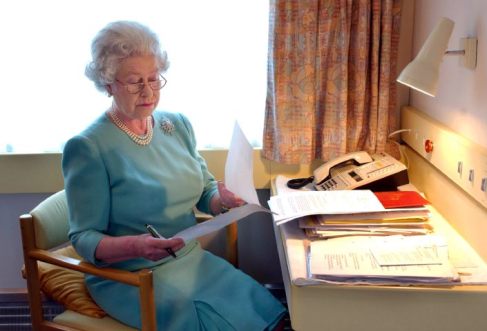
Her Majesty at work on the Golden Jubilee Train near Darlington

Press Association

Day Twelve – The Holy Word of God

Posted by Cor Unum Abbey on May 14, 2013
Posted in: devotional material, personal monasticism, Spiritual disciplines, The Coronation of Elizabeth II. Tagged: " good devotional habits, "watch and pray, Bible reading. Leave a comment


Image


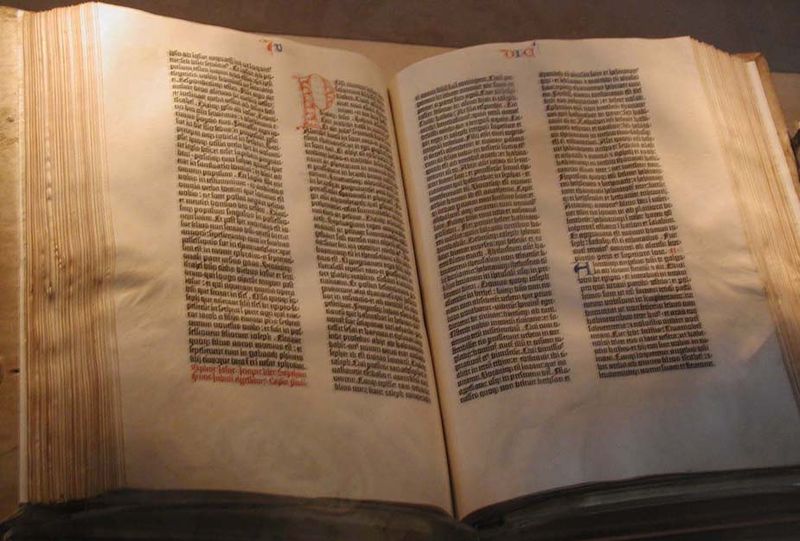
In the center of this tapestry of gold and silk, ermine and jewels, embroidered work and sculpted relics, a man stepped forward in a somber black Geneva gown, with a Bible in his hands.  He was Dr. James Pitt Watson, Moderator of the General Assembly of the Church of Scotland, asking her to receive the Scriptures “as the most valuable thing this world affords.”

“Here is wisdom;” he said, and his beautiful brogue intoned, “this is the royal Law; these are the lively Oracles of God.”  Her God-fearing Scottish mother sat a few yards away in the Royal Balcony, seeing and hearing her countryman gift her daughter with the Scriptures by which she had lived and so carefully raised Elizabeth and her sister.  That she could behold this simple, profound presentation was momentous, for the two churches have not always agreed upon the best expression of worship and communion.  The world may never know in how many small ways Her Majesty’s reign has been, from the beginning, one of mercy and reconciliation.  So may it be with us, whether our victories be small and hidden from view, or brought by God into an arena for all to see.

Of how little benefit might such a moment have been had the Queen received the volume as a token, a mere symbol of religion and not as the foundation of her own faith and the good of her nation.  We have been given to understand that, like her mother and grandmothers before her, Elizabeth uses her Bible and Book of Common Prayer as more than decorative elements in her private suite.

“Here is wisdom,” he had said. We retreat to our own devotional closets, we make time when there is none, and we share with Her Majesty the comforts and the challenges of founding our lives upon grace and truth.  The Gospel of Jesus Christ is our bedrock, as it has been hers.

She may have had a few “misses,” perhaps not too many; we, too, may have failed in our perceptions and obedience from time to time, but we, she and all of us, are alive before God, desiring His glory to be seen and His mercy to be revealed in every decision and every word, faith working through love.

The Queen is privileged to depend upon ladies-in-waiting, footmen, private secretaries, and pages to make sure her day runs smoothly, like clockwork, in fact, barring grave emergencies.  That isn’t so for most of us, but most of us do not face a schedule like hers, either.  As far as we are given to understand, her hours of prayer and Bible-reading take place before and after her workday, just as most working men and women must do.  We imagine, from what we do know, that those closest to her are acquainted with her devotional practices and perhaps can safeguard them to some degree, but she alone can determine that she will keep them.

Without ladies-in-waiting, footmen, private secretaries, and pages to help us keep our devotional hour sacrosanct, we must use our own good sense and an honest determination.  If the only free, quiet time a woman can claim as her own occurs during her children’s naptime, and if one of those children is ill and sleepless, her obligation is to her sick child, but faithfulness and honesty would suggest that, when they sleep, she would do well to read her Bible and pray before she checks her email, and determination will help her persevere.

“Here is wisdom,” said the Moderator, and wisdom and honesty are very valuable commodities.  In wisdom we can know that while our Spirit is willing to spend time alone with God, our flesh is weak, and weakened further by the excuses we make so adroitly.  There is a remedy, and it is just what Jesus said to his disciples in that passage: the Spirit is willing – the flesh is weak;  “watch and pray therefore, that you do not enter into temptation.”  There is wisdom!

How to find the time?  How to remain faithful in prayer?  Her Majesty’s life might be able to help us here, too.

More tomorrow …

The Guttenberg Bible

by permission, Mark Pellegrini

Day Eleven – Defender of the Faith

Posted by Cor Unum Abbey on May 13, 2013
Posted in: devotional material, personal monasticism, Spiritual disciplines, The Coronation of Elizabeth II. Tagged: day and night prayer, Defender of the Faith, Luke 18, prayer. Leave a comment

Image

With the Sword of State being borne before her, the Queen made her way to the steps of the altar.  The nation was bringing her to God.

She had just sworn on oath to “maintain the Laws of God and the true profession of the Gospel” to her utmost power, to maintain in the United Kingdom the Protestant Reformed Religion established by law, and to preserve all rights and privileges which the law accorded to the Clergy and Bishops.

At one time, such a promise was of greater significance than now, but on her honor she has upheld the Church of England and made other faiths welcome and kept them safe from persecution.  She has wonderfully opened a door of peace and understanding between Irish Catholics and Protestants, forgiving even the IRA bombing that killed Phillip’s beloved uncle, Lord Mountbatten.

Now, kneeling before God, with her right hand on the Bible opened to the Gospels, she swore a final oath:

“The things which I have here before promised, I will perform and keep.  So help me God.”  She kissed the Book and a silver Standish was brought; she signed the oaths that had been printed out on a special vellum page.  The page would be added to the Court Roll in the record of the Court Chancery.

Would we be better oath keepers if we had to sign the page of the oaths we made?  “I will.”  “I do.”  We must sign tax return forms and insurance claims and many other things, but those matters closest to our hearts and our well-being are nearly completely free of any binding legal form.

How precious, how honoring it is to us that God takes us at our word.  He says, “Come unto me,” and we come, and we stay.  He says, “This is my beloved Son,” and we listen.  He says, “Do unto others as you would have them do unto you,” and we take those words as our creed.  We say, “We have sinned,” and He says, “I have paid.”  We say, “Revive us to dwell with you forever,” and He says, “I will not leave you alone; I will come to you. I am the way, the truth, and the life.”

No roll, no record, no oaths, no pen, ink, or paper.  He takes us at our Word.

In every difficulty, in every trial we would rather escape, He remembers our commitment to be conformed to the image of His Son.  He knows where our safety and security are to be made sure.  He saves to the uttermost.

It is our own faith we must defend.  Jesus asks, not will He find missionaries or preachers when the Son of Man comes, but “will he find faith in the earth?”  (Luke 18:8)  He tells us clearly that it is day and night prayer that displays our faith.

By the mercies of Christ let a Standish be brought and let us write with the ink of decision on the vellum of our souls and our consciences and our will, “We will pray!”   For our families, our churches, our nations, for the Body of Christ around the world, for the peace of Jerusalem, for workers for the harvest, for the lost, for our enemies … we will pray.

All that He has asked us to do, we will do.

Teresa of Avila,by permission

Usuario:Xaxua

Windsor Worship

Posted by Cor Unum Abbey on May 12, 2013
Posted in: devotional material, personal monasticism, Spiritual disciplines, The Coronation of Elizabeth II. Tagged: Balmoral, Craithie Kirk, Windsors. Leave a comment

CrathieKirk01, permission granted, DanMS 

A day of rest, so valuable to all of us, might bear special importance to one so always on display, always in demand, as is Her Majesty.  There are Sunday events, of course, but it must be sweet indeed to close in on the Lord’s Day, when she can, and just be at home with her loved ones.

May God grant that royal grace to you this day.  Amen.

Craithie Kirk, “The Queen’s Church,” near Balmoral

by permission, DanMS

Posts navigation

← Older Entries
Newer Entries →
  • Recent Posts

    • A Sea Change
    • La Alcaldesa
    • But, How?
    • In at the Deep End
    • December 5 – “Savior”
  • Recent Comments

    safelake's avatarsafelake on April 28 – “. . . With Y…
    safelake's avatarsafelake on March 6 – D. T. M. (Divine Tim…
    Cor Unum Abbey's avatarCor Unum Abbey on February 26 – What Nuns B…
    di french's avatardi french on February 26 – What Nuns B…
    Cor Unum Abbey's avatarCor Unum Abbey on February 26 – What Nuns B…
  • Archives

    • August 2024
    • February 2024
    • December 2018
    • January 2017
    • March 2016
    • November 2015
    • September 2015
    • April 2015
    • March 2015
    • February 2015
    • January 2015
    • November 2014
    • October 2014
    • September 2014
    • August 2014
    • July 2014
    • June 2014
    • May 2014
    • April 2014
    • March 2014
    • February 2014
    • January 2014
    • June 2013
    • May 2013
  • Categories

    • "Dieu et Mon Droit"
    • 40 Days of Prayer for America
    • devotional life
    • devotional material
    • monasticism
    • personal monasticism
    • Prayer for the oppressed
    • purpose in life
    • Spiritual disciplines
    • Spiritual warfare, Prayer for loved ones, Prayer for the nation
    • Thanksgiving
    • The Coronation of Elizabeth II
    • Uncategorized
  • Upcoming Events

  • Meta

    • Create account
    • Log in
    • Entries feed
    • Comments feed
    • WordPress.com
Blog at WordPress.com.
Cor Unum Abbey
Blog at WordPress.com.
  • Subscribe Subscribed
    • Cor Unum Abbey
    • Already have a WordPress.com account? Log in now.
    • Cor Unum Abbey
    • Subscribe Subscribed
    • Sign up
    • Log in
    • Report this content
    • View site in Reader
    • Manage subscriptions
    • Collapse this bar
 

Loading Comments...