Cor Unum Abbey

Marketplace Monasticism … How to Live in a Downtown Abbey

  • About
  • July 9 – Sacred Simplicity

January 29 – Love and Laughter

Posted by Cor Unum Abbey on January 29, 2014
Posted in: Uncategorized. Tagged: Carmelites, cloister, deprivation, disciplined life, joy, Monastic diet, nuns. Leave a comment

Image

We may not speak of the austerity of Carmel or the poverty of the Poor Claires without giving place to the ringing laughter that can be heard within their walls.

There was the morning when the young – and zealous – new postulant, in obedient silence, wrested the duster from the hands of the old Sister so that she could have the choir wiped clean and shining before the others arrived, only to discover she had been polishing with the venerable Sister’s oversized handkerchief!

There are the smiles when food is scarce and the superior announces the substitutions on the menu.  If the meat, which for both Carmelites and Poor Claires is always fish, is hidden away in the salad, the Sisters are told from the head table where to find it.  Several root vegetables “sub” for potatoes, which must by rule be present but might not be available.  The Sisters find it an unending amusement when turnips get special billing, as if  Mother were a monastic maitre’d.

Monastics laugh with one another and they laugh at themselves.  They chuckle over poverty and smile at bone-weariness.  They grow to love one another with a depth of affection seldom replicated, because they daily practice treating one another as they would their Lord Jesus.

In Carmel, hardship is not sadness, and sadness is not despair.  Difficulties are friends and disciplines are close comforts.  We spoke of desert survival training.  We find our first issue of monastic gear waiting for us at the door to our cell, tied up in a little bundle of our “conversation” with cords of love.  Let us gird ourselves in this truth today: we, of all the inhabitants of earth, may choose joy for our portion.  It might be hidden under the greens, as love stays hidden behind fear, or a humble stand-in of patience when our expectations are unmet, but it is there, and it will nourish our souls!

Whatever difficulties we face, we will never confront them without the love and peace of God.  Whatever changes we must make, we may always make them for the sake of Jesus Christ.  Nothing is wasted here!  Whatever ills we have suffered or persecutions that may come, the One Who has gone before us will always confront them with us, and in us, and for the joy set before us, we take heart.

The sounds of monastic silence are patently cheerful.

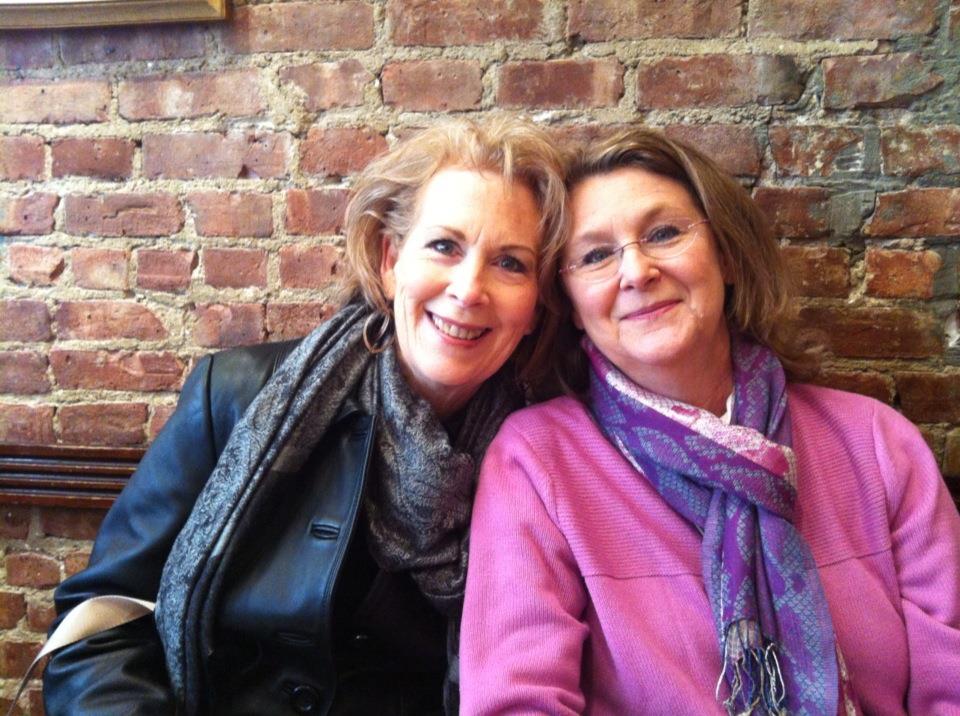
Abbey photo

(at Cafe Lalo, NYC)

January 28 – Carmel

Posted by Cor Unum Abbey on January 28, 2014
Posted in: Uncategorized. Tagged: Carmelite nuns, desert place, devotional life, hardship, spiritual discipline 21st Century nuns. Leave a comment

Image

For the Carmelite nun, the words “monastery” and “cloister” are not as descriptive of her new dwelling place as the word, “Carmel.”  The Carmelite does not go into a convent or abbey so much as into a desert place, by her own definition.

It was on Mount Carmel that Elijah confronted the prophets of Baal, and the Lord God vanquished them; there, God Almighty answered by fire (1 Kings 18.)  On Mount Carmel, the Shunnamite woman found Elisha and would not let him go until he came to her rescue (2 Kings 4.)   A rugged desert range, preferred by prophets, where the enemies of God breathed their last, and from whence a dead child would breathe again.

There are some naturally taciturn men and women among us.  They speak little, however much they might have to say, and silence seems to be their native soil.  There are those whose diet can or must be limited or even “strict,” who find no difficulty with it.  We all have acquaintances who prefer large portions of solitude to a full social calendar.   Carmel could accommodate all of these, but Carmel is something more.

Carmel is to love discipline and difficulty as the dearest and best of friends, intrinsically.  Carmel does not merely accept hardship – it flings wide the door!

Carmel as a way of life is not the work of a week, nor of  months, or years.  Carmel is bearing the burdens of others and so fulfilling the law of Christ. (Galatians 6:2) Carmel is hard; it is demanding, but purposefully.  It is not easily understood.  Carmel closely resembles . . . life, without pleasant distractions. without false comforts, and even without bona fide comforts if they will get in the way of Christlikeness.   The Carmelite might well say that they have “meat to eat” most of us “know not of.”  (John 4:32)

There are forces to be vanquished here in Cor Unum.  Selfishness and haughtiness and apathy are among them.  There are places in our hearts that will live again, if we will open wide the door to the remedies God provides within the hardships life supplies.  Can we trust the Mojave of discipline?  Can we befriend the Sahara of difficulties?  With interior fountains of joy?

Among the other orders, Carmel takes on desert survival training.  For each who will remain, there is an Arm upon which she may one day be seen coming up out of the wilderness, leaning on her Beloved.  (Song of Solomon 8:5)


Song of Solomon 8:5 … Who is that coming up from the wilderness, leaning on her beloved? Under the apple tree I awakened you. There your mother was in labor with you; there she who bore you was in labor. (ESV)

Tomas Castelazo, Wikipedia, by permission

January 27 – The Divine Office

Posted by Cor Unum Abbey on January 27, 2014
Posted in: Uncategorized. Leave a comment

Image

The new postulant, having knocked upon the abbey door and been admitted by the Mother Abbess and a number of her counselors, is taken through the corridors and directly into the life of the monastery.

Her arrival will often be scheduled to coincide with a period of recreation, when the Sisters are permitted to speak for an hour’s time, so that she can be made welcome by all, and because the superiors of the house must not be absent from the Divine Office, except in cases of emergency.

The new postulant will be led through seemingly endless corridors in some houses, and through the parlor and down the hall in others, trying to take in every detail that her eyes can cover.  She finds herself at last in the midst of the entire community and participates in the remainder of the hour, and then she is led to the cell that has been made ready for her.  There she will change into her postulant’s habit.  This used to be a blouse and skirt, a very long skirt until at least the middle of the last century, and a short veil, and when she reappears before the community, she is as “arrived” as ever she needs to be, if she will stay and take the rule of the house as her own, for love’s sake.

When recreation comes to a close, the Sisters file into the chapel to offer to God the praises and prayers of the next Office.  The newcomer is with them.  She will certainly be lost among the page turnings, the kneeling and rising, the bows, the proclamations and the chant, but THIS is that for which she came.  She can look around her and see that what is to be learned can be learned, and what is given can be received: the monastic vocation she seeks.  To the newest little sister, no matter her age, she believes she has chosen the better part, and it will not be taken from her.

For all of us in Cor Unum Abbey, nothing that we lavish on our Savior will ever be stripped from us.  The devotion of time for prayer or worship will enclose us in His Presence and His faith as days go by.  Our gifts  of daily thanksgiving on the way to work or a song of worship with the children  before they leave for school or quiet meditation on the Lord Himself before the computer turns on in the morning . . . as we learn to do what we can, we will take our designated places among those who have time for more, and it will be enough.

The robust love of God will become our practice, for we will advance by inches of unseen, unheralded conversion, rather than halting on the miles of good intentions.   What has worked wherever others would not turn back, will not fail to be for us, too, a “change of habit.”

by permission, Felipe Ribeiro, Wikipedia

January 24 – A View Inside

Posted by Cor Unum Abbey on January 24, 2014
Posted in: Uncategorized. Tagged: abiding in Christ, Biltmore Estate, mansion, monastic life, nuns, seeking God. Leave a comment

 Image

When the Oklahoma Carmelite monastery opened, a most rare opportunity was given to the local populace.

After the walls had been restructured and painted and the kitchen set up for the extern sisters’ use and the chapel fitted for the Divine Office and for the daily mass, before the monastery was sealed by Pontifical order, visitors were welcomed inside!  Thanks to a far-seeing magazine journalist, photographs were taken and published, by permission of the Mother Prioress.

We may see the interior of the nuns’ cells and the nuns themselves on the way to the choir and even nuns at work “fixing the place up.”  Every photo maintains the anonymity of the Sisters.  They may be seen scraping the wood floors or entering the chapel, but their faces are averted or veiled.

The anonymity that many men and women dread in life is precious and preserved among them.  They endeavor to live in perfect transparency of soul within the house, but they have left all public renown and acclaim, and even recognition, outside the doors.

We are seen and known.  There are points at which others see us and know us better than we know ourselves, which is as disconcerting as it is true. Yet, we share a reality with monks and nuns and other discerning believers all over the world who hide themselves in the likeness of Jesus Christ, if we will only take the time to seek Him and pay homage to Him at home in the secret place of our hearts, in Cor Unum.

“In My House are Many Mansions”

The Biltmore Estate

tomf688, by permission, Wikipedia

January 23 – “Our Cell”

Posted by Cor Unum Abbey on January 23, 2014
Posted in: Uncategorized. Tagged: Carmelites, crucified with Christ, in quiet with God, Poor Clare nuns. Leave a comment

 Image

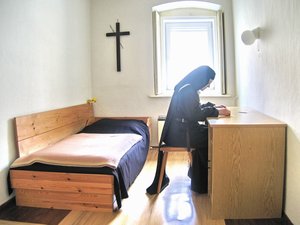
No matter how confined the monastic space, contemplative nuns do not share dormitories.  Sometimes the wing that houses their cells may go by that name, but it isn’t a common room with sleeping arrangements.  Each Sister has a place of her own, which she may never call her own, for it belongs to her and her Lord.

When one Carmelite order started a new foundation in Oklahoma, they took up residence in an old Army barracks, and walls were improvised to create a cell for each nun.  A Poor Claire order started a New Mexico foundation in a converted farm house.  Everything in the monastery was minuscule!  Even so, each Sister had a cell with a small bed and a small table, and for the  Carmelites, a small cross on the wall over her bed, not a crucifix.

The nuns of the Carmelite order display the simple, unadorned cross in order to remind themselves that, while on earth, they will accept the crucifixion to which each of us has been called.  They give all glory to the crucified Son of God, the only propitiation for fallen mankind, but they cherish a healthy respect for the privilege of bearing His cross in life.

That New Mexico farmhouse was subdivided inside to allow each Sister a place apart to be alone with her Savior and King.  At that time the dimensions of any Poor Claire cell was already prescribed into tininess in their “rule” and institution – “no bigger than,” and those dimensions may still be pre-determined in some cloisters, but these rooms were more tiny still, yet the Sisters made no complaint!

They did not need square footage to dwell in splendor with our Lord Jesus Christ.  For them, He was their spaciousness, and their place of abiding was a mansion in the house of God, which is Christ.

May God grant us, as we travel through the next three weeks of “conversatio,*” to find even the smallest opportunities to spend time with Him, to accept even the smallest crucifixions as He recommends them by His Spirit and counsel, and to have faith that His sovereign care over all our choices will bring us more absolutely into His abiding Presence.

[“conversatio” is the Latin term for “conversion.”  It is the part of the Benedictine vows which perpetrates an unending devotion to change for the sake of Jesus Christ]

Carmelite nun reading in her cell,

Melchior, by permission, Wikipedia

January 22 – The Unspoken Word

Posted by Cor Unum Abbey on January 22, 2014
Posted in: Uncategorized. Leave a comment

 Image

Of all the words in all the world, only imagine which one the Benedictine nun will have to eradicate from her vocabulary?

“Gee whiz!” and “Golly!” had to be curtailed in the ’fifties, and there are some that 21st century postulants will have to forsake, to be sure, but the one that might surprise you is the word . . . “mine.”

She sleeps at night in “our cell” . . . hers and the Lord’s.  If it is askew, she has to straighten “our veil,” and, on the table beside her bed, even the little Bible, of which the Lord has slight personal use, being Himself so inexpressibly familiar with the text, is “ours.”

The Benedictine nun may own nothing, may call nothing “mine” whatsoever, except her sins.

I remember a man saying once that his wife had one little habit that discomposed him: she referred to everything they owned as “mine.”  “My kitchen,” “my “dining table,” and “my children.”  It was a small thing, just a trifle, but he had to overlook it in order to love her freely.  With Benedictine Sisters, they overcome possessiveness in order to love their Lord more freely.

Here is a practice we will not try to adopt in full.  Those with whom we live and work won’t hear us refer to “our briefcase” or “our lipstick” any time soon, but it is very entertaining, not to say eye-opening, to use this plural possessive pronoun in prayer.

What’s more, it is very  enlightening.   Imagine saying to the Lord “our family,” meaning His and yours!  “Our” bills and “our” vacation!  His and ours!

It is time to return to the weight and power of our small “conversatio” practices.   Perhaps we haven’t had that third cup of coffee for several weeks, or perhaps we have limited our television viewing and spent the savings on the Lord – and now, we consider and add another small transformation.  Remember . . . we add to the first, choosing something that we really will (or will not) do for the next twenty-one days.  We are learning to address “our” sins, meaning “mine” and “yours” alone, to vanquish them because they once were “His” on the cross of our shame, where He who knew no sin suffered and died.  We don’t need to carry them, and we don’t need to perform them anymore.

There are those sins that we know we must cut away completely and immediately by the grace of God, repenting if we stumble but turning our backs on them and calling them what they are, but “conversation” helps us with those little twining selfishnesses and lazinesses and failures to love God and others and helps us take proper care of ourselves.  If you didn’t give this a spin the first time, be encouraged prayerfully to consider one TINY tweak that you can apply to the not-so-beneficial habits in your life, the hurtful over-indulgences or one of the empty places where a little discipline or attentiveness belong, like the visits to a shut-in person that have been put off for too long.  Go monthly if you can’t quite go weekly as yet.  Be absolutely sure that you choose something you WILL DO, be it ever so small.  Stop biting just one fingernail, as we say here in the Abbey.  But stop biting it forever.  Next time around, stop biting another.  Fingernails, after all, aren’t “mine” or “yours,” they are “ours” with God.    We were bought with a price, we are not our own.  (1 Corinthians 6:19-20 )

Maybe some of us will even stop saying “Gee whiz!” at last!

2 Corinthians 5:21 … God made him who had no sin to be sin for us, so that in him we might become the righteousness of God. (NIV)

1 Corinthians 6:19, 20 …”Ye are not your own: for ye are bought with a price: therefore glorify God in your body, and in your spirit, which are God’s.”

Changing Habits

Cor Unum Abbey photo

January 21 – Into Life

Posted by Cor Unum Abbey on January 21, 2014
Posted in: Uncategorized. Leave a comment


 Image


For the true monastic, entrance in the cloister is not at all a departure, but an arrival.  The new postulant steps over the threshold of the monastery and into the life she has chosen. 


For some, the wait has been long and the testing has been severe.  The Mother Abbess and her council are quick to recognize  and reject those who would come into their midst in order to hide from the world outside. 


For the cloistered, monasticism is a calling, above all. A contemplative nun lives her life trading distractions for devotion and pleasures for the privilege of pleasing God in all love and obedience. 


Will that leave us out?  Most of us cannot, probably none of us ever will, cross that threshold, but is there not a door through which we may pass into a life of unbroken fellowship with the Lord we love?


We look to Him.  He told us that the gate of life was very small, and the way very narrow and constraining. He said, too, that the way that leads to destruction is broad.  When children say, “But she gets to go!” or “But he has one!”, they only amplify the grievances of our lives without discipline and devotion.


In the Abbey, our calling is not to escape death or deprivation.  We are called to life, and that life is eternal, and it has begun!  Jesus ever lived the narrow-ness of a life dedicated to the Father.  He said, “My Father is working until now, and I Myself am working . . . Truly, truly, I say to  you, the Son can do nothing of Himself, unless it is something He sees the Father doing . . .”  (John 5:17 and 19)


There is no door so small or any way so narrow as is this one, but it is open to us.  We may learn to do as Jesus did, to enter life through faith and obedience . . . to watch and pray and wait upon our Father until we only do those things that originate in His life and love.  This is the small door through which life … Jesus’ life … comes into the world.


January 20 – One Heart, One Rule

Posted by Cor Unum Abbey on January 20, 2014
Posted in: Uncategorized. Tagged: fellowship, the Law of Love. Leave a comment

Image


We are entering our third week in the Abbey; the Novice Mistress is teaching us the fundamental prayers and songs that are in daily use, and the Mistress of Postulants is instructing us in the use of our liturgical books.  We are reading and singing large portions from the Psalms and the Gospels daily, as well as smaller texts from the Old Testament and Epistles, all a part of the Divine Office. We are otherwise keeping silence day and night, but for two hours of recreation, and we have been given a few small work assignments.

We are developing our first jealousies and experiencing our early humiliations.  If we are of good humor (and the counselors like to admit women who can laugh at themselves a little,) we are probably beginning to let go of a some of the baggage we brought with us.  In most traditional monasteries and convents, the new arrival “brings” the clothes on her back and has her postulant’s habit waiting for her in her cell.

We are seeing friendships we would like to promote and realizing that the most admirably advanced Sister, the one we would like to get to know,  will never be able to be our best friend.  We have to love all our Sisters, without favoritism.  Our souls are strengthening in the atmosphere of worship; our minds are beginning to size things up, in one direction or another.

What valid “rule” could any house of religion ever construct that was not based upon this one:

“You shall love the LORD your God with all your heart, and with all your soul, and with all your mind.  This is the great and foremost commandment” (NASB)?  For each of those very few women who are pursuing monastic vocations in brick and stone Abbeys, it is imperative, as the new and the novel wear off, for her to consider that she has chosen love.  Love of the Father and His Son, love for the community and the Abbess in the Spirit, love for those she may never see again but for whom she will pray most fervently and faithfully for the rest of her life.

If the postulant is meant to stay, she is beginning to realize that time has brought each professed nun into the joy and peace and confidence which is visible and enviable in them.  Time and “conversatio” will do the same for her and for us, if we are founded upon that Greatest Rule, the Rule of Love, here in the monastery of our hearts.  Where we are, with the jobs, responsibilities, and vocations that are our own, love will take us where we want to go.  We must not be stingy with it; if we have opportunity to love, we love.  “Love is patient, love is kind. Love does not envy, is not boastful, is not conceited … ” (1 Corinthians 13:4)

1 Corinthians 13:4-8a  …

Love is patient, love is kind.
Love does not envy,
is not boastful, is not conceited,
does not act improperly,
is not selfish, is not provoked,
and does not keep a record of wrongs.
Love finds no joy in unrighteousness
but rejoices in the truth.
It bears all things, believes all things,
hopes all things, endures all things.

 Love never ends.

Unum Abbey photo

January 17 – The Manners of Meekness

Posted by Cor Unum Abbey on January 17, 2014
Posted in: Uncategorized. Tagged: Carmelite nuns, meekness, Refectory, service to others. Leave a comment

 Image

One poignant practice in the traditional Carmelite house is stunning in its meekness.  A nun does not serve or “help” herself at any time in the refectory.  If her table partner does not observe the need, she must do without.  Think what this would accomplish!  One might eat and drink more slowly, for when it is gone, it’s gone, unless someone refreshes your cup.  Even with a most attentive table-mate, one would not want to be the cause of her having to interrupt her meal again and again.  One would be very careful and watchful over others, at first reciprocally, perhaps, and at last in the mature joy of service to them.

As time goes by and we add small conversions of life to beautify and strengthen our souls, how shall we replicate this enforced meekness?  Plans and patterns for “meekness” seldom make their way onto our lists of resolutions, even though the scope for training in this discipline is broad and long.

We have time.  In our first week together in Cor Unum Abbey, we have surveyed the vow of “conversatio,” of conversion of manners through attentiveness to the One Who has come in to dine with us.  We have seen that in the monastery of our hearts, we are subject to the “perpetual vow,” of seeking to abide in Him.

Let us take time to consider the preeminence of the meekness of Christ.  Central to the suffering and obedience and power of our Lord Jesus was the Father’s heart of compassion and of interest in us.  Jesus came to show us the Father.  Doesn’t the Scripture tell us, ” . . . cast your burdens . . . all your anxiety . . . upon the Lord, for He cares for you” (1 Peter 5:7)  Of all the creatures of earth, we can afford to care for others.

The Lord is watching to minister to us in every degree today, to fill our cups to overflowing.  In the conversion of manners that we pursue, meekness is the ideal, the consummate Abbess; it strengthens us while it reveals our weaknesses.   Let us show our comprehension and gratitude by practical, watchful care over others in this house, which is Christ, and over those outside for whom He died.

Sisters of Charity in Traditional Saris

released into public domain, Fennec, Wikipedia

January 16 – In the Refectory, Part 2

Posted by Cor Unum Abbey on January 16, 2014
Posted in: Uncategorized. Leave a comment

 Image

In most houses of monasticism, decorations are kept at a minimum.  The eyes are curious, says the Novice Mistress, and they will feast on many things rather than humbling themselves to let the heart gaze upon the Lord.

There was, at one time, in every Carmelite refectory, at the head table where the Abbess sits, a very distinct knickknack.  The Abbess’s table was “decorated” by a human skull.  Vatican II changed many things, and this practice may have gone the way of some of them, but its monastic understanding is of interest to us.

This centerpiece gave most new postulants pause!  From their first meal, at every meal, and on a small table in miniature replica in their cells, the Sisters were confronted by the reminder that we are not destined to live forever on this planet.  Rather than a grim representation of the worm of death, the skull served to help the postulant begin to think in terms of the shortness of life in comparison with the length of eternity.  The fleeting glory of the earth and of the flesh would begin to be subject to the nearness of the kingdom of heaven. Her mind would begin to transform, to have an eternal perspective, and transformation is the rule of every day and every custom.

In many traditional refectories, meals are eaten in silence.  There is no chatty atmosphere to obfuscate the cranial stare.  One nun observed that she waited in vain for a special feast when talking would be permitted, only to find that those events come on no other occasions than the Jubilee Anniversaries of the professed nuns!

The refectory isn’t completely without voice throughout mealtime, however.  An “hebdomadaria” is assigned who, at times and in a strong, clear voice, reads pages from uplifting texts and homilies.  It isn’t The Shopping Network, on in the background, but the nuns grow to love and appreciate this inspiriting accompaniment to their meals.

The staring head was there to remind each Sister that the day would come when her place would be taken by another.  The communal silence would continue, the meals might remain much the same, the reader would still clear her voice and begin, but each nun would vacate her seat one day, and vacate her flesh as well.

To the nuns, they think heaven is monastic in this regard, that every intention and every act of every moment is for and toward the Lord God.  With that in mind, even as they feed their bodies in life, they travel in silence toward the real joys they will know after death.

Few if any of us have a skull we can use as a centerpiece, but as we sat down to a meal with the Lord yesterday, let’s see if today we can dine on these words at least once.

2 Corinthians 5:8 … ” . . . we are of good courage, I say, and prefer rather to be absent from the body and to be at home with the Lord. (NASB)

Cor Unum Abbey, photo

Posts navigation

← Older Entries
Newer Entries →
  • Recent Posts

    • A Sea Change
    • La Alcaldesa
    • But, How?
    • In at the Deep End
    • December 5 – “Savior”
  • Recent Comments

    safelake's avatarsafelake on April 28 – “. . . With Y…
    safelake's avatarsafelake on March 6 – D. T. M. (Divine Tim…
    Cor Unum Abbey's avatarCor Unum Abbey on February 26 – What Nuns B…
    di french's avatardi french on February 26 – What Nuns B…
    Cor Unum Abbey's avatarCor Unum Abbey on February 26 – What Nuns B…
  • Archives

    • August 2024
    • February 2024
    • December 2018
    • January 2017
    • March 2016
    • November 2015
    • September 2015
    • April 2015
    • March 2015
    • February 2015
    • January 2015
    • November 2014
    • October 2014
    • September 2014
    • August 2014
    • July 2014
    • June 2014
    • May 2014
    • April 2014
    • March 2014
    • February 2014
    • January 2014
    • June 2013
    • May 2013
  • Categories

    • "Dieu et Mon Droit"
    • 40 Days of Prayer for America
    • devotional life
    • devotional material
    • monasticism
    • personal monasticism
    • Prayer for the oppressed
    • purpose in life
    • Spiritual disciplines
    • Spiritual warfare, Prayer for loved ones, Prayer for the nation
    • Thanksgiving
    • The Coronation of Elizabeth II
    • Uncategorized
  • Upcoming Events

  • Meta

    • Create account
    • Log in
    • Entries feed
    • Comments feed
    • WordPress.com
Blog at WordPress.com.
Cor Unum Abbey
Blog at WordPress.com.
  • Subscribe Subscribed
    • Cor Unum Abbey
    • Already have a WordPress.com account? Log in now.
    • Cor Unum Abbey
    • Subscribe Subscribed
    • Sign up
    • Log in
    • Report this content
    • View site in Reader
    • Manage subscriptions
    • Collapse this bar
 

Loading Comments...