Cor Unum Abbey

Marketplace Monasticism … How to Live in a Downtown Abbey

  • About
  • July 9 – Sacred Simplicity

February 13 – Corrie’s “Lectio”

Posted by Cor Unum Abbey on February 13, 2014
Posted in: Uncategorized. Leave a comment

 Image

While very  few of us will ever take such pronounced steps toward newness of purpose as does the new postulant who seeks entrance at the abbey door, most of us respect such vision and share it.

How Corrie and her sister Betsie must have thanked God for the spiritual training they had received at home!  They remembered those sweet and privileged years as they walked together in the cold and dark morning to stand in ranks for roll call at Ravensbruck, the German concentration camp to which they were sent.

They remembered Papa’s gentle, generous, well-disciplined life, with several daily episodes of private and family prayer and Bible-reading, as well as a keen interest in Bible discourse and study.  Tante Jans lived with the family and kept up a steady stream of evangelical writings.  Brother Willem was a pastor and spoke whenever he could to warn against the impending dangers of the rising German Reich.  Tante Anna was the “extern sister,” always busy in the kitchen or looking after the house.

“Discipline,” as we think of it today in terms of crime and punishment, was probably somewhat lacking, but training in kindness and faithfulness and the well-ordering of life were stringent.

Corrie’s life and the martyrdom of so many of her family members is a testimony to the effect of the Gospel of Jesus Christ that was lived inside that narrow little house on the Bartiljoristraat.

Corrie was faithful as long as she lived to remind those with whom she spoke that the Bible is God’s love letter to us, and that He is glad to help us perfectly understand it.  Begin with prayer, she recommended, and then she suggested keeping track of the following, day by day . . .

  • What was the most beautiful passage, and why?
  • Was there a warning in the text?
  • Was there a promise to believe?
  • Did a prayer arise in your heart while reading?

This would be a “Lectio” practice that could train us very well in Cor Unum Abbey.  It would never grow old, even after we do!

Better still, this manner of Divine Reading might help us to remain as young at heart and strong in the work of the Lord as was “Sister” Corrie ten Boom.  The Gospel worked for the ten Boom family, and they lived by it.  Love was the watchword, and love’s cost was paid in full.  Papa ten Boom died in a corridor, arrested with his family for hiding Jews during the war.  Before soldiers separated them, he prayed for his beloved children, blessing them, and for their “watches,” the Jews they had left at home, safe in their Hiding Place.

Corrie survived to share with the world the Gospel that she and Betsie had preached, even to women who were taken away to be cremated.  When she was released, only days before all the women her age were murdered, she traveled around the globe and gave this testimony, “There is no pit so deep that the love of God is not deeper still.”  This God she knew from the Bible, and she read the Scriptures daily her whole life long, until a stroke disabled her.  Then, she had them read to her.

For us, too, in Cor Unum, no matter what we must face in life, our Divine Reading will be for us divine strength to keep ourselves in the love of God and to live within His divine purpose.

Thank You, Father, for this faithful family, for the lives they lived and the death they suffered for Jesus’ sake.  Amen.

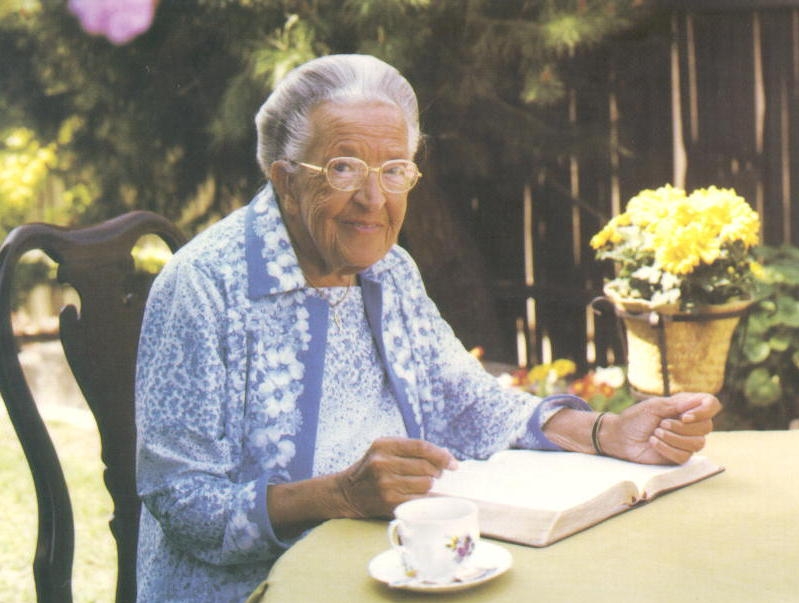
Corrie ten Boom,

courtesy of the ten Boom Museum website
February 12 – Abbey ten Boom

Posted by Cor Unum Abbey on February 12, 2014
Posted in: Uncategorized. Tagged: Bible reading, Corrie ten Boom, good habits, Lectio Divina. Leave a comment


 Image


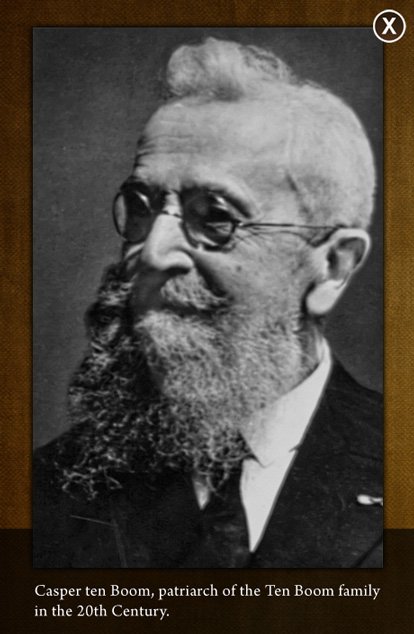
Welcome to the ten Boom cloister!


In a narrow house on a narrow street in Amsterdam, Papa ten Boom is descending the narrow stairs on his way to breakfast.  As his daughter Corrie always said, you could set your watch by the habits of the watchmaker who lives over the shop the family has owned for nearly one hundred years.


Caspar ten Boom’s habit are narrow, too, but his mind and his heart are very, very broad.  When the Nazis invaded his beloved country, he suggested to his friends and neighbors that they all start sewing yellow Stars of David on their clothing; that way, the Gestapo would never be able to know for sure which citizens were of  Jewish descent and which were not!


Papa ten Boom’s monasticism was gracious, hospitable, professional, and God-centered from morning to night.


At precisely eight-ten each morning he appeared at the breakfast table, impeccably dressed, but wearing a suit that might have seen better days.  He was finished with his private morning prayers.  After breakfast, no matter the pressing business of the day, he took up the heavy family Bible and there at the table, he read to family and employees alike.  His shop assistants were in attendance.  While his practice would not now be considered politically correct, he only had to fire one employee over the decades.


His daughter Corrie relates that there would often be inward groans when there was much to be done and the ribbon marker opened to an especially long passage.    Papa would not hurry past the reading of the Word of God, any more than he would hurry past a customer seeking a tiny service that would cost the shop more in time than the bill would cover, if indeed it was ever sent.


Corrie’s method of reading the Word may have come, in part, from Papa’s teaching.  She knew the Word of God intimately, deeply, compellingly, evangelically and well enough to live out her faith in the German concentration camp at Ravensbruck, and later to travel the world, sharing the message of God’s unfailing love even in that place of despair and death.  She continued her work well into her eighties.


We will take a look at her “Lectio” example tomorrow, but for today, let us take up our Bibles and open to the bookmark, asking God that we might read along with His Spirit.  Let’s see today what we can see as we read more slowly, stopping perhaps to spend some time at a passage that arrests our interest, making sure we have believed what we read and that it will stay with us during the day.  That is the essence of “Lectio Divina.”


Caspar ten Boom

Pinsocialmedia

February 11 – Lessons on Lectio

Posted by Cor Unum Abbey on February 11, 2014
Posted in: Uncategorized. Tagged: 2, Bible reading techniques, Lectio Divina, monastic silence, Romans 12:1. Leave a comment

Image

We will remind ourselves today that we are dedicated to “conversatio morum suorum,” commonly called a change of manners.  It is the conversion of the interior  style of our lives.

The postulant entering a monastery will change within the first hours into a simple postulant’s habit; she will eat her next meal and all of the rest of them for the rest of her life according to what is placed before her, and when she has a few minutes of time to herself, it is directed and her resources are extremely limited.  The list of books to which she will never again have access would wind around the world, yet  to her the convent library represents a wealth of material focused upon the object of her life, the knowledge and the nearness of God.

The new Sister is immediately assimilated into the rule and scope of the order, and she soon learns that even her thoughts are going to have to be overhauled, with gentle but unrelenting expediency, into the unfeigned and unfailing love of God.  This, if she has been well-advised, is what she came for.

In the Abbey, she is not even at liberty to change for her own sake, but for Jesus’.  With the realization that conversion for selfish reasons is no conversion at all, she begins to progress.  The goal of every moment of every day … the goal of her life … is the love of God, abiding in it, abiding in Him.  Every practice within the cloister walls is designed to relieve her of self-referential motives and impulses.  The worship of God and the practice of never forgetting His nearness, is the new pinnacle of  life for her.

We have been practicing the rudiments of “Lectio Divina,” the simple system of reading which directs the monastic toward God in the Scriptures and toward a path in life of ongoing, never-ending, conversion into the likeness of His Son.  Before we faint away under the bright lights of monastic aspiration, let’s take up the Romans 12:1 and 2 verses of last week and read them here in quiet, slowly and prayerfully, watching and listening to what the Spirit of God will highlight and what He will reveal.

Romans 12:1, 2 … Therefore, I urge you, brothers and sisters, in view of God’s mercy, to offer your bodies as a living sacrifice, holy and pleasing to God—this is your true and proper worship.  Do not conform to the pattern of this world, but be transformed by the renewing of your mind. Then you will be able to test and approve what God’s will is—his good, pleasing and perfect will.

Read them aloud if possible, sometimes emphasizing one word and sometimes another.  We might pray, today and always, for the grace of reading the Word of God with the same inflection that the Spirit of God would put upon the words and phrases.  Look at the passage, read it, hear it, say it, pray it, read it again, read it again, slowly, be thankful for it, worship through it.

All of this might add only a few minutes to our regular and disciplined study of the Word, but it will enhance our reading forever.  Nothing happens quickly in the Abbey, unless a storm is coming in and the windows are up.  Even then, what happens quickly takes place in silence.  Can you imagine?  Slowly, but with sudden happy results, in the quiet places of our lives, we will see the difference it makes when we behold the Lord in His Word, when we hear His Voice as we read.

Tomorrow in Cor Unum, we will meet, through the “grille” of time, one of the most prolific writers, one of the most sought after speakers of the twentieth century,  for whom the world was a cloister and the Spirit of God was the Superior, someone who will have something to teach us about making sure God’s Word lights our paths.

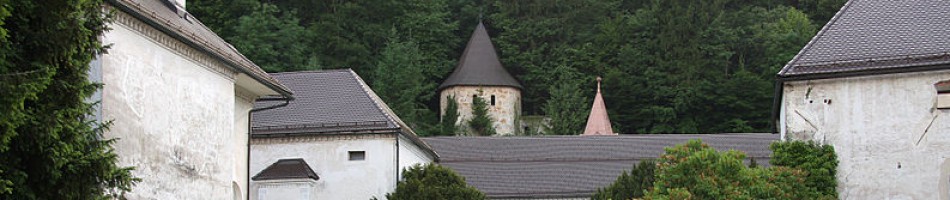
Abbaye de Chiaravalle

G. dallorto

by permission

February 10 – Divine Reading

Posted by Cor Unum Abbey on February 10, 2014
Posted in: Uncategorized. Tagged: Bible reading, devotional life, Hebrews 4:12, Lectio Divina. Leave a comment


 Image


“Lectio Divina” is the Latin term for “divine reading.”  There is nothing more divine in our study of the Word of God than to encounter Him there and then to walk with Him in faith after we close our Bibles and go on with our day.


This is the purpose of “Lectio.”  Its practice is making a big comeback in many circles as lay men and women have begun to discover the effectiveness of the prayerful, expressive, listening, worshipful, humble application of the Word of God.


Prayerful.  Expressive.  Listening.  Worshipful.  Humble.  All of these are relationships we would like to say we have cultivated toward God.  In “Lectio,” we shall.


Today, let’s look at that powerful, miraculous passage in Hebrews 4:12.  First, as we open our Bibles, we pray, asking God to show us what we may see there, to show us what we could never see without Him.  What an enormous difference it makes when we humble ourselves always, in all things, to pray first!   Now we read in the Presence of the Lord.  We make note of what we see, of the questions that arise, of the things that are evident, of the revelation of the character of God.  We can read again and again until we feel we have begun to hear these words as from the Lord Himself.  This is the training we have undertaken in Cor Unum, one of the slow and steady conversions that we know will bear fruit in our lives.   We will always read larger segments of Scripture, reading through the Word of God year by year, but we will take time to pause and consider and be changed as we go.


Now we read again and make a list of as many elements as we can draw from the text. 


Here is an example, from Hebrews 4:12 . . .


• the Word of God is alive

• it is active, it DOES something

• it is sharp, it cuts . . . sharper than a sword that cuts both ways

• hmm . . . wonder what that signifies?  (It is honest to ask questions, without doubting)

• it pierces so deep as to divide our souls and spirits

• (like dividing?) joints and marrow … apparently our souls and spirits are not one and the same

• the Word of God judges the thoughts of the heart … does my heart think on its own?

• it judges the intents of the heart … that would be a valuable assessment 


Those are the items that are clearly stated, even if we don’t completely understand them.  In Cor Unum, we cannot read over the Word of God to get to the next point, the tag line, the “zinger,” or the end of our assigned reading!   After we see the literal, factual elements, we can begin to apply them, prayerfully, and we do well if we take time to let the living, active Word act upon us at some point whenever we read.

We can pray for ourselves and others as we travel through the Scripture.  “Lord, Your Word can live in me and in those I love; it can change anything and everything.  You can show us what we’re really like, and Your Word can form in us the strength and faith and love that makes people new and free.  Judge my thoughts, Lord; judge my heart.  I’m not afraid of Your judgement … You gave Your Son so that we don’t even have to fear our own sinfulness and our failures.  We are safe with you, and when your sword cuts, it heals, I know.”


As Professor Agassiz’ students learned to look, to keep looking, and to SEE their fish, we will begin to see God in ways we never dreamed He could be known.  We will see the Son of God, obedient to the Father, full of compassion, powerful in meekness, conqueror, not victim.  We will be able to see our hearts as His home; that He lives in heaven and He lives in us.  Cor Unum Abbey will become to us a place of sweetest delights and liberating truth, because here we dwell in the Presence of God, and here he dwells in us.  Just the time we take, just reading and praying, looking and listening, is healing and strengthening.


“Look, look, look!  Look at Jesus, the Word made flesh!  Look at the Lord of life!  Look, look!”


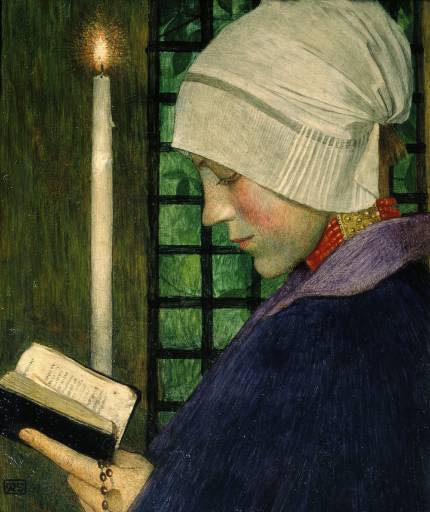
“Candlemas Day”

Marianne Stokes, by permission


February 7 – “Oh, Look At Your Fish!”

Posted by Cor Unum Abbey on February 7, 2014
Posted in: Uncategorized. Leave a comment


Image


In September of the year 1847, Harvard University was animated beyond its somber boundaries by the arrival of a Professor, the Chair of Natural History at Lawrence Scientific School.  This gentleman didn’t walk, talk, or dress like the other profs, and he certainly didn’t teach like them.  This was the famous Louis Agassiz, naturalist, and as was written of him, “good citizen … beloved by all.”


In his book, Brave Companions, David McCullough quotes Samuel Scudder, later a well-respected entomologist in his own right, from his memorable experience in Professor Agassis’ class.  When interviewing students for his class, he encouraged them to study nature, not books.  He would ask them when they would be ready to begin, and if they said, “Now,” he would personally select from a pickling container a fish, usually a long specimen, and place it on a tray in front of the student with the instruction to “Look at the fish.”  


Professor Agassiz would busy himself, leave the classroom – sometimes for the rest of the day!   Here is Samuel Scudder’s account:


“In ten minutes I had seen all that could be seen in that fish … Half an hour passed – an hour – another hour; the fish began to look loathsome.  I turned it over and around: looked it in the face – ghastly; from behind, beneath, above, sideways, at three quarters view – just as ghastly.  I was in despair.


“I might not use a magnifying glass; instruments of all kinds were interdicted.  My two hands, my two eyes, and the fish; it seemed a most limited field.  I pushed my finger down its throat to feel how sharp the teeth were. I began to count the scales in the different rows, until I was convinced that that was nonsense.  At last a happy thought struck me – I would draw the fish, and now with surprise I began to discover new features in the creature.”


The Professor returned, heard all that Mr. Scudder had to say about his findings … and told him to look again.

“I was piqued; I was mortified.  Still more of that wretched fish!  But now I set myself to my task with a will, and discovered one new thing after another. … The afternoon passed quickly, and when, toward its close, the professor inquired: ‘Do you see it yet?’

“No,” I replied, “I am certain I do not, but I see how little I saw before.”


Through the night, the fish was on Scudder’s mind, and the next day he reported more revelation to his Professor.  “Of course, of course!” said Agassiz, and again, “Look, look, look!  Oh, look at your fish!”


Three days passed.  The fish was before the student, and the student looked at the fish.  He later wrote that those days and that lesson was of incalculable value, life-changing, never to be forgotten or discarded.


When we open the Word of God, when we pray for understanding and wisdom, when we look to see Jesus, and continue to behold Him when we close the covers, our lives will change.  That will ever be the goal of our Divine Reading.


public domain

Title 17, Chapter 1, Section 105 of the U. S. Code. 

February 6 – “Lectio Divina”

Posted by Cor Unum Abbey on February 6, 2014
Posted in: Uncategorized. Leave a comment

Image

Here in this Abbey, the monastery of the heart, we are practicing the art of transformation.  The Apostle Paul wrote in the first verses of Romans 12.

“Therefore I urge you, brethren, by the mercies of God, to present your bodies a living and holy sacrifice, acceptable to God, which is your spiritual service of worship.  And do not be conformed to this world, but be transformed by the renewing of your mind so that you may prove what the will of God is, that which is good and acceptable and perfect.”

There have lived countless monastic men and women on the earth, by our definition; that is, multitudes have lived before God in the fulness of His provision of life in Christ Jesus.  As we have said, no one can live that life for us, but those trained in spiritual discipline have great help for us, and we are exploring one of those methods today.  Inside the cloister it is called Lectio Divina, and it is a critical aid toward our goal of Christlikeness and the pleasure of the Presence of the Lord.

Had we entered an earthly Abbey on January 1, by this time it is likely that we would have been given a short passage from the Scripture or perhaps from some worthy spiritual writing in order to start us out on this monastic version of The College Bowl, Lectio Divina, or Divine Reading.  The ancient scholars and shepherds of  monasticism are referred to as Doctors of the faith.  They are the Hall of Spiritual Fame graduates in theology and wisdom, and each new postulant is an inductee into a spiritual graduate program.  So, too are we here in Cor Unum, not to become smarter, but to grow wise and above all that we should know God as we are meant to know Him … as He wants to be known.  (John 17:3)

In the practiced of Lectio Divina, the monastic considers a Scriptural passage and allows it to make its own impression upon the understanding.  Time is taken, and a sensible template is put into effect.  Hundreds of Bible scholars and well-known Christians have published their own versions of Lectio, and we will look at just a few of them.   The idea and the purpose is ever to come to know the mind and heart of God and to know ourselves in His Light, not only what we were, but what we are meant to be in Christ Jesus. Remember how the writer to the Hebrews revealed that the Word of God is “living and active”?  As such, it is wonderfully powerful to transform us as we read it interactively with the Lord, the Spirit.

We will spend a few days exploring this beautiful, life-changing practice, but first, an illustration.  We will need a few clever students, a remarkable professor, and a fish …  

John 17:3 … “And this is eternal life, that they may know You, the only true God, and Jesus Christ whom You have sent.”

Hebrews 4:12 … For the word of God is living and active and sharper than any two-edged sword, and piercing as far as the division of soul and spirit, of both joints and marrow, and able to judge the thoughts and intentions of the heart.

Catherine of Sienna, Manetti, public domain

February 5 – A Day of Gladness

Posted by Cor Unum Abbey on February 5, 2014
Posted in: Uncategorized. Leave a comment

Image

The trials and sorrows of earth cannot keep us from the gladness of the Kingdom of God.  Today, even now, and every day as long as we live, we may enter  the very atmosphere of heaven, as revealed to us in the fourth and fifth chapters of the Book of Revelation.

No matter what, no matter when, in every age, with every tick of earthly time, before and after that, our God is worshiped in heaven.  Monastics all over the earth have discovered that we may JOIN IN, and they want in!   Some . . . many . . . of them are just like you and me.  The only cloister they will ever know is the abbey of the heart, and maybe a few minutes alone before the children wake up or, like John and Charles Wesley’s mother, Susanna, a few minutes retrieved in her chair with her apron over her head.

When we find our delight in the delightfulness of God, we have entered Cor Unum.  When life is hard and circumstances, even sometimes the shortcomings of those we love, compound to bring sorrow and pain into our lives, the cries of “Holy, holy, holy is the LORD God Almighty . . .!” resound unceasingly at the throne of God.  When we utter them, we have joined the chorus.

We may teach our hearts, our postulant hearts, to join the shout of heaven when we open our eyes each day and as we close them at night.  Before we say, “Good morning” on earth, we may proclaim the holiness of God in heaven, letting the angelic salute roll through our consciousness and, if we cannot sing at that hour, whispering our tribute while we bring in the newspaper and make the coffee.

We may join in!  Here in Cor Unum Abbey, we may command the worship of the day, the worship of our souls.  Before you step out of bed in the morning and on your way to make coffee, you may speak with angels and praise the One they exalt. Before and instead of the headlong rush into the day’s business, its worries, and even its delights, we may all command the preeminence of God our Father and of His Christ over  plans and purposes and even our thoughts, for our thoughts will quite readily take us away from the Presence of the Lord, away from heavenly attitudes and glories, and away from peace

“Holy, holy, holy, is the LORD God Almighty, Who was, and Who is, and Who is to come!”  (Revelation 4:8)   Those words are flying over the dome of heaven, even as we read them on earth!  When we speak them, we never speak in alone!  We join an anthem that never ceases.

While the nuns of cloistered monastic life are gathering in winter darkness to sing the Morning Songs of Matins and Lauds, our voices will be heard  with theirs in heaven. In each time zone over the face of the earth, believers in Christ will pick up the song as the sun rises without ceasing, and without ceasing, on earth as in heaven, God is praised.

Morning Light

Cor Unum Abbey

February 3 – Setting Sail

Posted by Cor Unum Abbey on February 3, 2014
Posted in: Uncategorized. Leave a comment

 Image

In the scorching heat of spiritual dryness, God is worshiped and praised in the cloister.  When all around and even all within is tumultuous and complex, the stones of the Abbey ring with songs of adoration and the proclamation of the majesty of God.

As on those days when it would seem heaven itself could hardly hold more joy and peace than does the monastery, God is exalted  in trouble and heartache, just as He is when food is scarce and Sisters are ill and even when death claims one of their own.

Praise and prayers rise to the throne of grace when snow falls and the earth is “as iron,” just as they do when the Divine Office is accompanied by the warble of birds in spring and the joys of a Sister’s Final Profession.

We will explore more and more of the rudder craft that produces peace in Cor Unum, the ipso facto of devotional life which will become the mortar in our walls and the stone beneath our feet.  We will learn as we go and we will gain strength and understanding with the dawn of each new day, and not least because we do , simply, go on.

For us in Cor Unum as for every well-instructed monastic,  to know what we know, to see from our vantage point, is to dwell in heavenly places, for we know this: the Lord God is worthy of our devotion.  He is worthy of all praise.   When our worship is full and when it is faint, He is worthy.  When our hearts rejoice and when they constrict, He is worthy.

When we set the sails of our lives by the vector of God’s glory, our devotional lives will hold course, and the cargo of all the good  to which we have been called by God, will arrive safely in harbor.

by permission, Ramon F. Velasquez

January 31 – Streams in the Desert

Posted by Cor Unum Abbey on January 31, 2014
Posted in: Uncategorized. Leave a comment

Image

Those who have been charged with the spiritual growth of others in houses of religion know that virtually every monastic will face seasons and even epochs of spiritual aridity and doubt.

Centuries of enclosure for the purpose of undiluted devotion have not been without result.  Monastics have learned from one another and from those who have gone before them.   Benedictines have taken tips from Cistercian practices and Franciscans from Carmelites.  Applicants are advised  concerning “the life” before entrance, but no counsel can replace the assurance that, if a calling is true, God Himself will sustain it.

The superior knows how to steer postulants and novices through the straits of loneliness and questioning and into the lives of devotion they seek to live. A rudder must be set early to help  newer “religious” navigate in choppy seas, and those who have been around awhile must keep a hand on the same tiller. The ages and sages can offer no better direction than this: a true monastic must not come and does not stay in order to experience a fountain of delights.  Those who catch the wind of the devoted life are those who are there to GIVE GLORY TO GOD, to delight in Him, and if it were possible, to refresh Him with their worship,  and to offer their steadfast prayers for others, taking part in His heavenly life of intercession.

When this matter is settled, the devoted soul, theirs and ours, can rest and abide in the shade that is found at the right hand of God (Psalm 121:5)

Have you made your extravagant list?  (See January 30th entry)  Sometimes it is important to us to worship with pen and paper, to put into writing the desires of our hearts, especially those places where we really do want more of God and a more devoted life of worship and prayer.  Too much can slip away when we try to keep big, full aspirations in our heads, and sometimes its easier to let things slip away … easier, but not better.  In desert places, habits of worship and prayer keep us from shriveling up and fainting.

Would you like to have two Quiet Times instead of one?  Would you like to pray for each member of your family separately, daily?  Would you like to sing to the Lord at least one song of worship every morning?  Write it all down!  Don’t skimp!  You don’t have to change it all tomorrow, but by the time we grow old(er), we can have so much, if we will make a start and not turn back.  Our latter years can and will be better than the former, but the garden in which we hope to dwell must be watered in these seasons.  Such tremendous results spring up from small steps in a right direction, when our compasses stay upon the Nearness of God.


Sahuaro Sunset, by permission

Sahuaro Pictures, Wikipedia


January 30 – Spiritual Muscle

Posted by Cor Unum Abbey on January 30, 2014
Posted in: Uncategorized. Leave a comment


 Image


 Wise counselors often instruct applicants to the monastery in daily practices that will help them start toning their spiritual muscles before the day of their entrance.  No matter how strong the desire to pursue a monastic life, the reality of enclosure and the Divine Office is one of the most abrupt lifestyle alterations around.


 Just as young men and women do not enter West Point or Annapolis with no more than good intentions toward physical fitness, monastic applicants must go into training while they await the day of their admittance.  Once inside, the intransigence of a traditional Benedictine or Carmelite order might unravel the stamina of a young cadet!


Applicants will be given a copy of the rule of the house, of St. Benedict or St. Claire, for instance, to read and study, and they will be expected to keep one or two regular seasons of prayer at home before they enter, as well as regular, and probably daily, attendance at mass, if possible.


 All of this, three times all of this, could not compare with the rigors that await them.


 All of this, three times all of this, could not compare with the elation and the satisfaction that the vocational monk or nun experiences when even their small efforts begin to bear fruit in “recollection,” the constant realization of the Presence of God.


 In the traditional contemplative house, six or seven Offices are chanted daily.  Meals, we have noted, are taken in silence and the atmosphere is charged with spiritual exhortation.  There will be at least one period allowed for private meditation and one for private reading.  Central to all of this will be the Eucharist meal, the Lord’s Supper.


We do not have the aid of rule or superior or enclosure, but we may consider the wisdom of taking our own sacred survey of those things we would like to incorporate into our devotional lives.   If time and circumstance allowed, within the framework of marriage, children, handicap, or career, what elements would we like to make sure were not overlooked?  Thanksgiving?  Memorization?  Singing?  Daily personal confession and memorial of Jesus’ atonement? 


We ask ourselves this probing question: What part of a joyous, worshipful life of devotion and of waiting upon the Lord do we want to go without? 


 We might make a long list, as long as we wish.  Be extravagant!  We might include items that would appear to be impossible to achieve or maintain, such as a daily session or two of silent devotion, daily intercession beyond the scope of our families, fasting and for some, even a form of perennial fasting, and of course, a life of “conversatio,” of commitment to change for Jesus’ sake.  If there are things we cannot fit into each day, we could do as others have done and spend a “Half Day” with the Lord once a week or once a month for longer periods of worship or of taking stock in spiritual matters, or for studying topically for a few hours.  We can choose an annual fast such as “no eating between meals” or praying on our knees daily, and commit that little fast to special prayer.  We can read through the Bible making note of all the verses we find relative to healing or salvation or hope – that’s a great subject for a year’s worth of focus.


Be encouraged to take time, right away if you can, and make your list.  Write down all you want to do, the things you know you should do, and be sure to include the things you don’t see how you ever will be able to do!  If the things we list ring true and important in our hearts, let’s humble ourselves to start with one, even just one, item that can be incorporated into our at-home worship.  Over time, if “wishing” doesn’t make things happen, steady “conversatio” will.  


Here in Cor Unum Abbey, we can move all those extravagant dreams of “effectual, fervent prayer” and unceasing worship into the fabric of our lives, if we don’t turn back in the pursuit.   After all, we are going to be here awhile.


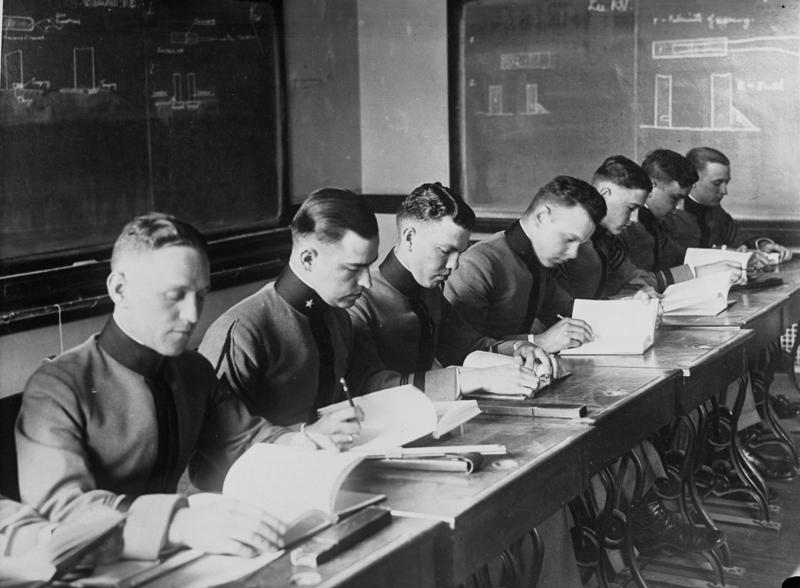
West Point Classroom, German Federal Archives, by permission

Aktuelle-Bilder-Centrale, Georg Pahl (Bild 102)

Posts navigation

← Older Entries
Newer Entries →
  • Recent Posts

    • A Sea Change
    • La Alcaldesa
    • But, How?
    • In at the Deep End
    • December 5 – “Savior”
  • Recent Comments

    safelake's avatarsafelake on April 28 – “. . . With Y…
    safelake's avatarsafelake on March 6 – D. T. M. (Divine Tim…
    Cor Unum Abbey's avatarCor Unum Abbey on February 26 – What Nuns B…
    di french's avatardi french on February 26 – What Nuns B…
    Cor Unum Abbey's avatarCor Unum Abbey on February 26 – What Nuns B…
  • Archives

    • August 2024
    • February 2024
    • December 2018
    • January 2017
    • March 2016
    • November 2015
    • September 2015
    • April 2015
    • March 2015
    • February 2015
    • January 2015
    • November 2014
    • October 2014
    • September 2014
    • August 2014
    • July 2014
    • June 2014
    • May 2014
    • April 2014
    • March 2014
    • February 2014
    • January 2014
    • June 2013
    • May 2013
  • Categories

    • "Dieu et Mon Droit"
    • 40 Days of Prayer for America
    • devotional life
    • devotional material
    • monasticism
    • personal monasticism
    • Prayer for the oppressed
    • purpose in life
    • Spiritual disciplines
    • Spiritual warfare, Prayer for loved ones, Prayer for the nation
    • Thanksgiving
    • The Coronation of Elizabeth II
    • Uncategorized
  • Upcoming Events

  • Meta

    • Create account
    • Log in
    • Entries feed
    • Comments feed
    • WordPress.com
Blog at WordPress.com.
Cor Unum Abbey
Blog at WordPress.com.
  • Subscribe Subscribed
    • Cor Unum Abbey
    • Already have a WordPress.com account? Log in now.
    • Cor Unum Abbey
    • Subscribe Subscribed
    • Sign up
    • Log in
    • Report this content
    • View site in Reader
    • Manage subscriptions
    • Collapse this bar
 

Loading Comments...