
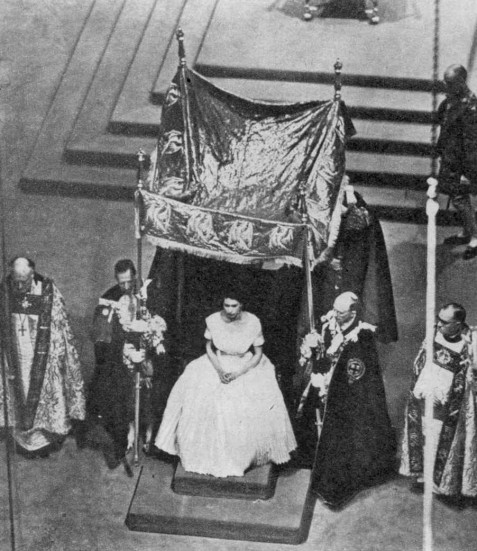
Brian Barker made note that the atmosphere in the Abbey had changed palpably. Now those in attendance were participants. The cry had gone up to heaven: “God save Queen Elizabeth!” Mr. Barker wrote too, that what he saw was indescribable. He recorded the sights and sounds and even the nuances of that day, but we believe him when he indicates . . . one would have had to “be there” to experience sanctity and the full impact of this God/man/monarch moment. We, however, are not estranged from the sanctity of a high and spiritual vocation. We are called to bear the image of Christ to the world around us, to be loved by God with the very same love He has for His Son. (John 15:9)
Elizabeth had returned to be seated in her Chair of Estate, and now she would have administered to her the oaths for which she had come.
“Madam, is Your Majesty willing to take the Oath?”
“I am willing.”
Her part was to “solemnly promise and swear” to govern as far as her rightful influence reigned, according to the “respective laws and customs” of her Kingdom, the Commonwealth, her Possessions, and Territories.
“I solemnly promise so to do,” she answered.
Can this swearing of oaths have any touch upon our lives? We know that it can. We promise in marriage, and with that promise comes the obligations of love and honor and the unspoken but patently implied promise to raise children as a credit to those vows. We sign contracts when we start new jobs. The military enforces oaths that bind its members to separations and deprivations and even confrontation with death, for the purposes of the service of the nation.
Some of the most prestigious jobs come with the most binding oaths. We may envy those who hold high positions in government, law, medicine, emergency services, and science, but if they live up to their oaths, they are not their own, to do as they please, unless they please and study to do well.
Here is an interesting vow, taken of old by practitioners of medicine, the ancient Hippocratic oath. After swearing by several gods and goddesses, and making them witness, the oath began by accepting one’s teachers as one’s own parents, and then:
To apply dietetic measure and keep patients from harm and injustice
To give no deadly drug to anybody if asked for it, nor make a suggestion to that effect, nor to give any woman an abortive remedy; to guard in purity and holiness this life and art.
Never to use the knife, but to defer to surgeons.
To visit houses for the benefit of the sick, remaining free from all intentional injustice and all mischief particularly sexual relations with both male and female, slaves or free.
Anything seen or heard in the course in regard to the life of men, which on no account must be spread abroad, “I will keep to myself, holding such things shameful to be spoken about.”
The oath ends with a petition for the enjoyment of life and art, honor and fame if the oath is kept, and if not, for the opposite.
There is an altered form of this oath that is taken by 98% of American medical students, without legal obligation.
***
The Archbishop next asked, “Will you to your power cause Law and Justice in Mercy, to be executed in all your judgments.”
“I will.” When a man broke into the Palace and appeared in her Majesty’s bedroom, in light of his mental condition, the charges were dropped. That was only a most public demonstration of royal mercy.
The British sovereign is sworn to maintain the Protestant Reformed Religion established by law and to uphold all rights and privileges that pertain to the clergy. At one time a necessary precaution, there are those who suppose this centuries-old vow will not survive the next coronation, but Elizabeth has been both a guarded the Christian faith and welcomed others under its protection. She was asked, “Will you maintain and preserve inviolably the settlement of the Church of England, and the doctrine, worship, discipline, and government thereof, as by law established …”
“I will,” was her answer. She has also given herself to the task of healing the wounds between Protestants and Catholics in both Great Britain and Ireland. She is and in truth has been, the Sovereign of the United Kingdom. Vows are delicate things, with bands of steel. The best vows keep us more than we keep them.
Many of us, however, made no vows on our way to faith in the Lord Jesus Christ, and have made few if any since we have been here! Yet, as He said, it is only necessary for us to let our “Yes,” be yes and our “No,” be no. He takes us at our word. He takes our decisions seriously. He does us the tremendous honor of trusting that we mean what we say. This is a glorious thing, for He knows our weaknesses, and He sees every turning, even the ones that are hidden in our hearts.
The whole world attended upon Elizabeth’s vows as television entered its glory days, but ours are attended by angels, if we will make them.
“I will give thee thanks forever …” (David to the Lord, Psalm 52:9)
“I will not be afraid; What can man do unto me?” (Psalm 56:11)
“I will bless Thee while I live.” (Psalm 63:4)
We can say with others,
“All things are lawful for me; but I will not be brought under the power of any.” (Paul, 1 Corinthians 6:12)
We can turn instructions and commandments into affirmation:
“I will love you with all my heart and soul and mind and strength, and my neighbor as myself!” (Matthew 10:27, 28)
We sometimes exercise an unworthy timidity. We look, for instance, at those words in Matthew, chapter 10, we recognize that our love for God is not whole in mind or strength or soul or heart, it isn’t what we wish it was, and so that God won’t smite us, we make no declaration at all. Having made no firm commitment, we drift along hoping that a blaze of faith or hope or peace will radiate us one day.
God takes us at our Word, and He sends His Word and His Spirit to bring our words to pass. “I will bless the Lord at all times; His praise shall continually be in my mouth! My soul shall make her boast in the Lord … the humble will hear of it and be glad!” We may speak as those who determine it shall be so, and God in His faithfulness will make it so, if we will not faint or turn back
We may make and preserve the oaths of our crowning daily. As surely as we are crowned with loving kindness and compassion, we may undertake to do unto others as God has done unto us!
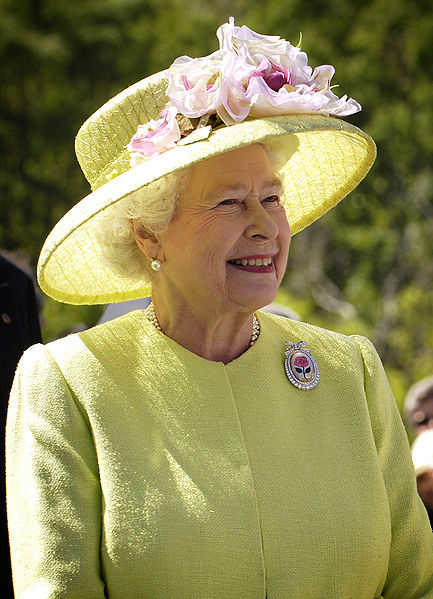
The Queen has done as she spoke, and it has been done because she spoke.
public domain, NASA photo



 Cor Unum Abbey