Cor Unum Abbey

Marketplace Monasticism … How to Live in a Downtown Abbey

  • About
  • July 9 – Sacred Simplicity

Introduction to Marketplace Monastics – Part Two

Posted by Cor Unum Abbey on February 24, 2015
Posted in: devotional life, monasticism, purpose in life, Spiritual disciplines. Leave a comment

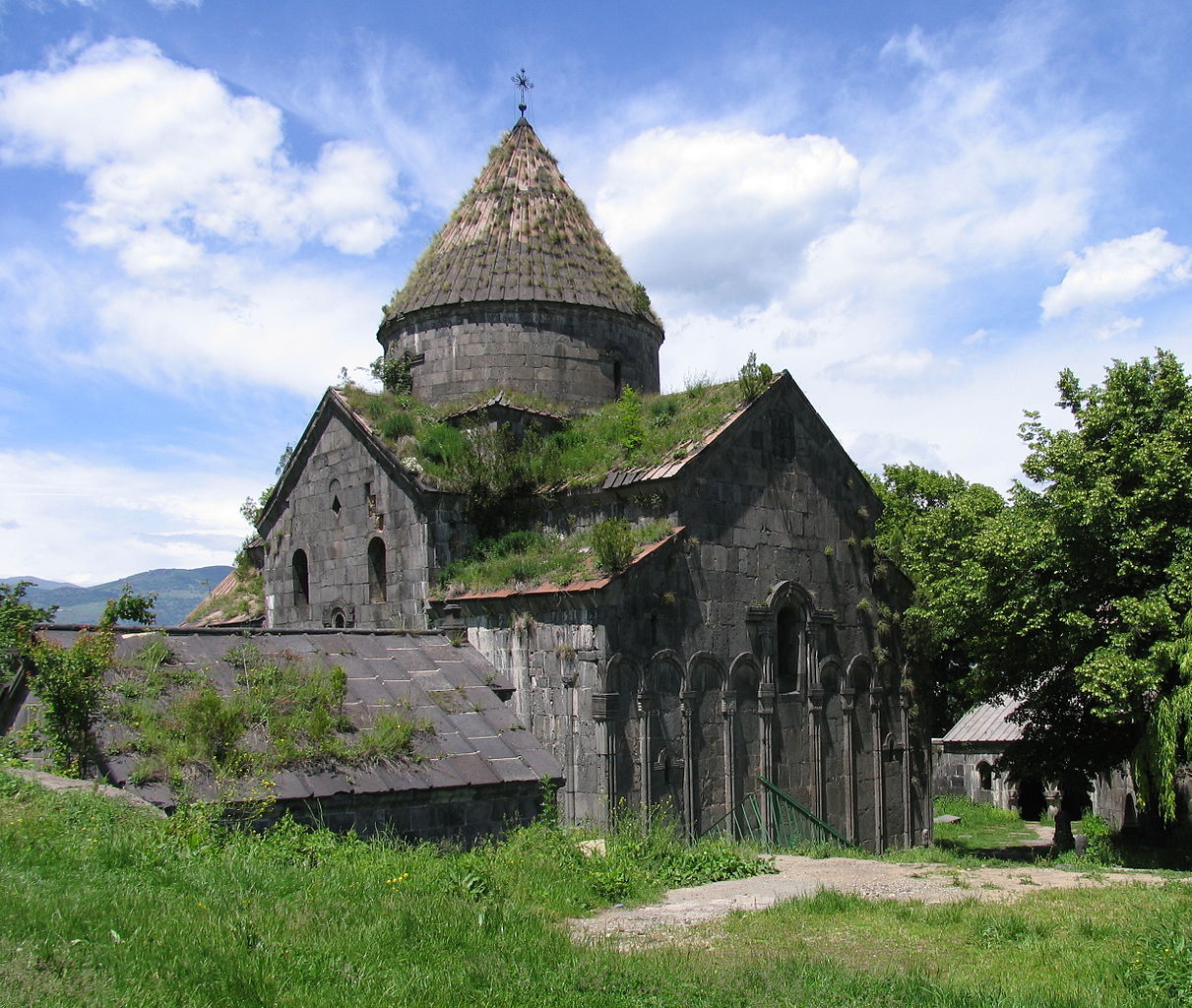
1211px-Sanahin_Monastery

Many of us have had or do have children or employees under our watch-care. How often have we expected of them an adherence to simple rules that we ourselves did not emulate in our private lives?

“Eat your vegetables,” “brush your teeth,” “finish your homework,” and of course, “If you can’t say something nice about someone, don’t say anything at all!” … while we ourselves struggled with the effects of poor nutritional choices and a crushing disorganization or a damaging tendency to gossip? All could have been repaired long ago if we had been obedient to our own good sense. “Eat your vegetables,” “brush your teeth,” “finish your homework,” is to them what “drink less coffee,” “get proper sleep,” “be on time,” and “don’t gossip” ought to be to us.

Here in this Abbey, change will take place, most of it gradually, and all of it in the direction of a closer walk with God, enhanced personal relationships, and a much more effectual life of prayer. We will begin to dwell in Christ in that settled down way that depends upon hearing and obeying, and upon the cultivation of an unfeigned love, of peace, and of joy.

Second rule of Cor Unum Abbey – You, in Christ, are the Superior of the monastery of your heart … and His Spirit will lead you in triumph.

How many, how colorful, how right, how desirable are the Lord’s strictures to us concerning personal responsibility! They range from the commandments given in the wilderness, from which we are not exempt until the law is fulfilled in love (Matthew 5:;17-20), to words that command the impossible:

Deuteronomy 28:1-7 … “And if you faithfully obey the voice of the Lord your God, being careful to do all his commandments that I command you today, the Lord your God will set you high above all the nations of the earth. And all these blessings shall come upon you and overtake you, if you obey the voice of the Lord your God. Blessed shall you be in the city, and blessed shall you be in the field. Blessed shall be the fruit of your womb and the fruit of your ground and the fruit of your cattle, the increase of your herds and the young of your flock. Blessed shall be your basket and your kneading bowl. Blessed shall you be when you come in, and blessed shall you be when you go out. “The Lord will cause your enemies who rise against you to be defeated before you. They shall come out against you one way and flee before you seven ways. (esv)

Luke 10:27 … And he answered, “You shall love the Lord your God with all your heart and with all your soul and with all your strength and with all your mind, and your neighbor as yourself.” (esv)

We know our love for God is not as whole as it could be, we know that we are not yet made perfect in love, but we don’t excuse ourselves from the pursuit, from the race … from the arena. As the Holy Spirit is given to help and inspire and strengthen, we enter into the training about which Paul spoke. (I like thinking of Paul as a man who knew how to “put up his dukes”!) There has never been a coach to compare with the Holy Spirit of God. He tells us how to make the wind work for us on every vault toward greater kindness. He goads us to run a little further or a little faster and tells us which spiritual muscles to call into greater service. He makes sure, if we will submit to his oversight, that we are properly nourished and rested, at least in Christ Jesus our Lord. What a heartbreak it would be to discover how far we might have gone with His instruction and preparation, if only we had shown up for practice!

Accordingly, I don’t run aimlessly but straight for the finish line; I don’t shadow-box but try to make every punch count. (1 Corinthians 9:226, CJB)

There is no fear in love. But perfect love drives out fear . . . (1John 4:18, NIV)

We will remember continually that we are called to seek the Presence of the Lord and to find our pleasure in His nearness. Anyone might balk at the idea of doing more than an already busy life can manage, but it is invigorating to see the difference it makes when at last we put Christ Jesus first, when He has preeminence over all things, and not with lip-service only. Time begins to warp into plenty of time; effort begins to rejoice rather than repress our hearts, in the middle of grave difficulties, we catch ourselves smiling a knowing smile … indeed, we have been chosen to bear the image of our Lord in this life.

Those who are true monastics know that nothing must be practiced that takes away from the rightful joys and sanctity of marriage or parenthood or the honor of work and responsibility. No, the inclusion of a personal Divine Office, if it is really divine, enhances life and relationships. We seek the life to be found in that close place, that closet, of which the Lord Jesus spoke, the life that is manifest when we learn to find God here and find Him now and then begin to display the open reward of the discovery.

“But you, when you pray, go into your inner room, close your door and pray to your Father who is in secret, and your Father who sees what is done in secret will reward you. (Matthew 6:6, NASB)

Trust in the Lord and do good;

dwell in the land and enjoy safe pasture.

Take delight in the Lord,

and he will give you the desires of your heart.

Commit your way to the Lord;

trust in him and he will do this:

He will make your righteous reward shine like the dawn,

your vindication like the noonday sun. (Psalm 37:3-6, NIV)

Much more than petitionary prayer will be discovered within these walls, of course. Marketplace Monastics have given up other things in order so to live, but they live well by happy standards, and what they do without is nothing that, in Christ, they would wish to retain. Family and fellowship and feasting and fun are all to be had – and let no one tell you that cloistered nuns do not enjoy all of those, as well, if perhaps on a smaller dietary scale!

Monastic pleasures are, to some degree, measured for those we will call “real” nuns, but the grand weight on the other side of the scale is practiced devotion to God and a boundless sense of His Nearness. They have, as Mother Mary Francis wrote, “a right to be merry,” as do we, the monastics of Cor Unum Abbey.

For us, when we set out to live lives of unfeigned devotion, some things will have to be replaced, because our lives are always full of whatever we do every day, even if it is patently nothing. For many it is overwork, for some it is excessive leisure and play, and for many, many others it is ennui, that elusive nothingness that makes one old and sad and useless and gives no account for itself.

Kiss that goodbye. We are meant to be ripe like fruit, lovely and luscious fruit on a healthy vine. The tomatoes in the garden or the potted plants on the back porch tell us, too many days without water will scorch the life out of a prize show of fruit or flower. We can learn much if we will investigate what it is that the monastics of this world, those in and those outside the cloister, do with the twenty-four hours they are given, for they certainly do find the spout of Living Water and plant themselves beneath.

We will look into many such lives, but above all, we will start living them!

Lest we be tempted in any way to say, “Some can, but I cannot,” the profound hope woven into these pages is that nothing will be written that cannot be catalogued under the express will and purpose of God … that we should seek Him with our whole hearts and love Him, heart and soul and mind and strength, and our neighbors as ourselves, and that we should take our places abiding in Christ and His Word in us. That we should learn to lose our souls that they might be found. All this must be possible to butcher and baker and candle-stick maker, to wife and mother, husband and father, to widows and college students, single parents and single men and women, even to those wondering in their hearts, where and how long before their hearts find a home. We may have this life of fruitfulness in and toward Christ Jesus, if we will.

Let us begin with this revelation from the Word of God: truly, hope deferred makes the heart sick. It is up to us to defer our hope no longer. Happily or tragically married or single, imprisoned or impaired, never was real hope to be found in any other than Christ Jesus and His Kingdom within our hearts. The one who seeks God and His astonishing Kingdom, will find.

Not only in Bethlehem, Connecticut, within the wall of Regina Laudis Abbey, but in many of the more enduring orders, it has been the more exacting practices that have prevailed, and a spot of exactitude might help us all, here in the workaday world they left behind. Let us follow a young postulant into cloister, and see if we, too, might not benefit from the manifold joys of a more disciplined devotional life.

The ancient monastery (10th century) of Sanahin, in Armenia

hansdewaele, by permission, Wikipedia

The Introduction …. Marketplace Monastics

Posted by Cor Unum Abbey on February 20, 2015
Posted in: Uncategorized. Tagged: Buckfast Abbey, devotional life, Divine Office, monasticism, nuns, Regina Laudis Abbey. Leave a comment

Buckfast_Abbey_-_geograph.org.uk_-_932824

Every evening, in Bethlehem, Connecticut, forty Benedictine nuns settle into the Night Silence that follows Compline, the last Office of the day. All speech is curtailed but for the prayer and praise of Matins at 1:50 a.m., then the profound monastic silence continues until well after daybreak.

Forty is rather a large community in this day and time. One cannot help wondering how it is that this monastery (Benedictine nuns live in monasteries, not convents) seems to be thriving when compared with many others. Perhaps it is because Delores Hart is cloistered there.

Mother Delores has become something of a monastic celebrity. She was a beautiful Hollywood ingénue in the 1950’s, just beginning a meteoric rise to fame. She made ten films, gave Elvis Presley his first on-screen kiss, and enjoyed tremendous success on Broadway before a day trip to Regina Laudis set in motion a change of vocation. From starlet to postulant to Professed Nun, she is still the only cloistered monastic who receives a ballot from the Screen Actors Guild every year when the Oscar nominations are announced!

Although a charming documentary of Mother Delores’ life was nominated for an Oscar, the nuns and superiors of Regina Laudis attribute the permanency of this monastery to, of all things, the fact that the nuns maintain a traditional approach to monasticism. They wear the full habit, a practice nearly lost since the councils of Vatican II, and they sing and pray the Divine Office in its entirety, in Latin, in Gregorian chant, every day. Many religious orders have curtailed their Office to only two or three communal gatherings, sometimes optional. Mother Duss, the founding Superior of Regina Laudis Abbey, said that she was intuitively certain that the ancient paths were the ones marked out for her Sisters. It seems she knew what she was talking about.

What now has any of this, the success or failure, indeed the existence or dissolution, of the Abbey to do with you or me? Of what interest to us are habits, long, short, full or forgotten, of what manner of intrigue or matter of importance is it to us whether nuns in Bethlehem, Connecticut or Bethlehem, Israel (and there are convents there) sing or chant, pray or maintain silence?

It is this. While these women and others like them, men and women all over the world, are living lives of intense prayer and praise on purpose and continually, learning to hallow and appreciate the nearness of God every hour of every day, they in their cloisters are not alone.

A tiny fragment of society, they are joined by hundreds of thousands of others in all walks of life, still a tiny slice of the population pie, but just as devoted within the confines of their workaday vocations as the nuns of Regina Laudis are in theirs. These “marketplace monastics” have learned the delights of devotion and the dignity of self-discipline. Across the board, they make no claim to have become experts in their chosen pursuit; first they chose, and then they learned to follow hard after the Lord they love.

These urban professionals, these young mothers and older widows and college students and “still single” men and women are the monks and nuns on their block, living in townhomes and tenements, in the suburbs and the outback. Some are Catholic, and there is a sweeping move of Catholic oblates who take their at-home monasticism very seriously, but others are just believing Christians who want to make sure their prayers are “without ceasing” and that they are faithful in worship and thanksgiving and stillness along the way. Some have fit devotion into their marriages and professions and parenthood and some have fit it into solitude and loneliness. If you are alone, if your life has taken a turn into widowhood or divorce or if you have remained single stretching over more years than ever you would have imagined, there is a place for you in this Abbey. This is Cor Unum Abbey, the abbey of the heart.

Do not imagine that crossing the threshold means you can never marry or that you can never again go out to dinner with friends. Do not imagine that if you choose to remain single and begin to want to stay so, that you cannot dwell here in fullness of joy all the days of your life. This cloister is founded upon Jesus’ words in the fourteenth chapter of John, words perhaps all too often misunderstood.

“Do not let your hearts be troubled. You believe in God; believe also in me.  My Father’s house has many rooms; if that were not so, would I have told you that I am going there to prepare a place for you?  And if I go and prepare a place for you, I will come back and take you to be with me that you also may be where I am. (John 14:1-3, NIV)


We often hear these verses quoted from the King James translation … “In My Father’s house are many mansions,” and we do like the sound of that, but Jesus did not go to the cross or return to heaven to build ornate palaces for us … there may be splendid ones in heaven (or there may not,) but that is not the place prepared by the finished work of Jesus Christ on the cross of our salvation. The preparation of which the Lord speaks was that which made ready a way that we might dwell in Him and He in us, an accomplishment which is light-years beyond any architectural magnificence, on earth or in heaven.

First rule of Cor Unum Abbey …. Jesus Himself is our cloister, and we make our hearts a dwelling place for His abiding. (John 15: 4 and 7)

One of the most well-known of those who founded religious orders was St. Benedict, who wrote his “Rule” that others who chose to live together in their pursuit of the Lord might do so as effectively and righteously as possible. Many others followed, among them St. Francis and St Clare and Finnian of Clonard, in Ireland. Many serious-minded seekers after faith and righteousness left record of a written, personal “rule.” George Washington had one, a guide for living a life of integrity, and among his peers he stood out, unequaled in their eyes. Marines and West Point Cadets have Codes of Honor and of Conduct, and so do physicians and fire fighters and nurses and brick-layers, too, when they are at the top of their field.

If you look up “code of conduct” on the internet, you will see everything from a Jedi Code (the Wookieepedia) to rules for Sharia law. In between are such things as “May I Shake the Lady’s Hand,” an expose on Hebrew cultural manners, and a code of ethics for those who work on Mercy Ships, bringing medicine and surgical care into Third World countries. Of particular interest is an article that stresses the importance of introducing a moral code to children at a tender age, suitable for their years.

In this sanctuary, we order our lives according to the leading of the Holy Spirit upon our own hearts; the only Superior here is one’s own ability to listen and obey as God leads us onward. Ever in keeping with the written Word of God, for us it’s rather like making good resolutions each New Year and actually keeping them. Where the Bible addresses “surfeiting” and “buffeting the body” and watchfulness with “prayer and fasting,” we make a start, with small steps in a right direction. Excesses of discipline and excesses of lethargy and laziness are both ungodly, so we keep to a humble path. It is humbling to keep going with only the smallest of successes, and it is humbling to come to terms with how hard our “flesh” will fight to be free from any spiritual progress whatsoever.

There are monks and nuns in “real” monasteries that have paved the way and greatly helped us, if we are willing to learn from them, but so too dedicated athletes, like the gymnasts and swimmers and runners we watch in the Olympics. How fascinating it is to think that one might spend years of one’s life and hundreds of thousands of dollars, training to take part in a competition that will be decided by mili-seconds and centimeters! That’s dedication!

Like the Marines, we will become a no excuses kind of Abbey, but ever in the ways that suit our individual lives and our calling in the Lord. The goal is progress toward life in Christ, toward bearing His image on the earth and giving Him the response of love and worship that ought to be His alone.  We proceed sometimes by inches more than leagues, but we press on.

Buckfast Abbey, Devon, England

Community of Roman Catholic Benedictine Monks

photo by Sarah Charlesworth, by permission, Wikipedia, Creative Commons

January 6 – Day Six – Forget the Fairytale

Posted by Cor Unum Abbey on January 6, 2015
Posted in: Uncategorized. Leave a comment

Cor Unum Abbey's avatarMarketplace Monastics

800px-Staff_Call_Bells_(7964118810)

Modest, dutiful servant girl seems perhaps to have caught the eye of the master of the house.   Love and relationship between upstairs and down are as far from the confines of reality as they can be. She must not even indulge the hope that he might someday take a valid interest in her; wishing isn’t forbidden, but it is dangerous and foolish and inadvisable. She thinks perhaps he has noticed her, but she will not risk her life and livelihood to find out. She cannot afford to flirt, and he cannot afford to love.

That’s the televised version.  Here in Cor Unum, we are the chosen handmaidens of One who is absolute Master and Majesty. Neither in literature nor in all history is there any chasm as deep or as wide as that which ought to separate us from His glory. Aristocrat? He is Autocrat of the universe! This is not…

View original post 500 more words

November 21 – First, Gratitude

Posted by Cor Unum Abbey on November 21, 2014
Posted in: Uncategorized. Leave a comment

Prayer-Before-the-Meal

Now that we have considered the rudiments of our Advent Fast, let us return to the happy celebration at hand – it’s Thanksgiving!, or it will be soon, and here in Cor Unum Abbey, we are filled with gratitude.

Please be so kind, if you feel you are not quite in that frame of mind, to trust that gratitude belongs to you, too. Thankfulness is not withheld from us, thanks be to God! Sometimes we must wait to see the answer to our prayers, at least until we learn to see them by faith and to believe that we receive what we have asked (Mark 11:24, 25)

            “Therefore I tell you, whatever you ask for in prayer, believe that you have received it, and it will be yours.  And when you stand praying, if you hold anything against anyone, forgive them, so that your Father in heaven may forgive you your sins.”

All of this, all of life, all of destiny, has so much to do with believing that God loves us enough. If there are any cracks or fissures, we fill them in believing that God loves others just as much! If neither we nor they live up to the love of God, we give thanks all the more, because His love does not fail, it does not ebb and flow, He does not offer His love like a carrot with which to catch a rabbit.

Oh, let us look to Jesus and be glad! His was the perfect demonstration – the Father loves us! To the gift and sacrifice of His own and His only begotten Son, He loves us. While we were yet sinners, Christ died for us! How much more will His love prepare us and bring us into the Presence of the Living God!

Here I share with you a personal word … gratitude will change your lives, my dear ones! Gratitude can save your life. I will tell you a story next Monday, a true one at that, of how it came to be that we practice deep, daily thanksgiving here in Cor Unum Abbey. In the meantime, if it pleases you, perhaps you will see if you can fill up these last days before Thanksgiving with … thanksgiving! You will be glad you did.

“Prayer Before the Meal”

Vincent van Gogh, 1882

public domain

November 19 – “Real” Advent

Posted by Cor Unum Abbey on November 19, 2014
Posted in: Uncategorized. Leave a comment

cropped-Journey-of-Magi.james-tissot.public-domain

Funny enough, and indicative of our times and culture, we think of the Advent Season as the coming of Christmas, the advent of the holidays and all the fun and joy we anticipate. As we grow older, we calculate in the expense and the trouble, and depending upon our personalities, we give ourselves a reality check or two.

If we celebrate Advent with the lighting of candles and the reading of Scripture, it lends a certain depth to the season and creates beautiful memories for our children, those of us blessed to have them. What could be more beautiful, though, than a young woman or a young couple, living alone, lighting the first, then the second and third, candles of the Wreath and praying through the season. What could be more inspirational than an older man or woman, alone, preparing to dine alone, as he or she must night after night, lighting that fourth candle with joy that the celebration of the Birth of Christ is upon the world?

As with so many of the things we investigate here in Cor Unum, we want to see the deepest beauty and the truest purpose that can be found in the living of our lives. We don’t have to have Christmas at all, and some don’t, but if we have it, let it be pleasing to the Lord.

“Real” Advent is not about the coming of Christmas, however. Real Advent is about the coming of the Lord! When we see Him coming again, something profound takes place at the culmination of four weeks of readiness. Not a rapture theology, but a true reminder that He who was born in humility will come again in glory, a concentrated devotional season spent looking for the Return of the King, we travel with the shepherds to the stable where it all began. Like the Magi who were on their way to Him, on their way to pay homage to His Majesty, we will see the Babe as He ought to be seen, and certainly He will be far more to us than the religious ornament on our tree, the crèche in the midst of all our candy canes and sugar cookies.

Like everything else in this Abbey and everything else in life, Christmas will be what we make of it. We can subtract some things and end up with more. We can have loads and loads of fluff, but still find the One of Whom the prophets wrote and the angels sang.

Choose, if you will, your Advent fast. Let it be simple and appropriate for the season, as you must spend it. “No sweets” might be difficult; “no sweets except in company” is doable. We might read a little less to allow a little more time to watch beautiful holiday movies, although one of us reads through the Lord of the Rings trilogy every year for all the spiritual significance it evokes. Perhaps the best part of an Advent Fast would be the keeping of the Advent tradition, the lighting of the candles and the reading of Scripture from an appropriate book … many have been written for the purpose. The Abbess hopes that these daily texts will be pertinent and meaningful and memorable for all of us. Stay tuned …

The Journey of the Magi

James Tissot, by permission

public domain

November 17 – The Advent Fast

Posted by Cor Unum Abbey on November 19, 2014
Posted in: Uncategorized. Leave a comment

Christkindl Market - Nuremberg - Bavaria - Germany

We are entering the ninth fast of our Cor Unum year, the Advent Fast. The days of each year conveniently totaling 365, we enjoy nine forty-day fasts, with five days remaining at the end of December for reflection and strategizing for the New Year.

As with all things here, this is a personal matter. Forty days without food has never been attempted and isn’t on the horizon! … but we have spent forty days without television and another forty days without desserts and forty days without complaining, and we have gone forty days with extra and concentrated thanksgiving and forty days with ongoing prayer for someone in great need and forty days with increased worship and focus on a particular passage of Scripture.

It is all that simple, and while not always easy, it is never difficult beyond delightful.

Let us be reminded of a most monastic practicality: sometimes in order NOT TO DO LESS, it helps us to devote ourselves to more. Sometimes? Really, for us, that is the cloistered credo, the choice of our consecration. If we were not here, we would be doing much less outside these walls. Instead, we ever call to mind in all we do that “here” we are hidden in the quiet temple of our souls with the abiding Presence of Jesus Christ by the Holy Spirit, and we are here to enjoy our Lord.

So, Advent begins. Its official start will be Sunday, November 30, the First Sunday of Advent, four Sundays before Christmas. Get your Advent Wreaths ready, for we will celebrate traditionally, too, as many as wish to join in, but we always start a little early, with a little preparation before the preparation. Our Thanksgiving Fast is ended, but Thanksgiving is yet to come, so we have a bit of a blending of these two most joyous seasons, these seasons of sharing, giving, of family and pleasures and great gratitude.

What would you wish your Advent fast to look like? In all the planning and making ready before Christmas, with all the baking, buying, busy-ness, and beauty of the season, how will you make sure that the Lord doesn’t go begging … for your company? Of course we know, He doesn’t. He doesn’t need us, He just wants us. We see ourselves, in hope, like the woman who “wasted” the contents of her alabaster jar on her Lord. He doesn’t need anointing for burial either, halleluiah! Heaven is fragrant without our praise! Perhaps we are perfuming Him for His next Advent, His Soon Coming, no matter the length of days beforehand.

But consider this, my dear ones … that while heaven does not require the aroma of our praise and our prayers, it is somehow, gloriously, wonderfully, MORE FRAGRANT with it! It could be truly said that it would not be the same without it! Don’t you think that this might be a moment when the Abbess could rightly say, “Enough said!”

October 10 – What Hegai Saw

Posted by Cor Unum Abbey on October 10, 2014
Posted in: Uncategorized. Leave a comment

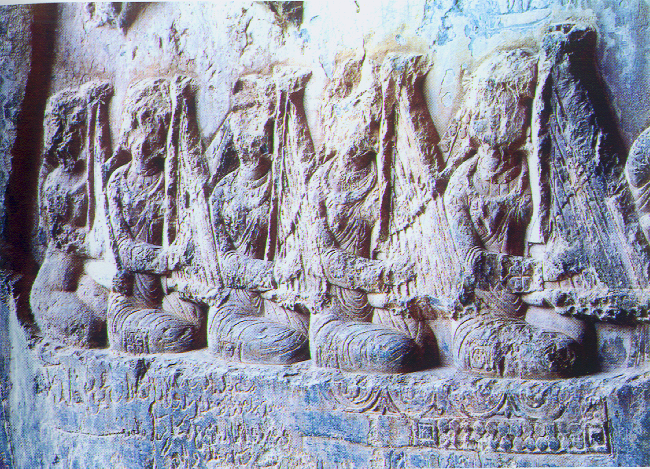
Harp-Sassanid

So it came about when the command and decree of the king were heard and many young ladies were gathered to the citadel of Susa into the custody of Hegai, that Esther was taken to the king’s palace into the custody of Hegai, who was in charge of the women.  Now the young lady pleased him and found favor with him. So he quickly provided her with her cosmetics and food, gave her seven choice maids from the king’s palace and transferred her and her maids to the best place in the harem.   (Esther 2:8,, NASB)


Esther seems to have been favored from the start, chosen from among many others, and before all her graces and gifts could have been fully known. Again, we believe there must have been “something about her.”   Let’s take another look at this concept.

We know there are at least a couple of things that stand out to us. First, she was bereaved, an orphan and a captive, now twice a captive, but she put her trust in Mordecai; she respected the will and the power of her protector. We can do that!

She might have said he hadn’t done the best job protecting her – here she was in Persia and now in the harem of the king!  No.  Esther brought with her something besides fear and bitterness and recrimination, or calculating greed and lasciviousness. We have reason to suspect a certain innocence about her, and as a Jew whose sins were confessed and atoned for, that would make her a stand-out in her culture and time, more than we tend to appreciate. After all, in our world, there’s a church on every corner and evangelism 24/7 on television and radio! Not so, then and there. In her day, people carried their sin and the weight and burden of guilt and iniquity, or they offered them up to demons. Oh, we sometimes so little value so cataclysmic a salvation in the earth, but we can remedy that!

Esther’s unspoken, unmentioned God … the time came when she would fast and ask her maidens to do the same. Fasting is toward God and purposeful, that He would intervene and break through. She hoped to live, but the time came when she was willing to die for the sake of God’s people. We will do that, laying our lives down continually for those whom we’ve been given to love. “We die daily,” as the Scripture says, and yet we live. We can fulfill that honorable role. For us to live is Christ and to die, even by inches, is gain! The woman who later was willing to perish for the sake of God’s own was the woman Hegai saw and honored and trained and blessed and favored and supplied with every good thing.

We may be that … we may live now as those who lay down our lives for the sake of the Gospel of Jesus Christ. Living and dying, it will set us apart.

Persian Women Playing Harps

photo by Amir85, Wikipedia, by permission


October 8 – Content in the Secret Place

Posted by Cor Unum Abbey on October 8, 2014
Posted in: Uncategorized. Leave a comment

Convent-Garden

         We also have an enemy, determined beyond any other impulse or any other gain to achieve our ruin. His quarrel is not with us, primarily, but with the One who will not make way for Him, the One who saw him fall from heaven as lightning. As often happens in this kingdom, that mail has come to our address. The Court of the Women in King Xerxes’ palace in Susa was not a harem to Esther; it was a monastery. She was alone there with God. Perhaps one reason why Jehovah gets not one mention in this story is to give us a sense of what it was like for her. It was not only the Unspoken Name of God that could not be uttered, but she could not whisper Elohim or El Elyon or Jehovah Shammah or Jehovah Jireh or any of the names by which her people knew Him. It was “radio silence” in the palace.

Hebrew prayers exalt the Name of God, as do the Blessings over food and worship and work. Not for Esther. When she needed Him most, she might have felt Him most distant, but when we consider her faith and her faith in action, we know she did not abandon the truth she had known from her infancy. God is the God of Israel, the God of the families of Israel, even if that family is one exiled man and his orphaned cousin. Israel was God’s chosen people, and that reality had not been cast aside in Esther’s heart. We cannot know what temptations to doubt or despair might have come her way, but we can be sure that she did not give way to those foolish and fiendish fears that would have prompted Hegai to invest his preferences elsewhere.

Haman’s downfall, as was that of his puppet master, Satan, was his overweening need for prestige and promotion, to be seen as greatest and highest. Meanwhile, Esther was content to be unknown, to conceal her identity, to do as Mordecai asked, to trust and maintain a quiet hope. Life lessons abound inside Esther’s monastery for all of us here in Cor Unum, the monastery of the heart.

Convent Garden, Quito, Ecuador courtesy of Rodney Dodig  

October 7 – What Was It About Her?

Posted by Cor Unum Abbey on October 7, 2014
Posted in: Uncategorized. Leave a comment

 Glaspalast_München_1890_073

We are asking ourselves the question, what was it about Hadassah, Esther as she was known, that made her such a stand-out among the other maidens? We ought not to presume that she was poor, but we have no reason to suppose, as an exiled Jew, that she was rich. Certainly, if any parents or relatives were able to buy back their daughters from the king’s agents, and there is no record in the Scripture of any such thing, Mordecai did not.

We know that her secret kept her separated her from the other girls, as secrets will do, and her religion and her faith were undisclosed in the court of the women. If it was her religion that kept her apart, it stands to reason that a Jewish maiden, raised according to the laws of God and the customs of His chosen people, with as much or even the smallest bit of nearness to Him through observance of the law and the celebration of Passover and the other Hebrew feasts, that Esther did have something they did not, apart from beauty and talent. She had God, and even the aroma of true God has freshness, reality, and intrigue above those things that are as old and tired and lifeless as the earth can bring forth.

Mordecai was not actually Esther’s uncle, although that’s how we refer to him. He was her cousin. Esther 2:7 says of him:

He was bringing up Hadassah, that is Esther, his uncle’s daughter, for she had no father or mother. Now the young lady was beautiful of form and face, and when her father and her mother died, Mordecai took her as his own daughter.

It rather seems that Mordecai might have taken her for his wife, but happily for the history of the Jews, he did not. One thing Esther must have known was that she was loved and cared for, quite unselfishly it does appear. That would have to have helped form her character as well.

Can we comprehend on a day-to-day basis how vast and how significant it is upon the earth that there are a people alive and living among us who know God? Taking that greatness into the nth degree, there are a people on earth in whom He is pleased to dwell. Oh, for Jesus’ sake, Father, let it not be that the only imprint we leave upon the earth is that we were glad we escaped hell, or that we “know” some truth! We are called to walk in truth, and light, and in Christ! We are here, as Esther was, though she knew it not yet, we are here to defeat the powers of darkness, to lay them waste, to pursue spiritual enemies and not turn back until they are consumed. (Psalm 18:37)

That knowledge and that determination sets us apart even more, far more, than did Esther’s secret or her lineage. Yet we manage to fit in so comfortably, sometimes, with those around us, to blend, to use a false humility to accomplish nothing of value. We need a Hegai!

Oh, my dear ones, we have a Hegai! We have a holy Hegai, we have a Mordecai, watching, even orchestrating, and we have a King, waiting, waiting for the REAL fairest in the land to come forth.

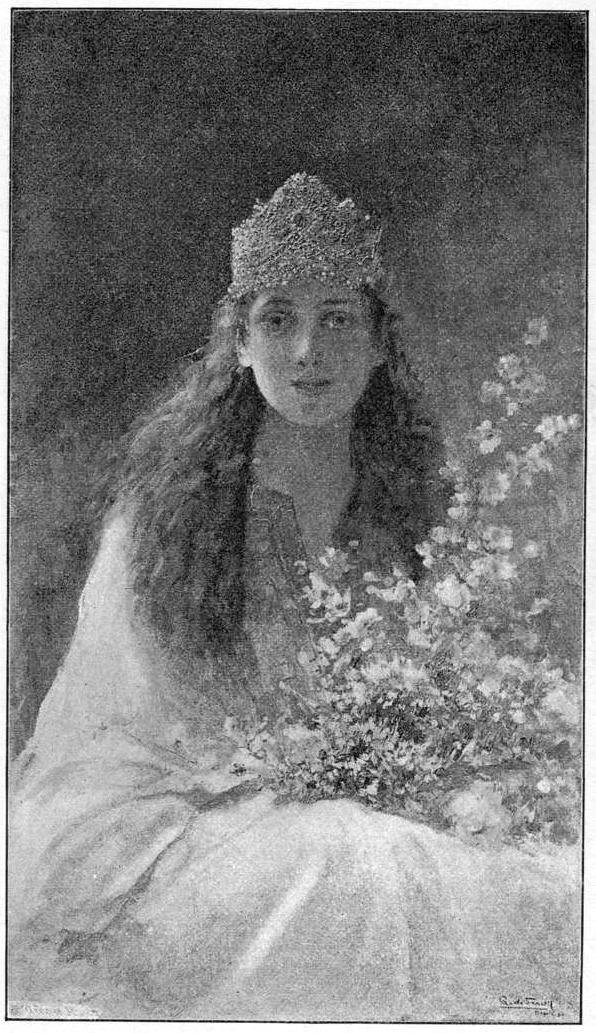
Ester

Giuseppi di Sanctis

public domain

October 3 – Dare We Say?

Posted by Cor Unum Abbey on October 3, 2014
Posted in: Uncategorized. Leave a comment

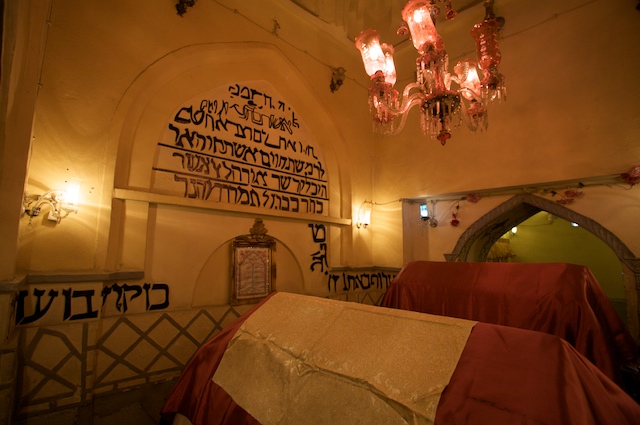
Tomb of Esther and Mordechai

Why is the Book of Esther in Scripture? An entire book dedicated to a story that, in Exodus or Judges, might have been told in a few paragraphs! What if there is more to see and more to learn in this book, this Scriptural account that never mentions “God” or “Jehovah” or “Lord,” not even in context with Israel. What of the unfailing watch-care of Mordecai? What of the unsung hero, the eunuch Hegai? One king, one kinsman, a slave and a beautiful maiden. Neither the Brothers Grimm nor Hans Christian Andersen, not Charles Perault or all writers of all the myths of Greece and Rome could pen a better story of intrigue, danger, romance, and the triumph of good over evil.

As in many of Jesus’ parables, it is possible that this account tells a deeper story than the one that is told. Jewish children hear this story every year at Purim. It is perhaps the most elaborately staged and dramatized retelling in Hebrew families, and they love the suspense and pathos and they cheer wildly when the villain, Haman, gets his just desserts. So they ought, for their ancestors may have been among those that did not perish because of Esther’s willingness to risk her life for her people.

We won’t be able to draw perfect parallels as we search the Book of Esther, but we may be able to see some elements of truth that, like any good story, are more dramatically memorable and applicable to us than first meets the eye. We may always employ truth to teach truth when the outcome is true. Let’s begin with this reality, of tremendous importance to us and to the Jewish nation: he is a Jew who is one inwardly.

True story, historical fact, stranger than truth, and very possibly all about you and me.

The Tomb of Esther and Mordecai, Hamedan, Iran Nick Taylor, by permission

Posts navigation

← Older Entries
Newer Entries →
  • Recent Posts

    • A Sea Change
    • La Alcaldesa
    • But, How?
    • In at the Deep End
    • December 5 – “Savior”
  • Recent Comments

    safelake's avatarsafelake on April 28 – “. . . With Y…
    safelake's avatarsafelake on March 6 – D. T. M. (Divine Tim…
    Cor Unum Abbey's avatarCor Unum Abbey on February 26 – What Nuns B…
    di french's avatardi french on February 26 – What Nuns B…
    Cor Unum Abbey's avatarCor Unum Abbey on February 26 – What Nuns B…
  • Archives

    • August 2024
    • February 2024
    • December 2018
    • January 2017
    • March 2016
    • November 2015
    • September 2015
    • April 2015
    • March 2015
    • February 2015
    • January 2015
    • November 2014
    • October 2014
    • September 2014
    • August 2014
    • July 2014
    • June 2014
    • May 2014
    • April 2014
    • March 2014
    • February 2014
    • January 2014
    • June 2013
    • May 2013
  • Categories

    • "Dieu et Mon Droit"
    • 40 Days of Prayer for America
    • devotional life
    • devotional material
    • monasticism
    • personal monasticism
    • Prayer for the oppressed
    • purpose in life
    • Spiritual disciplines
    • Spiritual warfare, Prayer for loved ones, Prayer for the nation
    • Thanksgiving
    • The Coronation of Elizabeth II
    • Uncategorized
  • Upcoming Events

  • Meta

    • Create account
    • Log in
    • Entries feed
    • Comments feed
    • WordPress.com
Blog at WordPress.com.
Cor Unum Abbey
Blog at WordPress.com.
  • Subscribe Subscribed
    • Cor Unum Abbey
    • Already have a WordPress.com account? Log in now.
    • Cor Unum Abbey
    • Subscribe Subscribed
    • Sign up
    • Log in
    • Report this content
    • View site in Reader
    • Manage subscriptions
    • Collapse this bar
 

Loading Comments...