Cor Unum Abbey

Marketplace Monasticism … How to Live in a Downtown Abbey

  • About
  • July 9 – Sacred Simplicity

Give thanks …

Posted by Cor Unum Abbey on November 17, 2015
Posted in: Uncategorized. Leave a comment

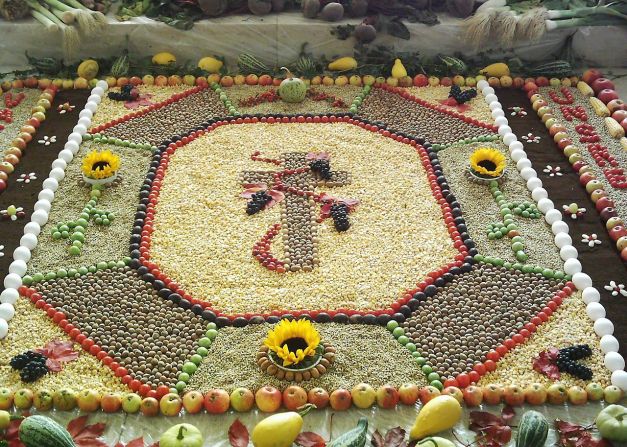
Treherz_Pfarrkirche_Erntedankteppich_2007


Today is the first day of the Cor Unum Advent Fast.

Our year is segmented into nine 40-day fasts, which totaling 360 days, leaves five days to spend in prayer and reflection for the year ahead.

Some of those fasts are as simple as “no eating between meals” or “no leisure reading.” It’s up to each, individually. Since the Lord made sure to include a chapter about the heart and the intent of fasting (Isaiah 58,) we try to make sure that what we do is what He can bless. Sometimes we skip a meal every day and spend that time in prayer. Sometimes we fast toward an outcome, as now at the beginning of the Advent Fast. From today until Thanksgiving we will be gathering a list of Bible verses that speak of thanksgiving, and meanwhile, we fast ingratitude.

Look at these words … for all their attention to the system of sacrifice, God was looking for grateful hearts in Israel as He does in us. Without it, the bringing of bulls and goats was not what it was meant to be.


“Hear, O My people, and I will speak; O Israel, I will testify against you;

I am God, your God.

“I do not reprove you for your sacrifices,

And your burnt offerings are continually before Me.

“I shall take no young bull out of your house nor male goats out of your folds.

“For every beast of the forest is Mine, The cattle on a thousand hills.

“I know every bird of the mountains, And everything that moves in the field is mine.

“If I were hungry I would not tell you, For the world is Mine, and all it contains.

“Shall I eat the flesh of bulls or drink the blood of male goats?

“Offer to God a sacrifice of thanksgiving

And pay your vows to the Most High;

Call upon Me in the day of trouble;

I shall rescue you, and you will honor Me.” (Psalm 50:7-15, NASB)


May I encourage you to dedicate this season of thanksgiving to … the giving of thanks! When we are simple and childlike enough to try it, it will change our lives. And may I say, perhaps not just online thanksgiving and the reading of seasonal posts … a daily season attached to your devotional hour, even if only two or three minutes long, of spoken gratitude, a “sacrifice of thanksgiving,” will matter more than you may be able to imagine.


The beautiful photo, rights permitted by Bene16 on Wikipedia, is a tapestry of fresh foods brought in celebration of Erntedankfest, the German Thanksgiving. While I lived there, it was a great pleasure to see and participate in the beautification of the entire altar area of our church with the best of the produce from every garden.

Charges to Keep

Posted by Cor Unum Abbey on September 9, 2015
Posted in: Uncategorized. Leave a comment

1952- Queen Elizabeth II

             On this day, Queen Elizabeth II becomes the longest reigning Monarch in British history.  In honor and celebration of the day,  here is a reminder from Wearing Majesty of how it came about and what it can mean to us.  God bless her and her family and the Commonwealth nations, bless them to know and serve Him and to attain to the true glory and majesty which are to be found in Christ Jesus, King of Kings. …. Kerry

“In the case of a will, it is necessary to prove the death of the one who made it, because a will is in force only when somebody has died; it never takes effect while the one who made it is living. (Hebrews 9:16, 17, NIV)

Elizabeth and Phillip were in Kenya when her father died. He had been recovering from surgery and illness, but had seemed to be regaining his strength. Somewhere in the night, probably in the earliest hours of February 6, he took his last breath. Far from home, unbeknownst to her or anyone else, Elizabeth’s next breath was that of a Monarch.

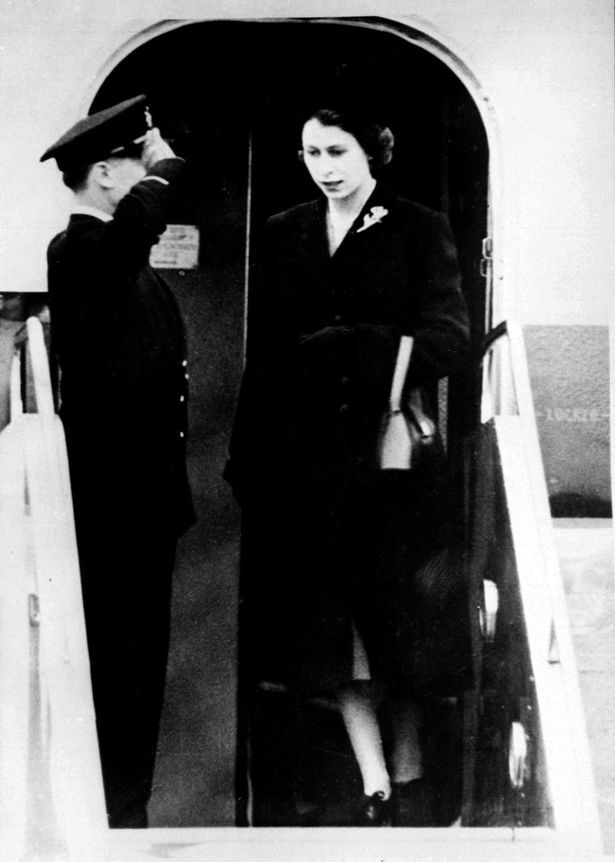
She flew home immediately, cutting short the tour she and Phillip had undertaken in his place. That night the Accession Council met in London, setting in motion the events that would proclaim her reign throughout her kingdom, lands, and dominions all over the world, but Elizabeth was only then on her way to catch a jungle plane that would take her to the next stage of her sorrowful journey home. She traveled all night and long into the next day, and at last, on February 7, she came down the steps of her BOAC aircraft to her waiting privy counselors, all dressed in black, and as she did, they bowed their heads. She, too, wore mourning clothes that had been included in her luggage, a part of the never-failing preparedness of those who serve the royal family.

“This is a very tragic homecoming,” Elizabeth said to Winston Churchill, who stood at the head of the line of her counselors, and indeed it was. The love she had for her father, indeed for all her family, was deep and true. She belonged to an immensely happy family, full of mutual love and comforts and understanding. She entered into her reign, not exulting in privilege or power, but in grief and duty.

No more would she be free to follow Phillip to Malta and live as normal a life as she had ever known as a Navy Lieutenant’s wife. No more was she The Princess Elizabeth, charming and delightful and relatively safe from censure and failure. No more would she be able to work alongside her beloved father, which had been her joy. Now she would have to stand, alone in his place. Now it was her own place, for good or ill.

It is lonely at the top, and rightly viewed, this is true at the pinnacle of every life, where no one can choose for us or do for us what must be done. There we are in solitude with the Lord. His death marked our accession, from darkness to light, from lost to found, and from shameful to sacred. The Scripture says that once we were not a people, now we are God’s own. Once we were without mercy, and now we have received mercy. Now we are a royal priesthood. (1 Peter 2:10) No earthly ceremony can accomplish such a consecration, but we who live by faith have acceded to great honor and responsibility.

Elizabeth’s Coronation Day certainly highlighted the splendors and the obligations of God’s choosing. A very long and complicated strand of accessions had brought her to this hour. She had become heir to the throne of a powerful kingdom, centuries old. As we have seen, she was Queen because one of those strands, the rightful successor to the throne, abdicated his place in history and in the hearts of his peoples. May it never be that we should refuse the duties of “reigning.” There are charges upon us, according to our inheritance: kindness and generosity, prayer and service, worship and obedience, repentance and honesty, and more besides, but we, in Christ, are fit for the task. We might have to leave some other loves behind, but at tremendous cost do we trade this kingdom for any other infatuation.

“We love, because He first loved us.”

(1 John 4:19)

Elizabeth II returns to Great Britain

Monastic Rule

Posted by Cor Unum Abbey on April 18, 2015
Posted in: Uncategorized. Tagged: devotional life, monastic life, personal rules of conduct, Rule of St. Benedict. Leave a comment

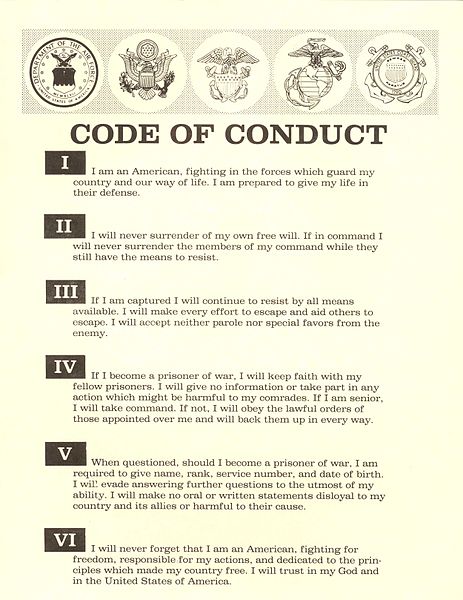
463px-Code_of_Conduct_(United_States_Military)

Rules! Rules! Rules!

How we hate them!

But then, don’t we love them when our children obey them, when other motorists are careful of the rules of the road, and when our neighbors respect the laws governing tidy yards and quiet evenings.

It has been years for most of us since we have been grown-up, out of college, out on our own, masters of our own lives, subject but to death and taxes, as we like to say, however erroneously. Can we even begin to imagine how profoundly our own rules of conduct can or do change our lives? Not just those regulations that keep us out of jail and relatively free from public censure, but those rules that make all the difference in an ordinary life. It is our personal rule, not our talents and abilities, and not our defects and deficiencies, that set us apart, in truth.

It always interests me to consider that we all – that I – have rules that we keep, that we never credit as such, and some of them are particularly binding.

I have known what it is to have rules like these working powerfully in my day-to-day life:

No less than four hours of television, daily.

Never more than five minutes of prayer, at most, apart from grave emergencies.

Always stay up as late as can be got away with.

Read voraciously; if at all possible, put aside beneficial habits and many responsibilities in order to finish a good book.

Drink at least two large cups of coffee, daily. Drink no more than one glass of water.

Always have an opinion.

Give very few concessions to the weak.

Always interrupt when not given opportunity to speak.

Hope for a return of everything given.

Something sweet with or after every meal.

Work rapidly, and when working, despise interruptions.

As I said, I know what it is to lead a regulated life, which is not to say well-regulated, but I was terrifically good at keeping those and other not so beneficial rules of conduct. I am learning how surpassingly delightful it is to have a new set of personal ordinances. Some are in place, some are sketchy but present, and all are very gladsome:

            No media in the morning until after my devotional hour


            No eating between meals.


            Consecrate a substantial time in prayer every day, at least twice each day.


            Never give way to bitterness or hopelessness in any manner.


            No gossip, no excuses.


            Take an extra devotional time before bed every night for 20-60 minutes.


            Pray at least three minutes each day for each child (and for my husband when             he was alive.)


            At least twenty minutes daily in adoration and stillness before the Lord.


            Find ways to fast in some manner, perpetually.


            Limit television – no more than one, or for a special event, two hours daily.             Devote the time saved to thanksgiving or prayer.


            Have lunch or coffee with someone besides my best friends, regularly.


            Begin every devotional time with worship and/or thanksgiving.


            Fast all desserts that aren’t part of a social event – no at-home sweets.


            Arrange to get plenty of sleep.


            Pray for the peace of Jerusalem and for workers for the harvest every day.


            Honor others at all times, in all circumstances.


            I fear to publish this list, for those who know me best will be able to pinpoint the areas where I fall short, but several of those “rules” have become habits, and the best of them have become delightful to me. To be sure, just as it is the crowning glory of the Postulant’s life when she takes the full habit and white veil of the Novice, it is glorious to know that some of those habits clothe me now.

Many convents and monasteries operate under the “Rule of St. Benedict.” It is a charming read, antiquated in part, but for those who would seek God in community, it is a monastic factotum that has stood the test of time. St. Francis had a Rule, and so did St. Clare and so did George Washington (another terrific read, his Rules of Civility and Decent Behavior,) and so did John Wesley and so do the Marines, and the NFL, too.

May I encourage you to make a fresh set of rules today or tomorrow? Write down about ten of the regulations you keep “religiously” that don’t promote any benefit to you or anyone else. This list is important because we do have so many fixed obligations to statutes that are do us nothing but harm. Then, make another list of those things you would most like to know, when life draws to a close, that you incorporated into your daily “Rule.” It is not at all necessary, and it has never been done, that any of us should be able to keep that Rule perfectly from square One, but once we know where we are going, it is certain that we can arrive at length, even if we take any number of detours along the way. Here in Cor Unum Abbey, we avoid a great many false turns and dangerous excursions, but it is always one foot in front of the other.

Perhaps our primary rule ought to be, “Never give up!” Hosea says it best, verse 3 of chapter 6:


Let us know; let us press on to know the Lord;

His going out (forth) is sure as the dawn;

He will come to us as the showers,

as the spring rains that water the earth.” (ESV)

Code of Conduct, United States Military

Public Domain, Wikipedia


Take Off Your Coat and Stay Awhile!

Posted by Cor Unum Abbey on March 20, 2015
Posted in: Uncategorized. Tagged: devotional life, habits, monasticism, nuns. Leave a comment

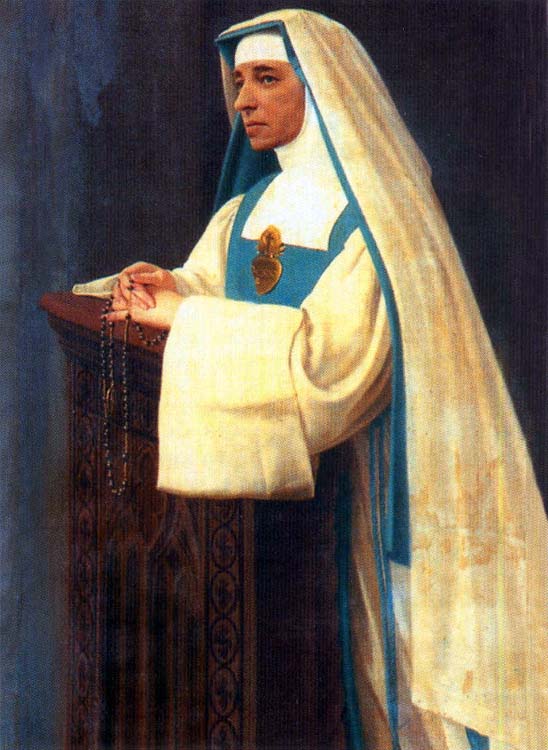
Mary_of_Jesus_d'Oultremont

What must it be like, to remove the last vestiges of life in the world?

It cannot be just the shoes and stockings, the dress and petticoat. Imagine – you’ll not need a purse again, or the debit card inside. Ever.

There are the earrings Grandmother gave you for Christmas the year you turned sixteen; you can send them to your cousin. She always liked them.

Nail polish! No more, and never again. Make-up? You gave it to your niece to use when she plays “dress up.”

Everywhere you look, everything that moves is a sea of black or brown, and in the case of the Poor Claires, it might be a sea of shadows, for they patch their habits with whatever dark scraps come their way. Even Abbey cats seem often to come in black and white! Nevertheless, within weeks the new arrival starts to realize how poorly the habit hides individuality. Sister Elizabeth’s sense of humor cannot be masked; Sister Lucia’s tender heart is more evident than were her tattoos when she entered.

More than “you are what you eat,” women become what they wear. If clothes make the man, they define the woman. In Cor Unum, we no longer wear what we think we are. We clothe ourselves instead in what we hope to become. Ours is not a wimple and veil, but we are putting on habits of joy and faith in God.

Here in the monastery of the heart, we clothe ourselves in the righteousness of our Lord Jesus Christ, and heaven calls us BEAUTIFUL!

Mary of Jesus, founder of the Society of Mary Reparatrix, N.N.

in the public domain in the United States and European Union,

artist dead more than 70 years

The Bells

Posted by Cor Unum Abbey on March 16, 2015
Posted in: Uncategorized. Leave a comment

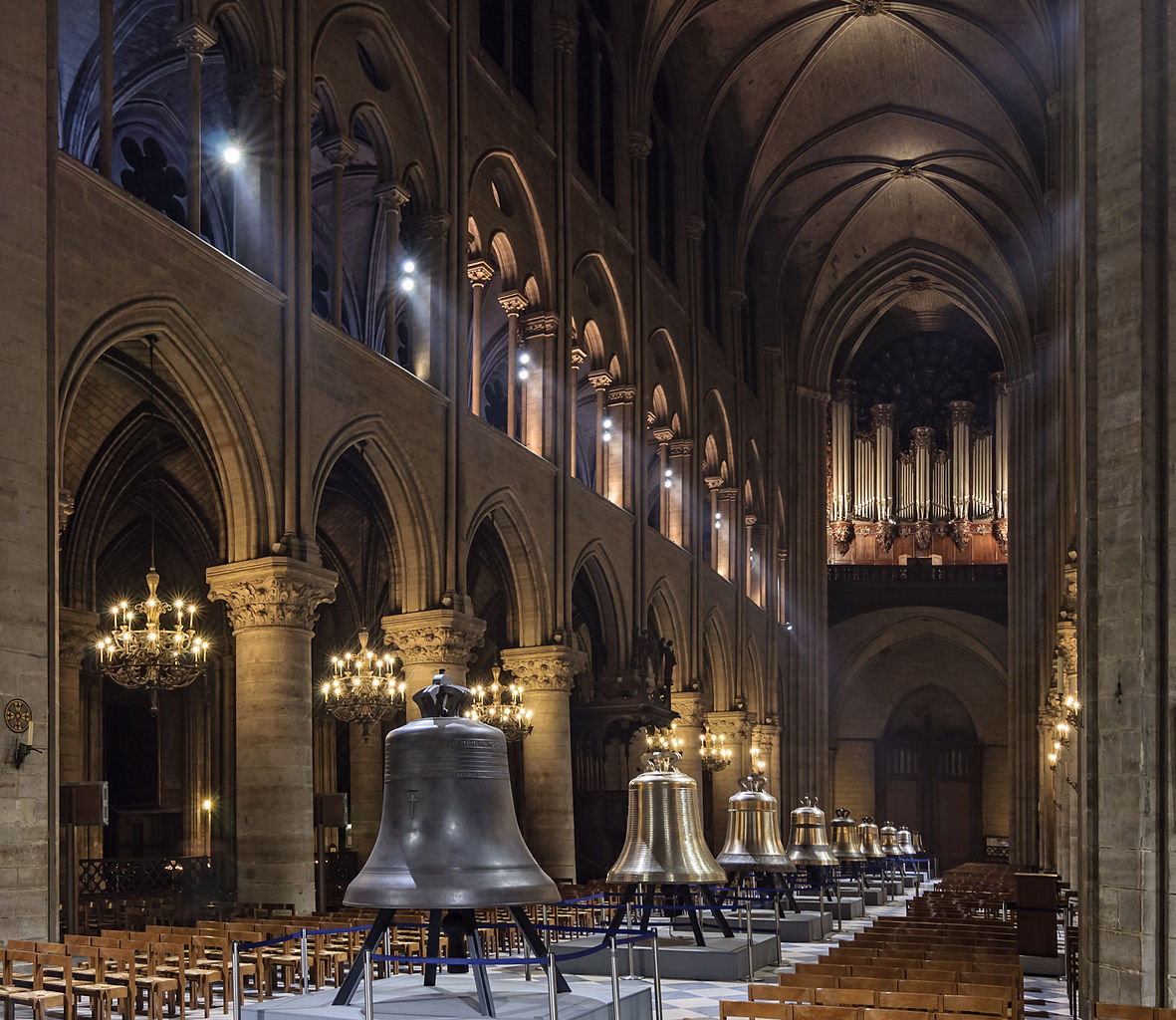
1181px-Cathedrale_Notre-Dame_de_Paris_nef_nouvelles_cloches

Those dear, innocent bells! Little do they know that for as many as they welcome into monastic life, there are dozens more who want no part of it, because of them.

For each man or woman on earth who lives according to a rule or schedule of devotion, there are dozens, hundreds, perhaps hundreds of thousands who boldly say, “I could not and would not live under the regimen of bells, a devotional schedule, punching in to spend time with God.” Even among those who do love the Lord Jesus Christ, the idea of developing such a well-ordered life with Him does not always appeal. “Surely,” they say, “He is not glorified by that kind of forced worship.”

The monastic says, “He wasn’t glorified by all the time I could have spent with Him and didn’t, either.”

For most monastics, the bells become the sweet sound of the rhythm of the life they have chosen, a call to worship, to prayer, to four, perhaps five, or even seven daily trysts with the Lord they love. Nevertheless, one of the most difficult early adjustments is that of stopping in the middle of a project, closing up shop just when you’re making progress, donning the mantle reserved for Chapel attendance, and filing silently into one’s place for as much as an hour (and sometimes more!) of Gregorian chant.

But …

… that’s why they entered.

One young postulant, about to enter her Novitiate year, said that she found herself standing on a street corner one day, with all the pulse and energy of a big city around her, the life she had formerly enjoyed, but asking herself, “Is this all there is for me?” She had a big job in a big city, but she also had a big love for God, and her busy life was not nurturing that love at all.

Did she have to enter a cloister in order to fulfill the desires of her heart toward the Lord? We are the ones who will be able to answer that question.

Even when we are successful in setting daily parameters for ourselves, when we can identify the built-in reminders that keep us within them, and even if we have bells that sound to keep us faithful in our marketplace vocations, we will never have quite what is to be had in cloister. It won’t take long for us see how many and how distracting are the phone calls, many of them unsolicited, the interruptions that come with the people we care about, the disturbances that creep in with every little diversion in our lives. A book we are reading will have us thinking about the plot for days; the music we listen to reverberates in our ears long after we heard it, perhaps standing in line at the grocery store; conversations we have with friends leave us contemplative, and not toward the Lord in every case. When such things are reduced by 75 or 100%, it makes a noticeable difference. When the things that enter our minds and our senses are always toward God, it makes a difference.

That is why they entered, our cloistered counterparts.

The bells and gongs and clappers call them to the hours of each day most precious to them, even if their natural inclinations say, like ours, “Just a minute! Let me finish what I’m doing, and then I’ll come.” When twenty or thirty other women are waiting for you, looking at your empty place in Choir, when they won’t be fully at ease until you are there with them, you learn quickly to attend to the bells that call you.

It’s rather like the young mother with a fussy child, trying to get him quieted for sleep in the afternoon. She leaves him, perhaps still sobbing that he has to close his eyes for an hour or so, and she says on her way out the door, “I wish someone would make me take an hour’s rest every day!” Monastics have taken that wishing into their own hands, and together they take time out of every day to bring themselves before God in worship and intercession.

Together they worship and pray. If ever there was an evidence of strength in numbers, it is to be found in cloister. We will take a look at that brand of unity one day soon.

Meanwhile, I hope you’re enjoying your extra five or ten minutes with the Lord, fitted somewhere into your day as a reminder that He is near and that you are glad. Have you felt yet that it is a waste of time, too interruptive to your day, not worth the effort? If you haven’t, you probably will, but your own choice will sanctify those minutes. I keep a few bells at hand in my house, and often will I ring them as I begin my Psalms Office or Matins in the morning … I love how they say, “These minutes are now the Lord’s own,” and somehow my heart answers them, “You speak truly, dear little friends.”

The new bells of Notre Dame Cathedral.
Mirabelle, Wikipedia, by permission

Ora et Labora, Part Two

Posted by Cor Unum Abbey on March 6, 2015
Posted in: Uncategorized. Tagged: devotional life, Divine Office, monasticism, personal devotion, Psalms. Leave a comment

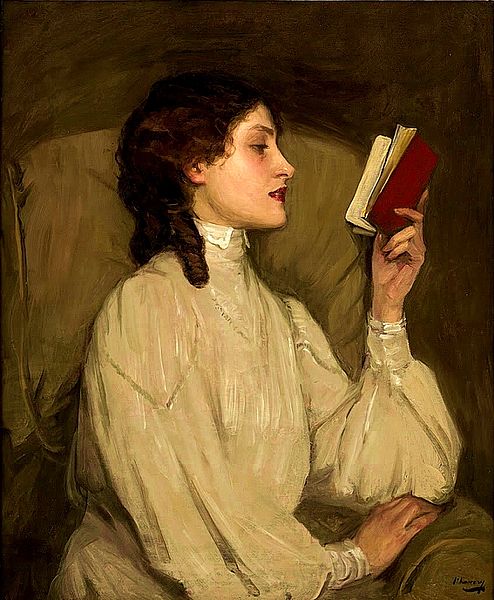
494px-Lavery_Maiss_Auras

We’ve come at last, to our very first prescribed Office. Who prescribes it? Each, for herself, as it will always be, but if you are willing, let’s take that idea of reading through the Psalms and make it work for us.

First, we choose a time of day that we can command, a time that is usually our own when we can claim about five minutes to do with as we please. For now, try to schedule it during other than the early morning hours. Many already have a morning practice of prayer and Bible reading, and if not, we will fill those first minutes of the day with wonderful delights of devotion before long. Meanwhile, we are endeavoring to find our way back to the Lord at least three or four times during each day, which for most of us is the more difficult part. Once we get rolling, so to speak, we like to fly, but this is the beginning of our own Opus Dei, the “work of God.” Here are Jesus’ words to the man who asked how he might busy himself with the work of God:

“This is the work of God; to believe In the One He has sent.” (John 6:29, NIV)

Whatever five-minute timeslot you choose, mid-morning, noon, mid- or late-afternoon, there is probably an Office that corresponds with the time! We will get to know them and their various contributions to a monastic day – Vespers, None, Compline, Lauds, and more. They are classically beneficial to a busy schedule, but this is your Office, and you can call it whatever you want! For now, find a time and frame it, not at 9:00 in the morning or 3:00 in the afternoon, but put it, “First thing after the children are down for their naps,” or “before washing the breakfast dishes” – or right after, if you are good at keeping your word to yourself. It is difficult for most of us, once we start moving, to stop, like those Newtonian laws of physics we all learned. (A body at rest tends to stay at rest, and a body in motion tends to stay in motion!)

We do stop when we are acted upon by an opposing force, like an invitation to afternoon coffee! Even so, many of us can claim to have turned down attractive invitations on occasion because we were caught up in a whirlwind of housecleaning or scrapbooking. Which one of us hasn’t stayed home sometimes just in order to sit in front of a favorite movie or television program? Speaking Newtonianally, we were in motion, sitting on the couch. We were actively watching the show we did not want to miss! When it was over, then we had to deal with the inertia into which our physical bodies had sunk; they were at rest and sometimes we watched another movie because they were tending to stay at rest!

Monastics can tell you that all these principles can be put to very good use for us. Here in Cor Unum Abbey, we introduce opposing forces of our own choosing, devotions and dedications that oppose our spiritual inertia, and in inverse proportion, we begin to find rest from our labors no matter how hard we work mentally and physically, because we choose stillness as well. The day will come, my dear Sisters, when spiritual rest will be such a powerful reality for us that we will tend to stay at rest, even from former all-consuming efforts toward self-justification and manipulations. The day will come when our tendency to “earnestly contend for the faith that was once delivered to the saints” (Jude 1:3) and our aptitude for abiding in Christ (John 15:4-9) will not be extinguished. There will be no opposition with enough force to interrupt our trajectory. We must begin with a simple decision never to turn back.

“ Remain in me, as I also remain in you. No branch can bear fruit by itself; it must remain in the vine. Neither can you bear fruit unless you remain in me.

“I am the vine; you are the branches. If you remain in me and I in you, you will bear much fruit; apart from me you can do nothing. If you do not remain in me, you are like a branch that is thrown away and withers; such branches are picked up, thrown into the fire and burned. If you remain in me and my words remain in you, ask whatever you wish, and it will be done for you. This is to my Father’s glory, that you bear much fruit, showing yourselves to be my disciples.

“As the Father has loved me, so have I loved you. Now remain in my love.”

We are training ourselves to take time with the Lord. Before long, we will find that we have a new velocity toward the Lord. Tremendous winds do not keep big jets from reaching their destinations. While airline flights are sometimes canceled for safety’s sake, nothing can keep us from the love of God in Christ Jesus our Lord. (Romans 8:39) Here in this Abbey, that means nothing can keep us from returning that love in worship and prayer and in seeking the place of abiding of which Jesus spoke, not even if we miss our prescribed time now and again. That isn’t the perfection we seek; ours will become the perfect heart of love for God that will not be denied. We are developing hearts that won’t permit the winds of distraction or even our many failures to keep us from our destination.

Now, back to our five-minute Office in the Psalms. We might fit in as soon as we get home from work, in our rooms just before changing clothes and going out to conduct the rest of the evening. Perhaps you can take time just before or after your shower, when you have a little bit of solitude to call your own. For most of us, it isn’t that we can’t take five minutes, it is that we have become accustomed to lingering over more entertaining pursuits and leisures and then rushing through the God-ordained structures in our lives.

Before technology, for which we are very grateful, the lighting of lamps and the milking of cows and the laying of wood for the morning fire hemmed in the hours of every day and every season. There were dozens of little absolutely necessary intervals in place. In order to regain all those lost boundaries, we must find the ones that work for us where we are.

We spoke of children and naptime, for instance. This is a perfect example of how we may establish a Divine Office that can be kept. Oh, the joys of welcoming children into your Abbey! Find a children’s version of the Bible and read a Psalm to them as you put them down to sleep every afternoon. You will need time by yourself and you will learn to find it, but young mothers can work in several extra Offices by including your little ones.

That, dear ones, is your first new Office, however you spend it and wherever you put it. It might be your second or third interval with the Lord, if you are already praying and reading your Bible morning and evening, but we will make this one special because it does interrupt the tug of the day, and that’s the whole idea.

Because this is a very short Office – and because it is the Psalms and often prayerful in nature – kneel as you read, if you can. You might find that this will become a simple and healthy benefit for your soul. We will talk more about those oft-maligned practices that have meaning and power in the Scripture. Otherwise, just quiet your heart and devote your attention to every word as best you are able. Before long you will be making each reading a prayerful, worshipful experience, every day, after you’ve had your tea … or brought in the mail … or taken the dog for a walk … but continually and with increasing power to reflect and believe!

We are headed toward our hearts’ desire, that we would be able to worship and pray and give thanks and listen and obey and fill our hearts with the love of God every day and throughout the day, never checking Him off a list, but always acknowledging the fervor with which our spirits long for Him unceasingly. Ours is to live in Him and learn of Him and hear His Voice and pray until our faith receives the answer.

We will talk further about the time-honored methods of reading prayerfully, but for now, as you read a Psalm each day (start wherever you wish, and just keep going!), try to read aloud if you can, even if in a whisper, and don’t hesitate to put all the joy and glory and pathos into your reading that is there in the text!

One last thing: now that you have a Psalms Office, sanctify that time to the Lord. Don’t be afraid; He won’t smite you with boils if you fail to keep it perfectly. What do we think of Him?? If you want to return to the experience of His Presence time and again, and not just on the run, He wants you there. Give those minutes to Him, and He will be waiting when you arrive and come looking for you to bless you if you can’t make it. He is the lover of our souls. He will be at least as gracious to us while we are making these monastic decisions as we would be toward a child trying for love’s sake to sweep the kitchen with a toy broom. Wouldn’t you agree?

Miss Auras, John Lavery

Wikipedia, public domain
Ora et Labora, Part Two

Posted by Cor Unum Abbey on March 5, 2015
Posted in: Uncategorized. Tagged: extern sisters, monastic life, nuns, Ora et Labora, widows. Leave a comment

1024px-A_Chinese_nun_climbing_ascending_steps_on_Mount_Putuo_Shan_island

It is a “job ’o work” getting a few dozen women fed three times each day, even if the meals are simple and the choices non-existent.

They all have laundry to be done as well, and because many larger convents and monasteries are self-sustaining, there are gardens to be planted and tended, eggs to be gathered, cows to be milked, and often as not, a little business on the side to help pay the bills, perhaps bee hives or bread-making.

The difference between us and cloistered monastics is shrinking, isn’t it?

Saint Benedict had a solution, and it is famous in monastic circles. He coined the phrase, “Ora et Labora,” “Prayer and Work,” and that’s what makes cloistered life hum.   His instructions were more than practical; he knew that the Scripture highlights a fundamental principle, one that saved the lives of the early Puritans under the governorship of William Bradford, and it is, “who doesn’t work, doesn’t eat.” This wasn’t Scriptural or colonial “to bed without supper,” it is a fact of community life and honor in the Abbey as it was in Plymouth Colony, where that little band survived. Those who had come before them were looking for gold washed up on the seashore or under the mushrooms; they were put out on the beach without leadership or vision or much of a work ethic. These earlier adventurers couldn’t take care of themselves and they fled for home or starved.

Cloistered nuns have to take care of themselves, for no one else is allowed inside. Only under the most serious conditions does anyone enter … usually severe plumbing or medical emergencies! In those cases, in traditional houses, the Portress would precede the visitor down the maze of corridors, ringing a bell to let her Sisters know to stay out of sight for the time being.

Also in those days, a large house would have a full complement of extern sisters, but never full enough to keep their enclosed Sister Nuns from having to pick apples at harvest or help with the planting when there was a break in the weather. The gardens and apple trees, were, of course, all accessible within the walls of the Abbey, along with walking paths for daily exercise, that enclosure would be kept.

Extern Sisters wore the same habit and attended Mass and Recreation with the cloistered nuns, but they did not chant the Divine Office with them because of their more rigorous work schedule. They did and do keep the Office together, at least in part, fitted into their busy days, but they must have supper on the table, and on time! Sound familiar?

Theirs was considered just as important a role as their Contemplative counterparts, and given all the more honor because everyone knew that without the Extern Sisters, the Enclosure would fail. Our focus is on the contemplative side of cloistered life, but we could say in truth that if an Extern Sister can take time out for prayer five or six times a day (and seven or more in times past,) so can we! Those intervals may be short, but our love for the Lord and His for us will make them sweet.

Let’s be sure that, when we are honest-hearted about the intervals of time that we do have at our disposal, the fact that we took the time, matters. Time is given to all, and precisely the same twenty-four hours, no matter our station in life. The at-home nun who kneels beside her bed to read one Psalm every day at the fitting interval, when five minutes is truly all she has, makes a difference for herself. Later, or earlier, she might have another five or thirty. Those who can take an hour in the morning or twenty minutes at lunch or ten minutes in the car alone, every day, sanctified to the Lord, will not be unrewarded. No Abbess can make that guarantee of herself, but it has been made by the Lord.

 But when you pray, go into your room and shut the door and pray to your Father who is in secret. And your Father who sees in secret will reward you. (Matthew 6:6, ESV)

So, to us. We ask ourselves, as we often will, what might be the result if we will “carpe minutam,” … seize the minute, if the day tends to get away from us?

Here in Cor Unum, each of us is Abbess, Contemplative Nun, Extern Sister, and Portress, all rolled into one. (The Portress is an enclosed nun who has a secretarial position, often in service to the Mother Abbess, and who has the most contact with the Extern Sisters and the outside world, primarily through the media.) Even if we don’t have to feed a family, we do have to feed ourselves, my dear widowed and solitary Sisters, and we will learn as we go that one must “eat well to fast well,” a pithy monastic saying. Someone has to sweep the porch and scrub the sinks and fold clothes, even if only for oneself.

Three hundred sixty-five days each year. That’s a lot of dishes and a lot of sweeping, but it’s a whole lot of devotion, too. We must begin to think much more expansively! Taking the example of Psalm reading, that would cover the entire book of Psalms twice each year. Not all, perhaps, but many of us would have a hard time remembering the last time we read all the way through the Psalms twice in a year!

Sister Brigid always reminds us … “By the mile, it’s a trial, and by the yard, it’s still hard … but by the inch, it’s a cinch!” Saint Benedict didn’t include those words in his rule … too bad!

Keep that thought in mind, Sisters and Brothers. Tomorrow, our first “Office.”

The Divine Office

Posted by Cor Unum Abbey on March 4, 2015
Posted in: Uncategorized. Tagged: devotional life, Divine Office, living alone, monasticism, purpose in widowhood. Leave a comment

1280px-Veruela_-_Iglesia_abacial_de_Santa_María_de_Veruela_-_Vista_desde_el_pie

The Divine Office is the teenager who stays home from a dance to attend a family get-together.

It is the husband whose wife doesn’t have to prod him to put down the newspaper or turn off the television.

The Divine Office is the wife who gets small children peaceably ready for bed after dinner so she can spend the rest of the evening with her husband.

Our personal Divine Office is the time we would like to spend in prayer for our families and churches and nations, but never seem able to acquire.

So far, unless it must diverge, this blog is written for all of those who have monastic hearts, hearts to live out their interior lives in an effectual devotion to God. So far, we are in this together, but there are those among us who have long evenings alone stretching before them, with nothing but time to do with as they please, and there are those who, at best, must fit God in between dinner, chores, children, and the life and health of their marriages. These lifestyles are quite dissimilar, but for the heart of worship.

Who understands this time/effort paradigm better than our God and Father, Elohim, the Creator God, who gave us marriage, family, obligations … and for almost all of us, eventually, solitude? Who but He can measure five devoted minutes on a scale with 55 devoted minutes and call them equally weighty?

He also gave us grace and the ability to set the course for our souls, to make choices between those things which profit and those which do not, and he gave us the mental capacity to see that a little time well spent, when that’s all we have, is far better than none invested because we wish we had more!

After more than ten years in this at-home Abbey, I can tell you that the hard part is still just taking the time I’ve been given. I can also tell you, it does get better when one keeps trudging along inside the verges of one’s own Divine Office.

Trudging? Trudging? Trudging toward a glorious relationship with God?

Yes.

It isn’t the relationship that’s tedious or painstaking, far from it. It’s the keeping to the path that is so daunting. One of us refers to it as a path “with handrails.” How is it possible that after so many years of knowing the mercies and the graces and the goodness of God, that we still say, “Not tonight, my Lord; I have a headache.”

I will not often get personal in this narrative and over these days together, but I think you may enjoy this little vignette.

After my husband died, about a week after his funeral, I finished dinner and faced my first evening alone. Our children had been here for nearly a month prior to his death and afterward, helping one another, comforting, showing the wonderful stuff they’re made of. Friends and neighbors had kept up a steady stream of every kind of assistance and kindness, never overbearing, just available and removing every possible practical difficulty. Now, for the first time, I looked around and faced the rest of my life alone in the house, alone in my heart, no longer married, no longer one of two in love.

However … I had been practicing these tiny Divine Offices for six or seven years. A few minutes here, a few minutes there, tiny disciplines of thanksgiving and intercession and stillness, and I had told the Lord the night Frank died – propped up on pillows, alone in our bed – that I was determined to spend the rest of my life grateful for what Frank and I had been given instead of mourning over what had been taken. I knew and I said, as King David had said, “He will not come to me, but I will go to him,” and that was the end of the matter, except for the three and a half years it took to begin to get used to living without him.

So, on that first night, I did the dishes and put them away, picked up my Bible and went into the den. I sat in Frank’s chair. I said to the Lord, “I will be to you what I was to Frank, and I hope even more, if You will give me grace for it. My evenings are Yours; I’m Yours … I won’t make You look like a poor substitute for a great husband.”

I opened my Bible, and my eyes fell upon a verse, an obscure verse in Jeremiah … that I had been trying to locate for ages. It was just a little verse of Scripture, but I had looked and looked for it; it was something lovely the Lord had shown me long before that I didn’t want to lose. It wasn’t relative to marriage or death or anything immediately pertinent, just something lost, now found. Perhaps one day I will tell you about it, but that wasn’t the point then or now. It was just a little present, a little something wrapped in love, as if it had been a bracelet I had seen and admired and Frank had gone back to get it for me and keep it for a special moment. “Here, darling, this is for you.”

The joy, like a wedded bliss, that flooded my heart was indescribable. I knew I’d been heard, I knew I’d been taken seriously, I knew beyond doubt then or now that my Lord was glad I was there with Him, and I knew that, for whatever reason Frank had died so relatively young and all our future cut off, all was well and that I would mourn with a healthy hope. I was Frank’s, but now I am the Lord’s, in a very special way. He is not a poor substitute for any loss; He is all and in all, and He is ours and we are His.

Thus began this more intense version of my Divine Office, but I can speak to you from both perspectives, both the snatching what time you have and filling more time than you wanted. The key, I believe, is to remember this: we are making a freewill offering. Nobody forces this devoted life upon us. There are societies aplenty for men and women alone and men and women too busy already. There are books to read and a few really good television programs and some great movies and good time to spend with dear friends. There is also a Lord, a Savior Who is Lord, near enough to touch, well able to comfort and inspire and revive any soul.

One more personal observation, and then we will return to our look into the rudiments of disciplined devotion … while it is true that I wept at times as though my heart would burst through my chest, it was always for missing Frank and always with a sweet gratitude, no matter how devastating the sorrow. I think those years of what seemed like catch-penny devotion made the difference, along with a will to obey what I was learning along the path.

Iglesia Santa Maria monastery

ecelan, by permission, Wikipedia

A Holy Vocation

Posted by Cor Unum Abbey on March 3, 2015
Posted in: Uncategorized. Leave a comment

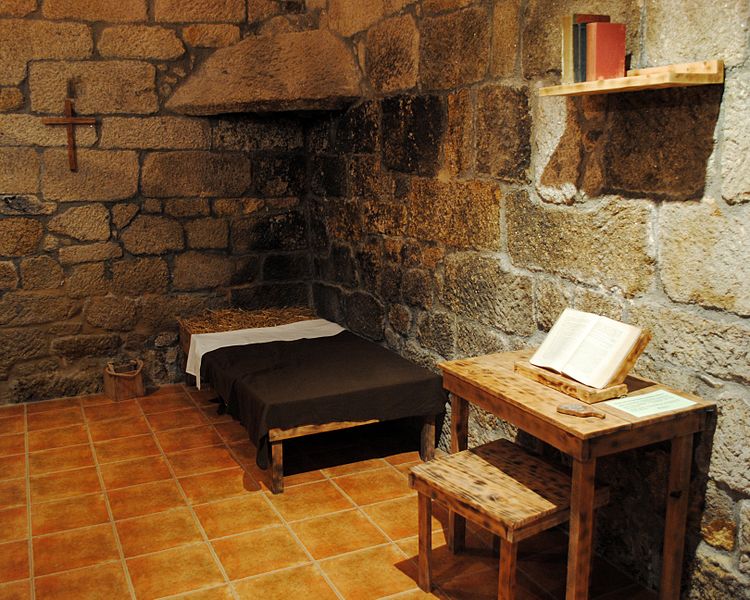
750px-S._Pedro_de_Rocas,_cela

The new Postulant has entered the Abbey, welcomed and surrounded by her new Sisters, and no doubt with eyes like saucers, trying to take everything in. She doesn’t soar above every pang of separation and doesn’t try to, but she is in her own “happiest place on earth,” and she wants to experience every shining floorboard and flickering candle.

This is her new home, and it will most likely be until her death. We will talk later about the Benedictine vows of stability, a two-way pledge between the monks and nuns who have chosen the house, and the house that has chosen them and won’t send them away. The “abiding” of which Jesus spoke in the fifteenth chapter of John is our stability, and without doubt, we are meant to have it, to hide ourselves in Christ, His Spirit alive in us. That is Cor Unum Abbey, this monastery of the heart.

Cecelia went first to Recreation, the hour when strict silence is broken and the Sisters gather with their handwork and with stories to tell about the funny and interesting things they have observed in quiet, at work and in prayer. Perhaps the Abbey cat has been leaving offerings at the feet of a venerable saint’s statue, or there may be news that blackberries need to be gathered assiduously over the next few days. When the bell or the clapper sounds the end of Recreation, the Sisters fall silent on the instant, gather their things, and make their way to Chapel for the Vespers Office.

Let’s be reminded continually that whatever we may think of cloistered life, those who take up a holy vocation do it for the sake of the pursuit of the Lord, and so may we, right where we are. We must do this right where we are, or it will never get done. We have this life and these boundaries and these responsibilities, and most of us are too old or too married to join a convent, anyway! Even so, if “real” monastics can give long hours to worship and prayer each day, we can give long minutes, at the very least.

Forget those myths about monastics trying to escape reality; there may be some men and women who enter in the hope of a fairy tale of religiosity, but seldom will those individuals be able to stay to the taking of Permanent Vows. Centuries of abbatial oversight can spot pretenders before they are ever admitted, and after that, the strength of character and laser-like focus required to remain does not often appear in someone trying to hide from life.

So then, what about us? We will need our own commitment and focus in order to live in this world, but not of it. If we determine to abide in Christ, His Word abiding in us, we have already seen that it won’t just happen, magically, but it will happen. As we learn to watch and pray and to keep ourselves in the love of God, as we learn that we share more of the life of God in Christ than ever we have imagined, one with Him now, not just in death, and as we keep plodding in pursuit, we will make progress. Interestingly, monks and nuns would be the first to say that, when one of us begins to take up the rigors of a disciplined devotional life at home, they are our most enthusiastic cheering squad. They know the rewards, and they know how difficult it is to persevere in the workaday world. That’s why they left it, and because they were willing to pay the price to have those fixed and unfailing hours in devotion. What would they say to us who will not be denied! If they wore hats, they would take them off to us! Three cheers for us!

Never forget, dear ones, we can always have those things that have been commanded and promised, and we have been commanded in our love for God and for others. Over and over again we have been instructed to watch and to pray, and to give thanks in all things. We have been promised the rewards of quietness and confidence, and when we are in no way alarmed by anything that transpires, our enemies are thrown into confusion. (Philippians 1:28) Those blessings cannot be for in-house monastics, only.

Night is coming on, and the Vespers Office will be sung, with the new postulants losing their places, completely confused, trying not to make a spectacle of themselves. Rather like us, starting out. Six months later, all the new Sisters are surprised at how far they have come and how very far they have to go. So, too, shall we all be, here in Cor Unum Abbey.

It is time to take a look at this Opus Dei, this Divine Office of worship and prayer and see what we can make of it for ourselves. Theirs will never be ours, but then, ours will never be inferior, not in the slightest, when we devote this freewill offering to the Lord our King.

A Monk’s Cell

HombreDHojalata, by permission

Day One – INTO THE ABBEY … “Passio Christi, Conforta Me!”

Posted by Cor Unum Abbey on February 27, 2015
Posted in: Uncategorized. Leave a comment

450px-Altenberg_1

Mother Catherine Thomas, in her classic work, My Beloved, writes that the first words she heard at her entrance to a Carmelite monastery were, “Passio Christi, conforta me!”

Passion of Christ, comfort me!

I like that! The ancient founders of monasteries could have come up with something more mysterious, perhaps a secret handshake or a password, but I like those comforting words. I imagine that they are meant to remind the newcomer that Jesus knows what it is to surrender one’s life. At the same time, Jesus has a passion, as we would define it, for oneness with His own, His people. We know it, but most of us have not yet begun to appreciate it as we might. Here in Cor Unum Abbey, we are giving ourselves to that end.

We do well to enter this new pursuit, this personal monastic adventure, comforted in our resolve. If we make progress, if the Nearness of God becomes our all-consuming good (Psalm 73:28,) it won’t be an easy marathon, but the comforts are colossal and well worth every footsore step. We will know times of joy and fulfillment unlike anything else that life can afford, but the very best pleasure is knowing that it is possible to delight the heart of God. (Song of Solomon 4:9, Jeremiah 9:24)

Into the Abbey … one moment you’re on the doorstep in your street clothes, Smart Phone in your pocket or purse, the next … you take a step over a threshold and heavy oaken doors close behind you. Keys turn in the lock. It seems looks romantic in movies; not so simple a choice in reality.

Our choosing is not as immediately profound, but when we make it in good faith, it is just as binding and just as apt to take us where we want to go, into the image of Christ Jesus our Lord. We don’t have to surrender our phones, but this is for real. This is stepping into the pursuit of the Lord our God.

Inside these walls, grief and bitterness will have to give way to hope and forgiveness. Pride and fear will have to show themselves in all the little hidey-holes they have found for themselves. We will have to cut away little chunks of our souls, the dark and rotting spots, where we have rather enjoyed being jealous or angry or covetous or lethargic, but this is the most successful operating theater in existence. Even incurable wounds will be healed (Jeremiah 30:12-17).

Moreover, seldom if ever will we do more than to make tiny steps in a right direction. There will be a few glorious conquests of our selfishness and pride, but most of the time it will be one finger ledge, one toe-hold at a time.

Inside the Abbey, Sister Cecelia was taken to change into her postulants’ habit, and even that was rather plain and sophomoric compared with the full habit of the Professed Nuns, but she was glad. She then met the community, a happy and congratulatory scene. Cecelia had been corresponding with the Mother Abbess for quite awhile, and she knew something of the rudiments of a monastic vocation.

Here are some of ours:

  • We will use time-honored tools for making sure that the Word of God dwells in us richly, conforming us to the image of Christ.
  • We will make adversity and loneliness work for us, mightily.
  • We will learn to practice silence for a season every day, some longer, some shorter.
  • We will begin to pray more and more diligently … giving ourselves not only to prayer but to a lifestyle of intercession …
  • We will learn to hope, beyond wishing.
  • We will get to know the glories of “Conversatio.”
  • This time next year, we will know we have made progress in this place.

This place. It is an imaginary Abbey, but we aren’t playing make-believe. We can know that we aren’t alone in this invisible cloister, as its walls and corridors and chapel are being constructed in our hearts. We begin to hear the bells at all the proper times of day. We can make sure that, together with one another, “Marketplace Monastics” the world over, we are obtaining Christ, which is why we’re here. Like Paul said,

Not that I have already obtained all this, or have already arrived at my goal, but I press on to take hold of that for which Christ Jesus took hold of me. (Philippians 3:12, NIV)

“All this” is all Christ, His abiding and our abiding in Him, learning to keep ourselves in the love of God (Jude 23, 24.) Speaking of the bells, they are ringing for Vespers. Follow the veil in front of you, and welcome to the first day of the rest of your holy vocation.

Altenberger Dom (Altenberg Monastery)

Uwe Barghaan, by permission, Wikipedia

Posts navigation

← Older Entries
Newer Entries →
  • Recent Posts

    • A Sea Change
    • La Alcaldesa
    • But, How?
    • In at the Deep End
    • December 5 – “Savior”
  • Recent Comments

    safelake's avatarsafelake on April 28 – “. . . With Y…
    safelake's avatarsafelake on March 6 – D. T. M. (Divine Tim…
    Cor Unum Abbey's avatarCor Unum Abbey on February 26 – What Nuns B…
    di french's avatardi french on February 26 – What Nuns B…
    Cor Unum Abbey's avatarCor Unum Abbey on February 26 – What Nuns B…
  • Archives

    • August 2024
    • February 2024
    • December 2018
    • January 2017
    • March 2016
    • November 2015
    • September 2015
    • April 2015
    • March 2015
    • February 2015
    • January 2015
    • November 2014
    • October 2014
    • September 2014
    • August 2014
    • July 2014
    • June 2014
    • May 2014
    • April 2014
    • March 2014
    • February 2014
    • January 2014
    • June 2013
    • May 2013
  • Categories

    • "Dieu et Mon Droit"
    • 40 Days of Prayer for America
    • devotional life
    • devotional material
    • monasticism
    • personal monasticism
    • Prayer for the oppressed
    • purpose in life
    • Spiritual disciplines
    • Spiritual warfare, Prayer for loved ones, Prayer for the nation
    • Thanksgiving
    • The Coronation of Elizabeth II
    • Uncategorized
  • Upcoming Events

  • Meta

    • Create account
    • Log in
    • Entries feed
    • Comments feed
    • WordPress.com
Blog at WordPress.com.
Cor Unum Abbey
Blog at WordPress.com.
  • Subscribe Subscribed
    • Cor Unum Abbey
    • Already have a WordPress.com account? Log in now.
    • Cor Unum Abbey
    • Subscribe Subscribed
    • Sign up
    • Log in
    • Report this content
    • View site in Reader
    • Manage subscriptions
    • Collapse this bar
 

Loading Comments...