Cor Unum Abbey

Marketplace Monasticism … How to Live in a Downtown Abbey

  • About
  • July 9 – Sacred Simplicity

May 21 – Heavenly Habits of Highly Devoted People

Posted by Cor Unum Abbey on May 21, 2014
Posted in: Uncategorized. Leave a comment


Image


“Everybody” is doing it these days . . . coming up with their corporate, congregational, conditioning “habits” itinerary. For an interesting departure today, let us take a look at Cor Unum’s list of

Nine Habits for the Monastery-Minded!

Let These Nine New Habits Help YOU Acquire the Habit You’ve Been Looking For!

In our case, the “habit” of godliness is the only one we will ever wear, and it will fit us like a glove! The only monastery we will ever inhabit is the one to which our hearts flee, the sanctuary of soul where our Lord abides with us, the cloister of our love and devotion.

The way for us is paved, not with successes but obediences, and we are not traveling toward accomplishment but to our destiny. Here is the list our CEO (Christ, Ever Omnipotent) “posted” about two thousand years ago:

Blessed [are] the poor in spirit: for theirs is the kingdom of heaven.

Blessed are they that mourn: for they shall be comforted.

Blessed are the meek: for they shall inherit the earth.

Blessed are they which do hunger and thirst after righteousness: for they shall be filled.

Blessed are the merciful: for they shall obtain mercy.

Blessed are the pure in heart: for they shall see God.

Blessed are the peacemakers: for they shall be called the children of God.

Blessed are they which are persecuted for righteousness’ sake: for theirs is the kingdom of heaven.

Blessed are ye, when [men] shall revile you, and persecute [you], and shall say all manner of evil against you falsely, for my sake. Rejoice, and be exceeding glad: for great [is] your reward in heaven: for so persecuted they the prophets which were before you.


We shall take a monastic look at these; that is to say, we will see how we may devote ourselves to them.


As with all things, whether twenty-six habits of the perfect life (Romans 12,) or four habits for personal peace and perseverance (Philippians 4,) or ten habits for heavenly hearts and homes (Colossians 3,) we are entering a forty-day “fast” track toward serenity, security, and success, which we shall define as . . . Christlikeness.


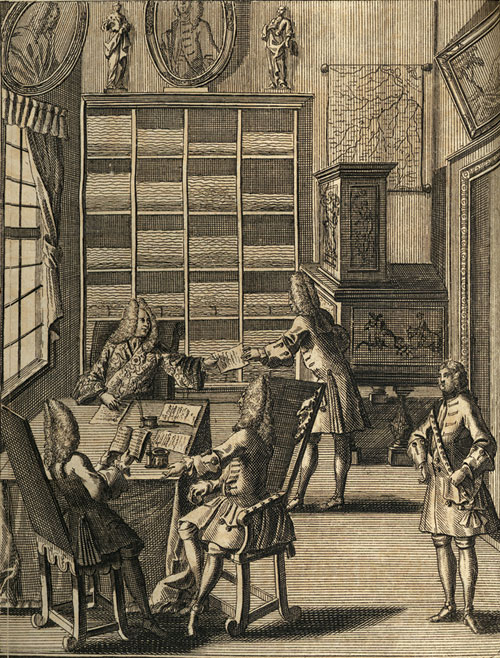
European Office

Julius Barnhard von Rohr, 1719

public domain, Wikipedia

May 20 – Amazing

Posted by Cor Unum Abbey on May 20, 2014
Posted in: Uncategorized. Leave a comment

Image

                  The idea that of all the attributes of God, WISDOM is the one that gets the feminine article, is . . . amazing.  A big thank you, Lord, from the nuns of Cor Unum!


                  In the ninth Proverb, we see her, Wisdom, having prepared a meal and a table, and calling out to the simple and those lacking in judgment, “Come in here!”


                  She has sent out her servants, and she calls from the highest point of the city,
    “Let all who are simple come to my house!”
To those who have no sense she says,
 “Come, eat my food
and drink the wine I have mixed. 
Leave your simple ways and you will live;
walk in the way of insight.”   (Proverbs 9:3-6)


“Leave your simple ways and live!” she cries. “Walk in the way of understanding!” Many “he’s” and “she’s” could echo those words through personal experience. It is a great thing to have left foolishness behind.


                  The Scripture tells us there are other “she’s,” adulterous tempters beckoning and flirting from the doorways of life, down the alleys of distraction and destruction. WISDOM bids us keep to the path of good sense.


                  The nuns in Regina Laudis Abbey and in convents and monasteries all over the world, have put themselves in the way of finding the heart of God, and we are here in Cor Unum for just that purpose. We will find Him in the wisdom of every circumstance, if we will ever seek Him, and we will find wisdom ever in Him.  WISDOM guards our souls and gains the mind of Christ.


                  The beginning of WISDOM is the holy fear of God, and that reverence is our pursuit today, in the all the parlors, cells, chapels and corridors of Cor Unum Abbey. Perhaps that’s why wisdom gets to be “she.”  “The fear of the Lord is the beginning of wisdom (Psalm 111:10,)” and it is beautiful as was Sarah when she obeyed Abraham, calling him “lord.”  True submission beautifies men and women together.  


                  Wherever we are, wherever we are headed, WISDOM will never forsake us.  “Can a woman forget her nursing child, or fail to have compassion upon him? She may forget, but lo! I will not,” says the Lord . . . “instead, I have engraved you upon the palms of my hands; your walls are always before Me.” (Isaiah 49:15) Wisdom is with God, ever with God, and God is with us. We have seen that mother-nearness, mother nurture is His idea. Wisdom is the breast where grown-ups ought to find health and comfort and strength. We prize this “she,” and our ears are open when she speaks.


by permission, Peter Trimming

Wikipedia

May 19 – El Shaddai

Posted by Cor Unum Abbey on May 19, 2014
Posted in: Uncategorized. Leave a comment

Image


                  When the infant leaves its inductive existence in the womb, where it need only BE in order to BE, there begins immediately a need for an INTERACTIVE and PRODUCTIVE life.


                  The newborn baby must nurse in order now to be fed and grow . . . in order to live. Being is no longer sufficient. Very few infants nurse flawlessly on the first attempt . . . not only must the human infant be PRODUCTIVE from the first day of life, they must be SUBMISSIVE.


                  What a thought! It is not unusual for a newborn to fight the experience that will keep it alive, to want to suckle and to fight the frustration and newness of the struggle. In the final analysis, the baby submits or perishes.


                  Oh!, that we would bring our souls before God and be nursed in the Presence of El Shaddai . . . by one of the most ancient and accurate definitions, the Breasted One. Shall we take no offense? From where else, after all, came the realities of birth, of nurture, of true thriving sustenance? No more than that we would deprive an infant its life milk should we deprive our souls the nurture of the Spirit and Word of God. No wonder there is a “failure to thrive” syndrome at times evident in the Church! No wonder we feel sometimes as if the wind were blowing over, dry and without dropping any rain upon barren ground.   Just so must the infant feel that will not be content to drink.


                  When the Presence of God works His divine induction, there will be a divine production. The “land” of our souls will flow with milk and honey. In our presence, having been in His, shrinking, atrophied souls will thirst and suckle faith one more time. Those around us, weak and staggering, will grow strong and willing, for we will demonstrate the benefits of nurture. We will teach them by the Word of God first in our lives, our countenances, our hope, and by our testimony, that with El Shaddai, all who seek, find, and the thirsty may come by special invitation:

In the last day, that great day of the feast, Jesus stood and cried, saying, If any man thirst, let him come unto me, and drink. (John 7:37)


May 16 – The Motherhood of God?

Posted by Cor Unum Abbey on May 16, 2014
Posted in: Uncategorized. Leave a comment

Image


                  Here we are, off into uncharted territory in the Cor Unum skiff, considering the almost unthinkable, definitely dangerous, seldom surveyed question of the “feminine” side of God.


                  He isn’t. Feminine. He is Father. He is Lord. He is Jesus, the SON of God.   He is . . . HE! There was, however, a “she” reference to our God in Scripture, and because we in Cor Unum are not afraid to see anything God shows us, we will consider these things.


                  Where, after all, did femininity come from? It came at the very least from the mind of God, and we have reason to suppose that it came from something that He “IS” as well, not just, as some say, from everything He isn’t.


                  Our God, at the very least, thought of femininity, and He gave it to roughly half of us. Women in Scripture get to . . . prophesy, proclaim, teach, lead and testify. All of those can be Scripturally substantiated.   Women are required to bear all things, believe all things, hope all things and endure all things. One gentlemen approached a “she” who had been sharing her thoughts and experiences on the efficacy of Spiritual “resisting” and commented that . . . she . . . would do better not to speak on the subject of warfare because warfare was for the MEN in the Body.   Her answer was classic.   She smiled sweetly and with a heart full of love and a big helping of courage, she answered that if the devil would just leave “us girls” alone, she would gladly leave the warfare to the fellas.


                  So, nuns in Cor Unum must learn to fight the good fight of faith successfully, and the gentlemen monks have need of this: to discover the comforting, nurturing, protective nature of God.   Not feminine, as to sexuality, not mothering as to role and responsibility, but ’tis a . . . HOLY spirit.


                  No jokes that call God “she.” (The Abbess just heard one this week.) He calls Himself “he.” But no failure to know the fullness of God, either. Not here, not in this monastery of the heart.  We will look next week at this amazing parallel, and we hope that He will be pleased.

May 15 – What Elisha Knew

Posted by Cor Unum Abbey on May 15, 2014
Posted in: Uncategorized. Leave a comment


Image 

                  We continue to explore the idea that our time spent in the PRESENCE OF GOD must be, first and foremost, not productive but inductive. That is to say, we fix our gaze upon the Lord for no purpose other than to be with Him because He wants us there, with the result that the experience has what effect on us He wishes it to have.


                  In the science of embryology, induction is the effect of one part upon another. How mysterious and marvelous must that be in the embryo! How mightily does it work to weave together a birth-able infant in such a short time!   In Cor Unum, we know from Scripture (Psalm 139) that God is doing the weaving, working all the threads of mind and body, soul and spirit together.


                  May it not be that the womb was the last place where we waited upon God! He did such an incomparable job there . . . we might well wait upon Him now, as adults and rational beings, as humans who know where they came from and where they are going. As postulants, novices, and professed monastics, we believe that we may travel and arrive IN HIM, if we will.


                  Do we remember Elisha, that man of sublime determination. The great and mighty Elijah spoke as though he would shake him off, go on without him, but Elisha would not have it. “As the Lord lives and as you live, I will not leave you.” (2 Kings 2:2, NIV) And what was the outcome? TWICE the anointing, TWICE the power and miracles, that Elijah had known.


                  We remember too that our job description, from our Lord Jesus Himself, includes these words, “Greater works than I do will you do, because I go to the Father.” (John 14:12) The skill we need above all is the ability to stay, where Jesus is, in the Presence of the God we love and serve.

May 14 – Babies in the Captain’s Quarters

Posted by Cor Unum Abbey on May 14, 2014
Posted in: Uncategorized. Leave a comment

Image


                  What about the INQUIRING part of Psalm 27?

                  “One thing have I desired of the Lord, that will I seek after; that I may dwell in the house of the Lord all the days of my life, to behold the beauty of the Lord and to INQUIRE IN HIS TEMPLE.”


                  Having found our place, our rest, our security in Him, we are not destined to live by “blind faith.” That concept is not found in Scripture.                  God makes His will and His ways known, and we are given to know them. Then, we walk in them as His life fills us with strength and vision and hope and assurance. But how do we get to that place?


                  We INQUIRE! We ask of Him. We looked earlier in Cor Unum into the difference between these two questions: “What do You want me to do for You, God?” and “What is Your will in this matter, Father?” Picture a seven-yeara-old at a space launch . . . the child just learning to subtract with two-digit numbers. There may not be anything this one could do for the rocket scientists, but if the little one were very obedient, he could flip a switch when a light came on.


                  A seven-year-old at a launch site is more capable of providing assistance than we are to God; there is nothing God cannot do better without us . . . except . . . when we will be His hands, His feet, His voice.


                  The Scripture tells us that these things are not always revealed to the casual inquirer, and sometimes it requires tremendous stillness on our part to hear a simple instruction from Him. Why? Because of clamoring. Clamoring thoughts, impressions, fears, desires, obsessions, obligations, persuasions. Inquiring minds will know the will of God, when inquiring hearts humble themselves to ask and wait quietly upon God until His instructions are clear. We will grow to love this truth: God is able to make His glorious voice heard.


                  The best preparation is in His Presence. Those who took three minutes alone and quiet and still and attentive before God yesterday . . . do take five or ten minutes today. Don’t ask anything yet, and don’t be at all concerned if your time yesterday seemed like a mental bear pit! Be there, be glad to be there just because He is there, too. Allow no interruptions that you can avoid; ignore interrupting thoughts and emotions. We will soon learn to listen while we wait, but for the moment, and for Jesus’ sake, let’s just show up.


                  Here in Cor Unum, soon we may be flipping the switch that causes great good to launch!


Abbey Photo


May 13 – Quiet Delight

Posted by Cor Unum Abbey on May 13, 2014
Posted in: Uncategorized. Leave a comment

Image


Today the Abbess recommends making a start . . . take three minutes at least once today. Set a kitchen timer. Turn off your cell phone (like you do at the movies!), leave your coffee cup in the kitchen and a note on the door “Back in three minutes!”


Settle yourself before the Lord Jesus Christ and look up into His invisible Face. Trouble yourself not at all to try to see or imagine it! You will see Him face-to-face when the time comes. By this effort and endeavor, you will be known among those on earth who, never having laid eyes upon His beautiful countenance, “see Jesus!” (Hebrews 2:9)


Trouble yourself even less when your thoughts wander. Ignore them UTTERLY, beloved Sisters and Brothers . . . ignore them! Only bring your countenance before His. Enjoy His nearness, only.   Experience it, but give the experience no attention whatsoever!   Have Him, as truly as He has you in the Father. Stay. Don’t pray … don’t grieve . . . don’t repent . . . this is not that time!  Don’t even worship, except with the stillness of your soul.  Only keep yourself in Him! You can bring nothing to these minutes beyond your desire for Him and your pleasure in Him.  Don’t even take pleasure in this pleasure – just remain before Him, face to face.  He sees your countenance, and that’s all that really matters.  (Song of Solomon 2:14)


Find in Him a quiet delight that will sustain you throughout the day. That is what we call this discipline here in Cor Unum Abbey: “Quiet Delight,” and it is that. We practice it daily, at least once for at least twenty minutes, even when it seems we’ve not spent two minutes out of twenty truly at rest in His delightful Presence.  We aren’t very good at this, but He is well worth the attempt. The woman who touched the edge of Jesus’ garment did not come whole to that moment in time, and she did not reach out in any kind of perfection but that of her faith. It was her faith that was rewarded!


It is powerful and freeing simply to deny ourselves every mental and emotional and productivity agenda for these moments, but it is far more beneficial to us that we are seeking the One whom our souls desire. (Song of Solomon 3:3.) As the hemorrhaging woman touched His garment’s hem, let us touch His Nearness. All else is there, His mercy, His truth, His strength, His joy, but we are not seeking those; we are seeking HIM. Try not to lose that realization . . . though you will at first. Come again tomorrow . . . and the day after . . . and the day after that. He will be watching . . . waiting . . . for you.

May 12 – Sometimes, Never Enough is Fulness

Posted by Cor Unum Abbey on May 12, 2014
Posted in: Uncategorized. Leave a comment

Image


                  One of nuns in Cor Unum coined a phrase.


                  She has charge of the very newest, most tender and raw postulants. Her devotional hours are hard won. An hermetical nun by nature, she is providing an hermetic environment for her charges, sacrificing her own predilection for the sake of their protection, and she once responded to a Cor Unum “homily” with these words:

                  “Remaining before God for no reason . . . bliss!”


                  It is. Blissful. Nothing compares. It is He . . . pure Him!


                  Who are we, the busy worker ants of the earth, that we should lollygag in the Presence of God! There is so much to be done! The Scripture admonishes us be like the ants, who without guide, overseer, or ruler work diligently in summer to be well-prepared for winter.


                  Busy as ever we may be, we are first and foremost His Bride. What, my beloved inmates, what greater accomplishment could we ever gain than that we go out into our day FULL to overflowing with the Presence of God, in which we have soaked our souls in stillness . . . for a few moments not asking, not studying, not expressing even our gratitude, for it pales in comparison with His sufficiency. We will give thanks to Him, sometimes for half an hour or more all at once, and always in all things, but for a time each day, we don’t use our words to project ourselves in any way.


                  For a little while, never long enough, we will only imbibe His nearness, His nature, His beauties. As surely as morning follows night, we will with all of these gain His wisdom, too, and His understanding, His joy, His strength, His peace, His hope (this alone is valuable beyond estimation,) His compassion . . . and with them, His grace to walk in step with all that He imparts.


                  All this, and BLISS, too!


Dominican Cloister,

by permission


May 2 – The Last and Never Least Vesture

Posted by Cor Unum Abbey on May 2, 2014
Posted in: Uncategorized. Leave a comment


Image 

                  Of all the things we might list to define a devotional relationship with the God of the universe, there is one critical aspect which often goes begging.


                  We know we should pray, and we do. We know that gratitude is an integral part of our “Divine Office” as well as a boon to our own well-being. We know we must read the Scriptures, and further, we study to show ourselves approved, endeavoring to implement what is read.


                  We do well when we incorporate continual, daily cleansing of our souls through repentance, and if we meditate upon the Lord and His myriad majestic attributes, we will profit through the experience. But we typically leave our closets a few minutes too soon.


                  This overlooked practice is stillness, and it has a companion that we will examine a few days from now. Until we hear about this practice and give it a try, it is difficult to imagine the essential nature of STILLNESS, of remaining before God for no reason except to be with Him and admire His invisible loveliness. This “invisible loveliness” incorporates all His wonderful nature, and in stillness, we prize and enjoy it for a few moments without reference to our own benefit or really to ourselves in any way. That is not to say there is no benefit to us! Stillness may be the greatest of all.


                  In stillness, we actively esteem all about Him that we can neither see nor hold nor even name. For instance, if we praise His generosity or His compassion or His mighty power, we must reference the times when we have received bounty, kindness, and deliverance. Those things we certainly do honor and praise during our worship, but in stillness we sit with Him, we wait upon Him, rather like a maiden’s heart might beat faster at the very sound of the voice of the one whom her soul loves. The anticipation of his nearness is as invigorating to her as the knowledge that he is near. She is not anticipating anything he may bring or do – her desire is for him.


If, in the next moment, he comes through the door and brings with him a gift, a bouquet, an invitation to dinner, she could affirm that whatever he offers cannot begin to measure up to the fullness of joy she experienced before she ever saw his face.


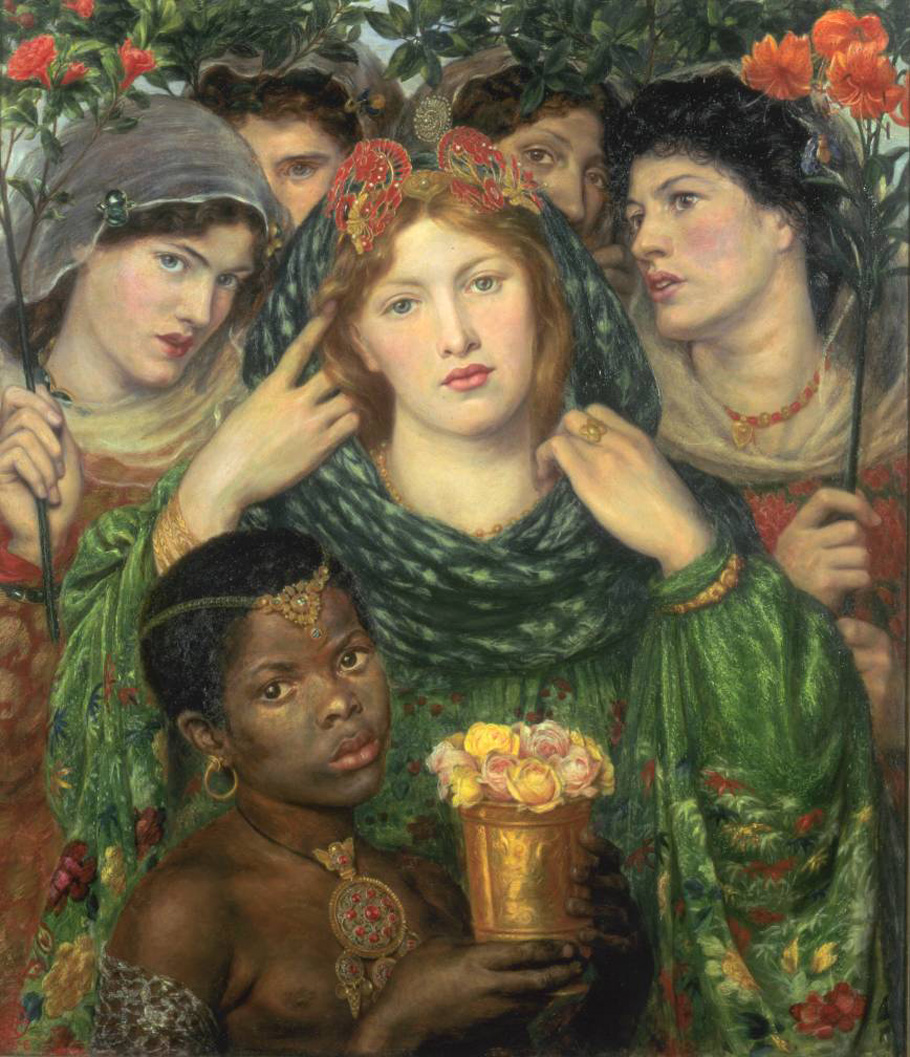
This is Cor Unum. We are here . . . because we want Him. We seek His face more industriously than His hand. We know that if we touch the hem of His garment, He will stop even in His forward and momentous path and give to us, do for us, all that we need, but we must have more even than this. We MUST HAVE the crook of His arm, the shelter of His wings, the spreading of His robe over us.


The Beloved

Dante Gabriel Rosetti

May 1 – Where Beauty is Beautiful

Posted by Cor Unum Abbey on May 1, 2014
Posted in: Uncategorized. Leave a comment


Image                 


The day will come when those who needed salvation will see their Savior face-to-face. The beauty of His sacrifice, the loveliness of His forgiveness, the jaw-dropping splendor of having been released from the death grip of iniquity will not be lost on these.


No matter how “beautiful” will be our resurrected Lord in appearance, those who have believed will see even more; they will behold the profound attractiveness of His redemption, its intrinsic magnificence and the love that accomplished it.


For those who saw no beauty in having been ransomed from the grief of sin and the gall of having rejected God, for those who were “underwhelmed” in life by the exquisite love of God, His Presence will radiate the truth of His beauty, and unbelief will not deflect the smallest glimmer of it.


When we consider these things, shall we not, here in Cor Unum, desire ONE THING upon the earth, and seek after it with all our hearts, that we may dwell in the house of the Lord all the days of our lives, to behold His beauty – the composite grace and truth, righteousness and peace that form the contours of His face – and inquire in His temple?


We shall and we will, even now, day by day, here in Cor Unum Abbey, the monastery of the heart.


 photograph by Andreas Cruz

Posts navigation

← Older Entries
Newer Entries →
  • Recent Posts

    • A Sea Change
    • La Alcaldesa
    • But, How?
    • In at the Deep End
    • December 5 – “Savior”
  • Recent Comments

    safelake's avatarsafelake on April 28 – “. . . With Y…
    safelake's avatarsafelake on March 6 – D. T. M. (Divine Tim…
    Cor Unum Abbey's avatarCor Unum Abbey on February 26 – What Nuns B…
    di french's avatardi french on February 26 – What Nuns B…
    Cor Unum Abbey's avatarCor Unum Abbey on February 26 – What Nuns B…
  • Archives

    • August 2024
    • February 2024
    • December 2018
    • January 2017
    • March 2016
    • November 2015
    • September 2015
    • April 2015
    • March 2015
    • February 2015
    • January 2015
    • November 2014
    • October 2014
    • September 2014
    • August 2014
    • July 2014
    • June 2014
    • May 2014
    • April 2014
    • March 2014
    • February 2014
    • January 2014
    • June 2013
    • May 2013
  • Categories

    • "Dieu et Mon Droit"
    • 40 Days of Prayer for America
    • devotional life
    • devotional material
    • monasticism
    • personal monasticism
    • Prayer for the oppressed
    • purpose in life
    • Spiritual disciplines
    • Spiritual warfare, Prayer for loved ones, Prayer for the nation
    • Thanksgiving
    • The Coronation of Elizabeth II
    • Uncategorized
  • Upcoming Events

  • Meta

    • Create account
    • Log in
    • Entries feed
    • Comments feed
    • WordPress.com
Blog at WordPress.com.
Cor Unum Abbey
Blog at WordPress.com.
  • Subscribe Subscribed
    • Cor Unum Abbey
    • Already have a WordPress.com account? Log in now.
    • Cor Unum Abbey
    • Subscribe Subscribed
    • Sign up
    • Log in
    • Report this content
    • View site in Reader
    • Manage subscriptions
    • Collapse this bar
 

Loading Comments...