
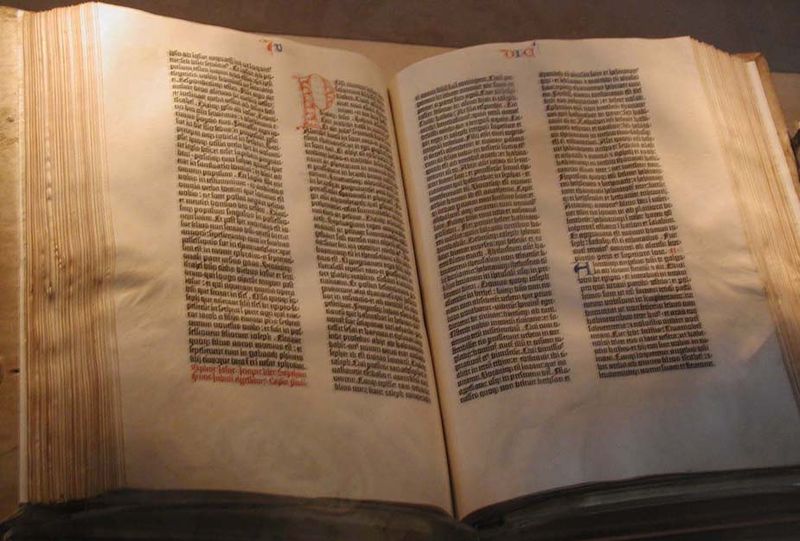
In the center of this tapestry of gold and silk, ermine and jewels, embroidered work and sculpted relics, a man stepped forward in a somber black Geneva gown, with a Bible in his hands. He was Dr. James Pitt Watson, Moderator of the General Assembly of the Church of Scotland, asking her to receive the Scriptures “as the most valuable thing this world affords.”
“Here is wisdom;” he said, and his beautiful brogue intoned, “this is the royal Law; these are the lively Oracles of God.” Her God-fearing Scottish mother sat a few yards away in the Royal Balcony, seeing and hearing her countryman gift her daughter with the Scriptures by which she had lived and so carefully raised Elizabeth and her sister. That she could behold this simple, profound presentation was momentous, for the two churches have not always agreed upon the best expression of worship and communion. The world may never know in how many small ways Her Majesty’s reign has been, from the beginning, one of mercy and reconciliation. So may it be with us, whether our victories be small and hidden from view, or brought by God into an arena for all to see.
Of how little benefit might such a moment have been had the Queen received the volume as a token, a mere symbol of religion and not as the foundation of her own faith and the good of her nation. We have been given to understand that, like her mother and grandmothers before her, Elizabeth uses her Bible and Book of Common Prayer as more than decorative elements in her private suite.
“Here is wisdom,” he had said. We retreat to our own devotional closets, we make time when there is none, and we share with Her Majesty the comforts and the challenges of founding our lives upon grace and truth. The Gospel of Jesus Christ is our bedrock, as it has been hers.
She may have had a few “misses,” perhaps not too many; we, too, may have failed in our perceptions and obedience from time to time, but we, she and all of us, are alive before God, desiring His glory to be seen and His mercy to be revealed in every decision and every word, faith working through love.
The Queen is privileged to depend upon ladies-in-waiting, footmen, private secretaries, and pages to make sure her day runs smoothly, like clockwork, in fact, barring grave emergencies. That isn’t so for most of us, but most of us do not face a schedule like hers, either. As far as we are given to understand, her hours of prayer and Bible-reading take place before and after her workday, just as most working men and women must do. We imagine, from what we do know, that those closest to her are acquainted with her devotional practices and perhaps can safeguard them to some degree, but she alone can determine that she will keep them.
Without ladies-in-waiting, footmen, private secretaries, and pages to help us keep our devotional hour sacrosanct, we must use our own good sense and an honest determination. If the only free, quiet time a woman can claim as her own occurs during her children’s naptime, and if one of those children is ill and sleepless, her obligation is to her sick child, but faithfulness and honesty would suggest that, when they sleep, she would do well to read her Bible and pray before she checks her email, and determination will help her persevere.
“Here is wisdom,” said the Moderator, and wisdom and honesty are very valuable commodities. In wisdom we can know that while our Spirit is willing to spend time alone with God, our flesh is weak, and weakened further by the excuses we make so adroitly. There is a remedy, and it is just what Jesus said to his disciples in that passage: the Spirit is willing – the flesh is weak; “watch and pray therefore, that you do not enter into temptation.” There is wisdom!
How to find the time? How to remain faithful in prayer? Her Majesty’s life might be able to help us here, too.
More tomorrow …
The Guttenberg Bible
by permission, Mark Pellegrini






 Cor Unum Abbey