
Archives
All posts by Cor Unum Abbey

If you were spending the New Year in a Carmelite monastery, you would have the incalculable joy of not having to tweak your diet after the Christmas “holydays.” Just think of it!
In some houses, breakfast is coffee and bread, eaten while standing and preceded by several hours of worship and prayer, also standing, with kneeling thrown in for good measure and enough sitting to keep you from keeling over with exhaustion.
Coffee and bread for breakfast, followed by a period of work and instruction and more prayer and worship, and then a monastically substantial noon meal: this is the daily fare for Carmelites and many other pre-Vatican II orders.
Monastically substantial is a diet of “veg” and protein. Through part of the year, usually during Lent, a modified diet, lovingly referred to as the Black Fast, is observed. Some orders abstain from butter, cheese, milk, eggs, and flesh meat during those weeks. At times, some have also limited daily meals to one, in the evening. That would lower your cloistered cholesterol considerably! Several studies over the last decades have been conducted using monastic samples, because the data is so pure . . . all eating the same food at the same hours, getting the same amount of sleep and exercise, enjoying the same pursuits. Overall, nuns are documented long live-ers!
The typical evening meal is a “collation,” sometimes a cold meal, such as breads and salads or hard-cooked eggs, when permitted, as well as fruits and raw vegetables and sometimes soup. These menus have been altered considerably in the last thirty years and differ from order to order and from house to house, but suffice to say, most cloistered nuns do not have the run of the kitchen or access to vending machines.
Imagine having your New Year’s resolutions resolved for you by the house in which you have chosen to live! Study is required, and exercise and work and lots of worship and prayer and plenty of sleep, and a healthy diet. The catch, of course, is that your sleep is interrupted at midnight for prayer in the chapel, and the food you eat is that which is put before you. Exercise takes place within the garden walks and walls, and for the first years of your formation, your reading is chosen for you. Rather like going back to college, without the parties . . . or money from home!
WHY are these women so universally happy? Free from care? Not really. The Abbey doesn’t fund itself, and nuns do have to eat, even if sparsely. They do get sick sometimes. There are temperaments that don’t fit at all well together. We are doing what we can to learn from them this year, and from other monastic souls. Perhaps their unusually bright and pure smiles have something to do with the fact that they knew what they wanted and went after it with all their hearts. We can do that. Married, we can learn to honor and enjoy the one to whom we have been given in marriage. Single, widowed, we can practice the rare joy and privilege of putting Jesus first in all things and living in the closest imaginable friendship with Him.
Take time today during one meal, or all three, and set a place for the Lord. Turn off the tv and silence your cell phone. Enjoy the Guest at your table Who is, in truth, the Founder of the Feast. Engage your children if they are gathered around. Or … just make sure that in the cloister of your heart, you dine quite intentionally in God’s Presence today, at least once. Put a Scripture about the Lord or about His faithfulness before you, and see how deeply you can attend to it while you eat. Enjoy every bite! Enjoy the Lord’s Nearness! A thousand tiny practices of devotion, if they should yield only one pure draft of love for God, would be well worth it.
It won’t take that many … it won’t be long. We can train our souls to feast upon the goodness of our God and King. Bon appetit!
Behold, I stand at the door and knock; if anyone hears My voice and opens the door, I will come in to him and will dine with him, and he with Me.”
Revelation 3:20
Cor Unum Abbey photo
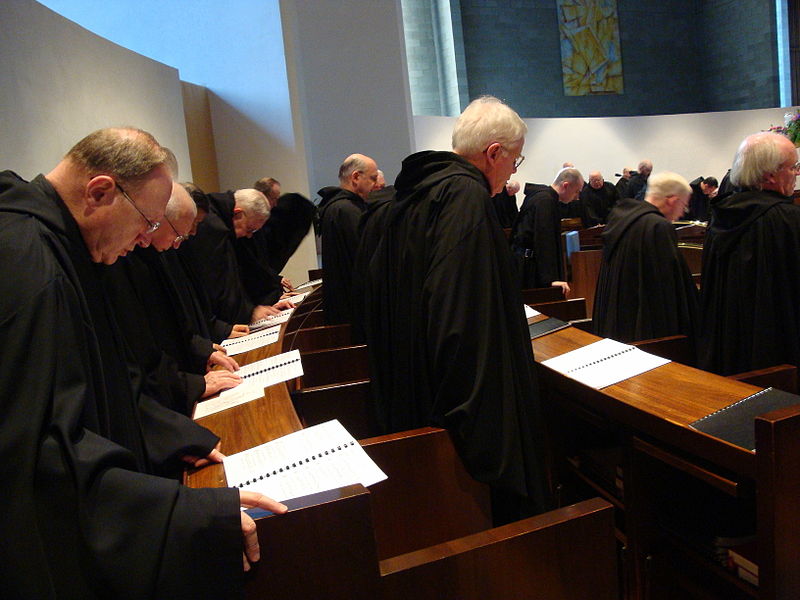
While passing through entrance interviews, the candidate for postulancy will become well acquainted with the rudiments of the Benedictine vows.
Benedictines do not take the more familiar vows of chastity and poverty. The postulants and novices move toward final vows of 1) obedience, 2) stability, and 3) “conversatio.” These have a spiritual genius about them. Let’s see what we can learn that will work for us here in Cor Unum Abbey.
The Benedictine considers that the Abbot or Abbess having charge and care of the house is God’s agent to love and watch over all and each, and to see the house remain, hopefully to the end of time. To the Benedictine, it is nonsensical to strive for excellence of spirit and refuse to obey those whose purpose in life is to see that you get there. The Benedictine superior is as given to obedience as those who obey, for the Abbott or Abbess has the most demanding vocation of all. The souls in their care have come into the monastery to be inexorably moved along toward the love of God and transformation into the image of His Son. A prideful, petty, or persnickety Abbess would not suit, for faith alone can set out upon such a quest, and faith works through love. Those who, by their vote, have chosen her know that they will have to obey her for the duration of her life, or theirs. They choose wisely in the election of each new Superior.
We are the Abbots and Abbesses of our own souls here, under the watch care of the Holy Spirit. We needn’t be prideful in all we demand of ourselves, or petty or persnickety, either. As we pray for ourselves and others, in wisdom we know that the Lord wants to get us where we want to go, and He will undertake that we shall arrive.
Stability is a vow largely unique to the Benedictines. Monks and nuns will vow steadfast devotion to the very house which has welcomed them. They are the homebodies of the orders, the contemplatives.
The third vow is that of conversatio. This is a Latin term from the phrase “conversatio morum suorum,” indicating that the Benedictine vows to keep changing in pursuit of the likeness of Christ. A vow to keep changing. Goodness gracious!
Isn’t it interesting to note that the vow of chastity becomes redundant? If a Benedictine stays with the order (stability,) and submits to the obedience of Scripture and Benedict’s rule for monastic life (obedience,) chastity is a “given;” it is required within the house. Benedictines do not vow to keep poverty, because within the enclosure all are rich or poor together. Usually not rich! Benedict settled these matters, and those who enter are under obedience to his rule. All that comes in is spent on the welfare of the house and the needy beyond its walls. Thus, no separate vow of poverty is taken, and none is necessary.
Observing chastity and poverty within the vows of stability and obedience, the Benedictine has opportunity to take up the more searching vow, the more crushing vow, in the sense of crushing thyme and rosemary to release their aroma. The Benedictine vows to keep changing in pursuit of the likeness of Jesus Christ.
Let’s consider today, what walls keep us safe from leaving our first love? What allegiances help us to continue to transform into the image of Christ? Where we must obey, let it be for His sake. Here together in Cor Unum, we will never settle for “good enough” when the prize is the likeness of Jesus, the Son of God. (2 Corinthians 3:18)
2 Corinthians 3:18 … And we all, who with unveiled faces contemplate the Lord’s glory, are being transformed into his image with ever-increasing glory, which comes from the Lord, who is the Spirit. (NIV)
Benedictine monks at Vespers
by permission, John Stephen Dwyer (Boston)

I mentioned those dozens of books we read early on, my monastic friend and I. In one of them, written by a woman who became the Superior of her monastery, she tells of her eagerness in early days, how she was given a set of heavy volumes to read and study. She lugged them to her cell and undertook to sail through them as best she could, delivering them back at the end rather happy with herself.
She found them the next day back at her door with a note to read through them again, this time slowly.
There we go. There is a good glimpse into what lies ahead. There is no hurry, there is only the taking of small, purposeful steps in a right direction. We will get where we are going, trusting the God we seek, if we do not turn back.
We spoke very early in this New Year about an adventure through the Gospels of Jesus Christ, setting out to read them through five times this year. One right after another, whether relatively quickly, or just a little at a time, but daily. Those of you involved in another study, hallelujah! Keep up with your goals … but let me encourage you not to go a day without reading those Words in Red, those sentences that came directly from the mouth of the Lord or that related specifically to His life and ministry on earth. By them, His disciples knew Him, and so shall we. Let us incorporate them into our reading and study, or read just those books until they become more familiar than any other text we have ever read.
This is one of the tenets of Cor Unum Abbey … we will give place and precedence to Jesus, the Word of God, and to Jesus in the Word of God. There are 89 Gospel chapters, times five, and that equals 445 chapters. That’s more than one chapter each day per year, but our reading can spill over into the next year, because we will be reading those chapters daily as long as we live. A January First beginning is completely inessential – isn’t that comforting and liberating! If you would like to go through quickly, do go ahead, just pray as you go. We should all have some wonderful stories to tell before we are finished those first five readings.
In the interest of full disclosure, we value the entire Word of God in this cloister, and we will find ways to read through it, to pray our way through it, praying, worshiping, repenting, and giving thanks as we go, but well begun is half done, as said that other delightful Superior! You know the one … Nanny to the Banks children!
Family Bible
David Ball, by permission
Text: John 4:3-43
Jesus: tired, weary … but ready, of course
The disciples: out to lunch (well, sent to buy meat)
The woman: on an errand to draw water, defined by her culture and her lifestyle … honest
The scenario: politically incorrect
What does it mean to worship God in spirit and in truth? We want to know, because that is where we want to go.
For those who will participate, read this passage at least once today and once tomorrow. Make it a true weekend, a Sabbath meant for you, for Sabbath rest was made for you, not the other way around. (Mark 2:27)
Go to church with a better understanding of worship. Come home and see where worship can expand in your life.
Consider that these crucial, pivotal words about worship were spoken to an adulteress woman. Thank You, Jesus, and thank you Samaritan lady! If the “worship in spirit and in truth” sermon came to you, ma’am, we, too, can become fountains of living water! … we trust that from where you are and from whence you’ve come, you will take no offense. In fact, be glorified as we learn with you what it is to become the worshippers who are sought out by God.
We will begin our first Matins practices starting Monday … God bless you all.
(Below you’ll find the link to a wonderful article on this subject by John Piper. Please read the passage for yourself, first! That’s the monastic way.)
http://www.desiringgod.org/sermons/god-seeks-people-to-worship-him-in-spirit-and-truth
By John Piper @ desiringGod.org
Leather bucket well
by Neogeolegend, by permission
A Quality image, Wikipedia
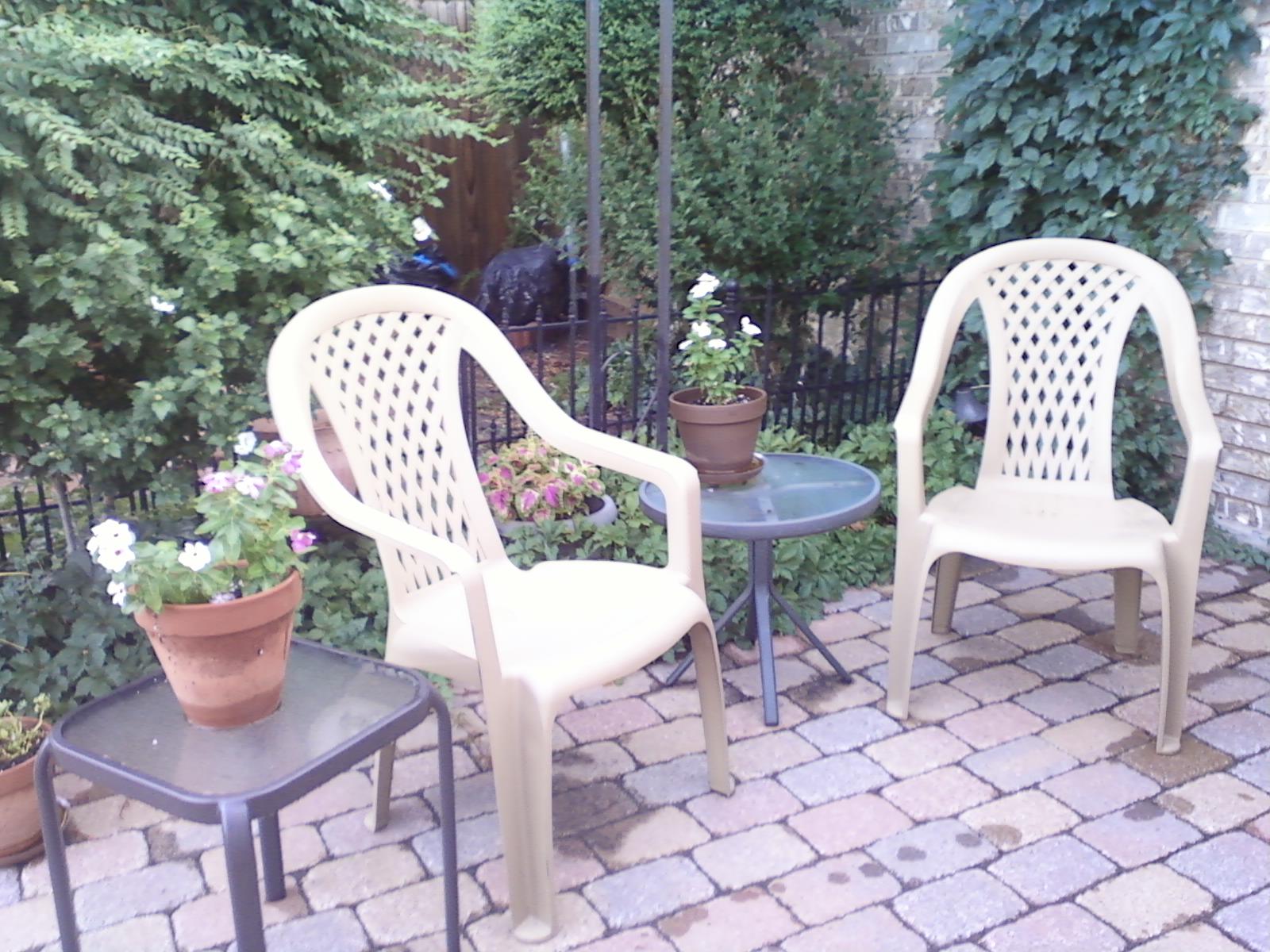
You’ll see this on the morning of January 10th. I’m writing it on the evening of the 9th, the day that the reality of a full at-home monastic vocation came to me.
For years I had been reading, studying, and inquiring into devotional practices from all kinds of monastics, Protestant and Catholic, young and old, men and women, married and single. I laughed my way through The Abbey Up the Hill by Carol Bonomo as she told the story of her path into Benedictine oblation, the society of lay sisters and brothers of that order. For her, it was AA therapy on steroids.
In This House of Brede was great story-telling, and The Story of a Soul brought realities of cloistered life home for two housewives whose purpose was to see if anything like that kind of devotion could be achieved at home. I had a friend who was feeding me “nun books,” and before long I was starting to write about what we found. We were both married with children, grandchildren, mortgages, laundry and good old American “busyness” filling, as we thought, every corner of our lives.
What a discovery! Monastics in hospitals and watch shops, in universities and in the movies! A then-famous starlet, after giving Elvis Presley his first on-screen kiss, who went on to other major rolls and loads of fame and lots of money, who had a devoted suitor and his offer of marriage, walked away from all of it, even the man who loved her deeply, and entered a closed monastery (monasteries usually are closed; convents only sometimes.) Delores Hart still appears on screen occasionally, because she is wise and witty and still a voting member of the Screen Actors’ Guild – the only nun on the roles! She gets to break cloister to appear on talk shows. People are still fascinated with a life like hers.
We wanted a life like hers, my friend and I, only it would have to be uniquely ours, fitted to our circumstances. MIddle-aged married women, already too old to be considered for any novitiate but our own. We made a start. Small increases in prayer. Tiny fasts. Regular hours of prayer, even if they only lasted for minutes.
Then one day, one of our husbands left to be where we were so happily headed, into the Presence of God. My husband, in fact. I hope I’ll never forget the grin on his face some mornings when he would come around the corner and see me giving thanks around a string of old wooden beads … one of the earliest and best of our practices, still very much a part of our happy discipline. He understood, he gave it all his blessing, he thought it was something valuable, and in the years before he died, the two of us had begun to read and pray together in the morning, coffee mugs steaming at hand.
That very night, on the day of his death, as I was getting into bed without him and feeling that unbending realization that this was my new normal, I knew that I was now the Lord’s alone, if He would have me, and that very reminder made me smile. Have me? He had made me ready when I thought I was sort of playing at devotion.
Frank didn’t have to die for me to live monastically. My friend continues in her at-home cloister, and her husband is still there, still delighted with his wife, and probably still grinning at her when she finds her prayer corner in their library, lights a candle or two, and hunkers down with God. Others have joined us. For me on that night, the truth of “going solo” lifted me into the arms of God. Here was a purpose where purpose had died … my life’s purpose was that night lying in a morgue, and yes, those thoughts did come to call. Monasticism made everything easier. I had lived for Frank, and he had lived for me, and the best parts were when we found delight in one another, laughing, dreaming, rejoicing. Would Jesus mind if I laughed and dreamed and rejoiced with Him? I knew the answer.
Oh my dear Sisters … whatever the calling on your life … Jesus Christ is so much fun to know! Come, since we must do this alone, let’s do it together.
Coffee for Two
Cor Unum Abbey album

A 2012 article in the Wichita Eagle states that fewer than 100 women enter American convents and monasteries each year. From one perspective, and given our post-modern culture, that might seem like a lot, but not compared with days gone by. Here in Cor Unum Abbey, we delight to think that more and more men and women are exploring deeper and more devoted practices of worship and prayer at home, and within these cyber-walls we know that what matters most is that we enter that holy vocation, that we bring ourselves before God continually, finding our joy in Him and His strength, learning His ways, hearing His Voice, knowing Him, and letting that knowledge become for us eternal life. (John 17:3) We have seen and spoken this year: God is not on the surface. He hides Himself that we may know the value, the honor, and the necessity of training our souls into the race that winds through the Highway of Righteousness. (Isaiah 40:3)
We have been together for our first week of the New Year, looking into the challenges and the benefits of a life with one focus and goal, that we might walk with God. The sub-heading for that volume is very, very long! That we would obtain His peace, receive the answers to our prayers, conquer our fears, abide in hope, be filled with the Holy Spirit … this list could go on for pages and for days!
We are bringing our lives together that we may live alone before God in the splendor of His will and His life within us. We have seen that we must live “solo” as to our faith and our pursuit of God, but we can help one another in this online community and in our churches. I hope you will leave a comment or two along the way, make Cor Unum a site that comes to your door, brought to you by the world wide web! Many of you, were we living within stone walls with bolted oaken doors, would be Chapter Nuns, the decision makers, those bound to pray for the novices and postulants, those that keep the Abbey going. Some of you are new and wondering “why?” and “what?” concerning Cor Unum Abbey, and wondering “why?” and “what?” relative to your own devotional lives. As is true for those who really do, those 100 or so women across the nation who do leave their everyday lives behind to live out their days in cloister, in worship, in intercession, in the Practice of the Presence of God, this can be done! It wasn’t to monks and nuns alone that the promise was made … it was to all! If we seek God we will find Him, if we seek Him with our whole hearts. (Deuteronomy 4:29)
Over the next few days we will worship here together, and on Monday, we will roll up the sleeves of our habits and get down to business. (John 6:29)
John 17:3 … Now this is eternal life: that they know you, the only true God, and Jesus Christ, whom you have sent. (NIV)
Isaiah 40:3 …Listen! It’s the voice of someone shouting, “Clear the way through the wilderness for the LORD! Make a straight highway through the wasteland for our God! (NLT)
Deuteronomy 4:29 … But if from thence thou shalt seek the LORD thy God, thou shalt find him, if thou seek him with all thy heart and with all thy soul. (KJV)
John 6:29 … Jesus answered, “The work of God is this: to believe in the one he has sent.” (NIV)
Discalced Carmelites … Nun and Novice
by permission, Eugenio Hansen
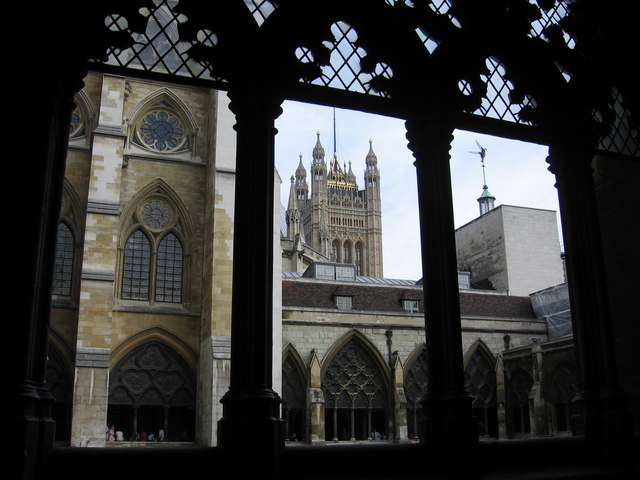
There have been several excellent books written from the inside of monasteries and abbeys, penned by professed nuns who once walked the corridors in a haze of glory to have “left the world behind.” As novices, they entered eager beyond expression to start their new lives, bold for the most part in their faith, and alive with the promise of a monastic vocation.
For nearly all, the dark night of the soul caught up with them.
Abbesses must be preternaturally expert in what they do. Perhaps it would be better to say that the Chapter of voting nuns is preternaturally expert in choosing one from among them to lead gently but succeed fabulously in the oversight of the community. Dozens of women of all ages and backgrounds, in all stages of maturity (and immaturity,) all counting on the Abbess to help them, really help them, get where they want to go, to steer them through the rough spots and to light the way through the dark.
Those Shepherdesses that are wise are able to keep these women heading true north, all of them. This is the direction, for them and for us: we will find our delight in Jesus Christ. (Psalm 37:4)
Now we have to help one another over the less than thrilling miles we travel to get there … because in their house and ours, we want to find joy in the journey! Look, dear Sisters, at what lies ahead . . .
Rejoice in the Lord always: and again I say, Rejoice. Let your moderation be known unto all men. The Lord is at hand. Be careful for nothing; but in every thing by prayer and supplication with thanksgiving let your requests be made known unto God. And the peace of God, which passeth all understanding, shall keep your hearts and minds through Christ Jesus. (Philippians 4:4-7, KJV)
Psalm 37:4 … Delight thyself also in the Lord: and he shall give thee the desires of thine heart. (KJV)
Victoria’s Tower, from the Cloisters at Westminster Abbey
Arjen Bax, by permission

For years after Cor Unum Abbey was founded, which is to say that a handful of women had begun together to explore the wonder of a disciplined devotional life, we looked for a different terminology, something less off-putting than the practice of “monasticism.” It is a disciplined devotional life into which we’ve entered, but it is to all of us something more, and monasticism says it. We kept our practices and we kept the word.
The word “monastic” has a simple meaning. It’s like saying we are going to go “solo,” and while it is never good for Christians to leave fellowship and the encouragement of others and toward others in the Body of Christ, we very often fail to come to terms with how very solo this life must be. As we said a few days ago, nobody can really live out for us our lives before God. Nobody can worship in your place or mine; nobody can add the volume of prayer that belongs to you alone to devote at the Throne of Grace. Often the danger for us is not so much that we lack fellowship, although we can see improvement in those paths, too, but that we never learn to bring ourselves alone before God, never learn to stay there until our hearts mend and our faces shine, as Moses’ did when he came out from the Presence of the Lord. We fail sometimes to “pray through” as the saints of old used to say, to not let go of God until the blessing is obtained, the blessing God will bestow.
Some of those in our lives are in desperate trouble, and we know what to do. Paul said, “Pray for me!” The early church prayed continually for Peter when he was arrested. Jesus told us to pray, to ask what we wish – what can we say to a door so wide open as that? (John 15:7)
When we do not avail ourselves of the peace, the wisdom and guidance, the grace and strength, the blessings and the miracles that are ready and waiting for those who prevail, monasticism can help. First, with the realization that we all must work out our own salvation with trembling and fear. (Philippians 2:12) Secondly, that there are some things in life that require change of direction, devotion, time, and persistence, and that can be had if we will not give up. (Galatians 6:9)
Last, but certainly not least, God is found and He is known in secret. This is the best part. The Scripture is full of reference to our God Who hides Himself so that He may be found. We may not understand that at first, but we know that He is not on the surface, at least not the depths of His mercy and grace. He wants to be known, but in the words C. S. Lewis gave us, He is not a tame lion. It is worth every minute and every sacrifice to know Him, and always He wants to be known right where we are, inside our marriages, our parenting, on the job, and yes, in our grief and loneliness.
We are all monastics, rightly understood, unless we exchange our vocation for a vacation from God. That, dear ones, and as we all know, is no pleasure trip! Rather, let us walk with Him and seek Him out, at home and “unterwegs,” as our German sisters say … all the way, underway. On the job, on point, on vacation, on our knees, on purpose. We are marketplace monastics, and the world needs us to fill this cyber Abbey with the song of our gratitude, our praise, and our prayers.
John 15:7 … If you remain in me and my words remain in you, ask whatever you wish, and it will be done for you. (NIV)
Philippians 2:12 … Wherefore, my beloved, as ye have always obeyed, not as in my presence only, but now much more in my absence, work out your own salvation with fear and trembling. (KJV)
Galatians 6:9 … And let us not be weary in well doing: for in due season we shall reap, if we faint not. (KJV)
Mlada Redovnica
unknown artist, Slovenian Gallery, by permission
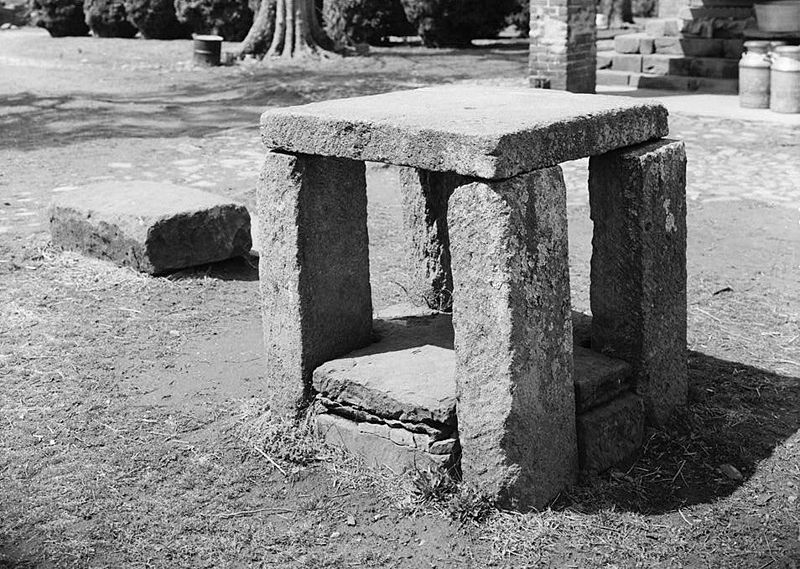
There is balm in Gilead, To make the wounded whole; There’s power enough in heaven, To cure a sin-sick soul.
Those are the lyrics of an American Spiritual, and as so often occurs when desperation and hope meet, they speak to us powerfully. Let us, here in Cor Unum, not spoil our chances at life through any false idea, that we need nothing or that we have nothing. Here in this monastery, we need Jesus, gloriously, and we have Him, eternally. Even when our souls are made sick by irremedial loss or by the sin of others, there is a Balm in Gilead.
Cor Unum is making specially welcome those left alone in the world, yet who among us has not known loneliness or bereavement or blistering grief and loss? Close friends move away, jobs come to an end, children grow up and leave home, dreams die on the vine, and death does not hold back forever. Always, what did the saints of old do in response? It’s what the saints of today do. Just as barren Hannah prayed in the temple and poured out her heart to God, as Joseph remained faithful when cruelly betrayed and as Ruth returned alone with Naomi to Israel, a foreigner and a young widow, we will trust, we will hope, we cry out, we believe. Many have known tremendous loss, tremendous sorrow and grief, but hope does not disappoint. (Romans 5:5) Here in the monastery of our hearts, even the most wounded hearts, hope does not disappoint.
What’s more, when it is Christ we want, above all, Christ Jesus we shall have. With Him, all things are ours. (1 Corinthians 3:21, 22) This, dear ones, is the monastic advantage. We have one desire. We are alive for God, we want His will above and apart from anything more. The Father gave His Son, and with Him, He gives us all things. (Romans 8:32) In this Abbey, it is our strong desire never to doubt such a promise as this.
No matter the depth of our grief or the extent of our loss, we will not withhold our love from God. We need Him, and we have Him. All things, even grief, will find their summation and purpose in Jesus Christ. Our business, in this Abbey, is to hold on to the Lord as He has held on to us, never to let Him go, and to obtain the blessing of those who will not be denied, for they know He will not fail.
Romans 5:5 … And hope maketh not ashamed; because the love of God is shed abroad in our hearts by the Holy Ghost which is given unto us. (KJV)
1 Corinthians 3:21, 22 … So then, no more boasting about human leaders! All things are yours, Paul or Apollos or Cephas or the world or life or death or the present or the future–all are yours … (NIV)
Romans 8:32 … He who did not spare His own Son, but delivered Him over for us all, how will He not also with Him freely give us all things? (NASB)
Slave Auction Block, Green Hill Plantation, Library of Congress photo, by permission


 Cor Unum Abbey