
So it came about when the command and decree of the king were heard and many young ladies were gathered to the citadel of Susa into the custody of Hegai, that Esther was taken to the king’s palace into the custody of Hegai, who was in charge of the women. Now the young lady pleased him and found favor with him. So he quickly provided her with her cosmetics and food, gave her seven choice maids from the king’s palace and transferred her and her maids to the best place in the harem. (Esther 2:8,, NASB)
Esther seems to have been favored from the start, chosen from among many others, and before all her graces and gifts could have been fully known. Again, we believe there must have been “something about her.” Let’s take another look at this concept.
We know there are at least a couple of things that stand out to us. First, she was bereaved, an orphan and a captive, now twice a captive, but she put her trust in Mordecai; she respected the will and the power of her protector. We can do that!
She might have said he hadn’t done the best job protecting her – here she was in Persia and now in the harem of the king! No. Esther brought with her something besides fear and bitterness and recrimination, or calculating greed and lasciviousness. We have reason to suspect a certain innocence about her, and as a Jew whose sins were confessed and atoned for, that would make her a stand-out in her culture and time, more than we tend to appreciate. After all, in our world, there’s a church on every corner and evangelism 24/7 on television and radio! Not so, then and there. In her day, people carried their sin and the weight and burden of guilt and iniquity, or they offered them up to demons. Oh, we sometimes so little value so cataclysmic a salvation in the earth, but we can remedy that!
Esther’s unspoken, unmentioned God … the time came when she would fast and ask her maidens to do the same. Fasting is toward God and purposeful, that He would intervene and break through. She hoped to live, but the time came when she was willing to die for the sake of God’s people. We will do that, laying our lives down continually for those whom we’ve been given to love. “We die daily,” as the Scripture says, and yet we live. We can fulfill that honorable role. For us to live is Christ and to die, even by inches, is gain! The woman who later was willing to perish for the sake of God’s own was the woman Hegai saw and honored and trained and blessed and favored and supplied with every good thing.
We may be that … we may live now as those who lay down our lives for the sake of the Gospel of Jesus Christ. Living and dying, it will set us apart.
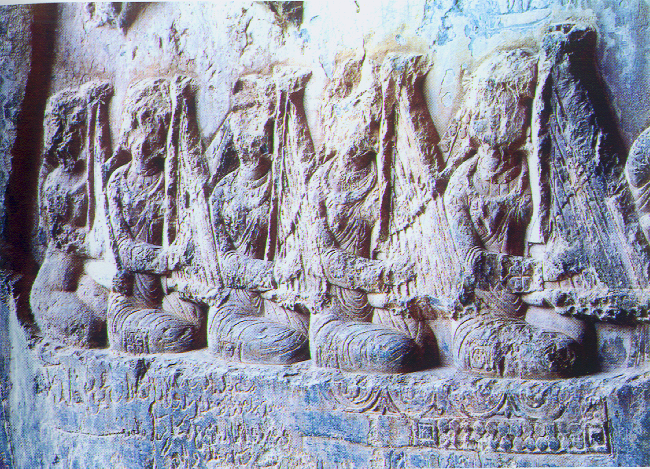
Persian Women Playing Harps
photo by Amir85, Wikipedia, by permission


 Cor Unum Abbey