
Why is the Book of Esther in Scripture? An entire book dedicated to a story that, in Exodus or Judges, might have been told in a few paragraphs! What if there is more to see and more to learn in this book, this Scriptural account that never mentions “God” or “Jehovah” or “Lord,” not even in context with Israel. What of the unfailing watch-care of Mordecai? What of the unsung hero, the eunuch Hegai? One king, one kinsman, a slave and a beautiful maiden. Neither the Brothers Grimm nor Hans Christian Andersen, not Charles Perault or all writers of all the myths of Greece and Rome could pen a better story of intrigue, danger, romance, and the triumph of good over evil.
As in many of Jesus’ parables, it is possible that this account tells a deeper story than the one that is told. Jewish children hear this story every year at Purim. It is perhaps the most elaborately staged and dramatized retelling in Hebrew families, and they love the suspense and pathos and they cheer wildly when the villain, Haman, gets his just desserts. So they ought, for their ancestors may have been among those that did not perish because of Esther’s willingness to risk her life for her people.
We won’t be able to draw perfect parallels as we search the Book of Esther, but we may be able to see some elements of truth that, like any good story, are more dramatically memorable and applicable to us than first meets the eye. We may always employ truth to teach truth when the outcome is true. Let’s begin with this reality, of tremendous importance to us and to the Jewish nation: he is a Jew who is one inwardly.
True story, historical fact, stranger than truth, and very possibly all about you and me.
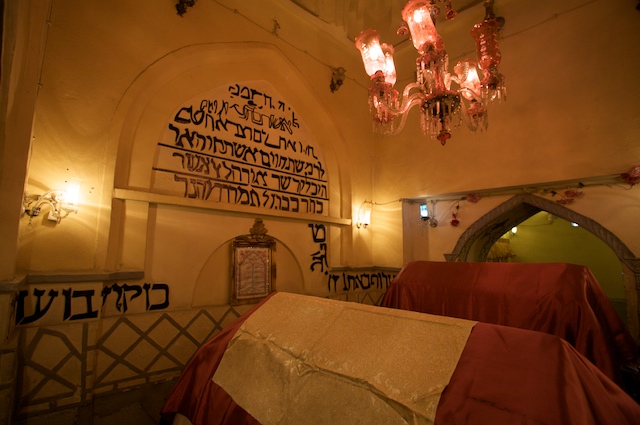
The Tomb of Esther and Mordecai, Hamedan, Iran Nick Taylor, by permission


 Cor Unum Abbey