
The Book of Esther poses some of the most interesting questions in Scripture, including these:
WHAT made Vashti think she could do what she did and get away with it?
WHAT made Esther stand out in Hegai’s estimation among all the loveliest ladies in the land?
King Xerxes gave a state dinner that went on for seven days, and everyone was invited, both high and low in the capitol city of Susa. It took place in an enclosed garden in the palace, which would seem to have been a rather large garden, given the guest list. Wine flowed freely and without restriction, each guest served in a golden goblet, each goblet of unique, handcrafted design. Scripture specifically mentions that no one was required to drink, an interesting sidebar, but that the King’s liberality was on display. It was a great show of his wealth and goodwill. During that time, Queen Vashti was hosting a banquet herself, for the women. On the seventh day, the King sent for Queen Vashti to appear before the nobles of his land, because she was a beautiful woman, but she would not come. Various theories have been put forth:
Perhaps she did not want to leave her guests and good manners forestalled her. Maybe she didn’t want to be paraded before a bunch of men who had been feasting and drinking for seven days. That’s reasonable, but, understanding the culture, better to show up than to get booted out. Did Esther take the place of a noble, chaste queen or a stubborn, obstinate woman? If a king puts a crown on your head, does he have the right to ask you to wear it at a banquet appearance? Food for thought, and the book of Esther says not one word to us about Vashti’s response when she was deposed.
However … there is a great deal said about another “queen,” another favorite. The nation of Israel, the Lord’s choice vine, His own, on display for all to see. When Israel went through the land, humble, trusting, calling on the Name of the Lord, and obedient to His commands, nations trembled and came out against her at their own peril. Israel was on her way to God’s promise.
Whatever Vashti’s reason for declining, here in Cor Unum our delight is to come at the Lord’s bidding, to appear before His throne, and we have a beauty – oh joyous thought, a beauty that is increasing, not diminishing! – that has been put on display. It is the loveliness of Christlikeness, and we are destined to keep our crown.
Some have said that Xerxes wanted her to appear in her royal crown, as the Scripture says, and ONLY her royal crown. Beside the fact that this is a BIG grammatical surmising, beside the fact that, were it so, Scripture would very likely have said so, clearly, it was truly not likely in that culture. The women at home (whom we see were taken into consideration when judgment was passed) would have applauded Vashti’s refusal, and their menfolk would have had a real problem on their hands if they had made an example of her in that instance.
We have to learn to think and pray as we read God’s Word, and certainly here in Cor Unum. If we are a nation of sheep, let it be in the Lord’s pasture, not those who graze themselves over a cliff.
Sometimes, we just cannot know for certain, but we do wonder, what was the intrinsic difference between these two women?
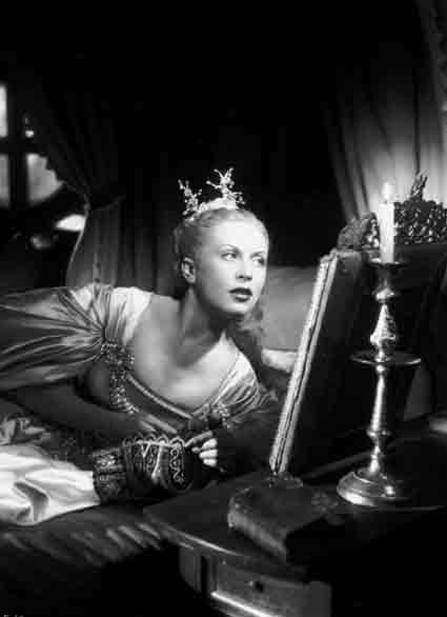
Still from Belle et la Bete
public domain


 Cor Unum Abbey