
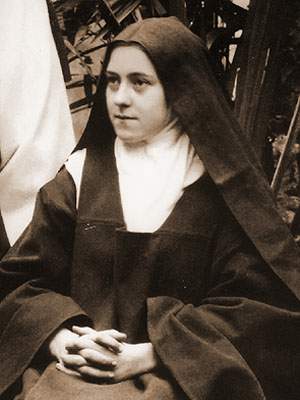
We have looked briefly into the life of Thèrése of Lisieux, the French Carmelite.
She entered the monastery at a very young age, having appealed directly to the Pope for special permission to transgress the age restrictions. Once inside, she received a wonderful grace to make her vocation not one of holiness, devotion, or learning for her own sake, but for the sake of the love of God. She resolved to do all things for love, as her demonstration of her love for the Father and His Son.
She died at a very tender age, of tuberculosis, but not before her “Little Way,” her way of love, had been so influential that her superiors insisted she write an exposé concerning her life and the development of her thought and purpose.
Thèrése wrote of a most happy childhood and of early sentiment and resolve toward God, which were not amazing in consideration of the tender love and honor she was given at home.
She wrote, too, of her own feelings of irritation and impatience with others, her fears and her perceptions inside the monastery. These she determined to commend to the love of God. She would do all things for love.
What does our Lord indicate when He admonishes us, “Take My Yoke upon you and learn of Me . . .”?
The burden that Jesus Christ bore all the way to His crucifixion was the yoke of love; He loved the Father, and the Father loves us. Jesus did all things for love, as we are enjoined to do. He knew that the will of His Father emanated from love; by Him we have come to know, “God is love.”
As Jesus spoke, perhaps His hearers could have lifted up their eyes and looked over His shoulder to see the farmer in the distance, leading a team of oxen. Two strong burden bearers in harness, yoked together, getting the job done.
If we, like Thèrése, will fit our will into the yoke of the love of Jesus Christ, we will find rest for our souls.


 Cor Unum Abbey