
If you were spending the New Year in a Carmelite monastery, you would have the incalculable joy of not having to tweak your diet after the Christmas “holydays.” Just think of it!
In some houses, breakfast is coffee and bread, eaten while standing and preceded by several hours of worship and prayer, also standing, with kneeling thrown in for good measure and enough sitting to keep you from keeling over with exhaustion.
Coffee and bread for breakfast, followed by a period of work and instruction and more prayer and worship, and then a monastically substantial noon meal: this is the daily fare for Carmelites and many other pre-Vatican II orders.
Monastically substantial is a diet of “veg” and protein. Through part of the year, usually during Lent, a modified diet, lovingly referred to as the Black Fast, is observed. Some orders abstain from butter, cheese, milk, eggs, and flesh meat during those weeks. At times, some have also limited daily meals to one, in the evening. That would lower your cloistered cholesterol considerably! Several studies over the last decades have been conducted using monastic samples, because the data is so pure . . . all eating the same food at the same hours, getting the same amount of sleep and exercise, enjoying the same pursuits. Overall, nuns are documented long live-ers!
The typical evening meal is a “collation,” sometimes a cold meal, such as breads and salads or hard-cooked eggs, when permitted, as well as fruits and raw vegetables and sometimes soup. These menus have been altered considerably in the last thirty years and differ from order to order and from house to house, but suffice to say, most cloistered nuns do not have the run of the kitchen or access to vending machines.
Imagine having your New Year’s resolutions resolved for you by the house in which you have chosen to live! Study is required, and exercise and work and lots of worship and prayer and plenty of sleep, and a healthy diet. The catch, of course, is that your sleep is interrupted at midnight for prayer in the chapel, and the food you eat is that which is put before you. Exercise takes place within the garden walks and walls, and for the first years of your formation, your reading is chosen for you. Rather like going back to college, without the parties . . . or money from home!
WHY are these women so universally happy? Free from care? Not really. The Abbey doesn’t fund itself, and nuns do have to eat, even if sparsely. They do get sick sometimes. There are temperaments that don’t fit at all well together. We are doing what we can to learn from them this year, and from other monastic souls. Perhaps their unusually bright and pure smiles have something to do with the fact that they knew what they wanted and went after it with all their hearts. We can do that. Married, we can learn to honor and enjoy the one to whom we have been given in marriage. Single, widowed, we can practice the rare joy and privilege of putting Jesus first in all things and living in the closest imaginable friendship with Him.
Take time today during one meal, or all three, and set a place for the Lord. Turn off the tv and silence your cell phone. Enjoy the Guest at your table Who is, in truth, the Founder of the Feast. Engage your children if they are gathered around. Or … just make sure that in the cloister of your heart, you dine quite intentionally in God’s Presence today, at least once. Put a Scripture about the Lord or about His faithfulness before you, and see how deeply you can attend to it while you eat. Enjoy every bite! Enjoy the Lord’s Nearness! A thousand tiny practices of devotion, if they should yield only one pure draft of love for God, would be well worth it.
It won’t take that many … it won’t be long. We can train our souls to feast upon the goodness of our God and King. Bon appetit!
Behold, I stand at the door and knock; if anyone hears My voice and opens the door, I will come in to him and will dine with him, and he with Me.”
Revelation 3:20
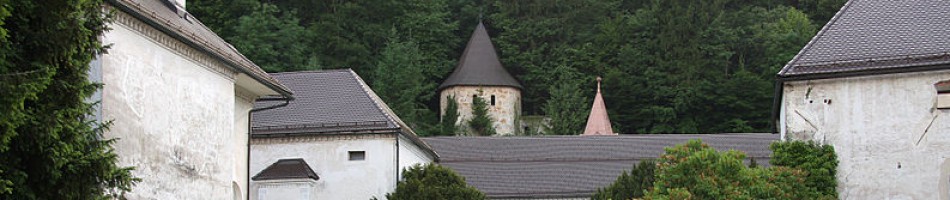
Cor Unum Abbey photo


 Cor Unum Abbey