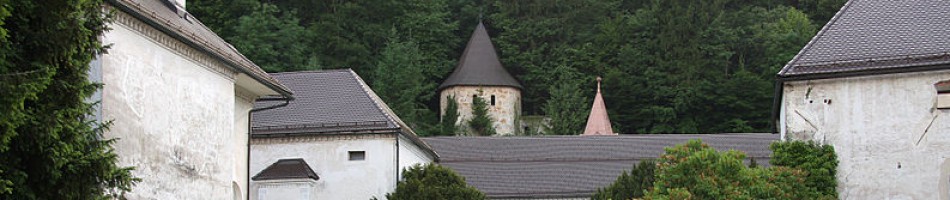

For years after Cor Unum Abbey was founded, which is to say that a handful of women had begun together to explore the wonder of a disciplined devotional life, we looked for a different terminology, something less off-putting than the practice of “monasticism.” It is a disciplined devotional life into which we’ve entered, but it is to all of us something more, and monasticism says it. We kept our practices and we kept the word.
The word “monastic” has a simple meaning. It’s like saying we are going to go “solo,” and while it is never good for Christians to leave fellowship and the encouragement of others and toward others in the Body of Christ, we very often fail to come to terms with how very solo this life must be. As we said a few days ago, nobody can really live out for us our lives before God. Nobody can worship in your place or mine; nobody can add the volume of prayer that belongs to you alone to devote at the Throne of Grace. Often the danger for us is not so much that we lack fellowship, although we can see improvement in those paths, too, but that we never learn to bring ourselves alone before God, never learn to stay there until our hearts mend and our faces shine, as Moses’ did when he came out from the Presence of the Lord. We fail sometimes to “pray through” as the saints of old used to say, to not let go of God until the blessing is obtained, the blessing God will bestow.
Some of those in our lives are in desperate trouble, and we know what to do. Paul said, “Pray for me!” The early church prayed continually for Peter when he was arrested. Jesus told us to pray, to ask what we wish – what can we say to a door so wide open as that? (John 15:7)
When we do not avail ourselves of the peace, the wisdom and guidance, the grace and strength, the blessings and the miracles that are ready and waiting for those who prevail, monasticism can help. First, with the realization that we all must work out our own salvation with trembling and fear. (Philippians 2:12) Secondly, that there are some things in life that require change of direction, devotion, time, and persistence, and that can be had if we will not give up. (Galatians 6:9)
Last, but certainly not least, God is found and He is known in secret. This is the best part. The Scripture is full of reference to our God Who hides Himself so that He may be found. We may not understand that at first, but we know that He is not on the surface, at least not the depths of His mercy and grace. He wants to be known, but in the words C. S. Lewis gave us, He is not a tame lion. It is worth every minute and every sacrifice to know Him, and always He wants to be known right where we are, inside our marriages, our parenting, on the job, and yes, in our grief and loneliness.
We are all monastics, rightly understood, unless we exchange our vocation for a vacation from God. That, dear ones, and as we all know, is no pleasure trip! Rather, let us walk with Him and seek Him out, at home and “unterwegs,” as our German sisters say … all the way, underway. On the job, on point, on vacation, on our knees, on purpose. We are marketplace monastics, and the world needs us to fill this cyber Abbey with the song of our gratitude, our praise, and our prayers.
John 15:7 … If you remain in me and my words remain in you, ask whatever you wish, and it will be done for you. (NIV)
Philippians 2:12 … Wherefore, my beloved, as ye have always obeyed, not as in my presence only, but now much more in my absence, work out your own salvation with fear and trembling. (KJV)
Galatians 6:9 … And let us not be weary in well doing: for in due season we shall reap, if we faint not. (KJV)
Mlada Redovnica
unknown artist, Slovenian Gallery, by permission


 Cor Unum Abbey