
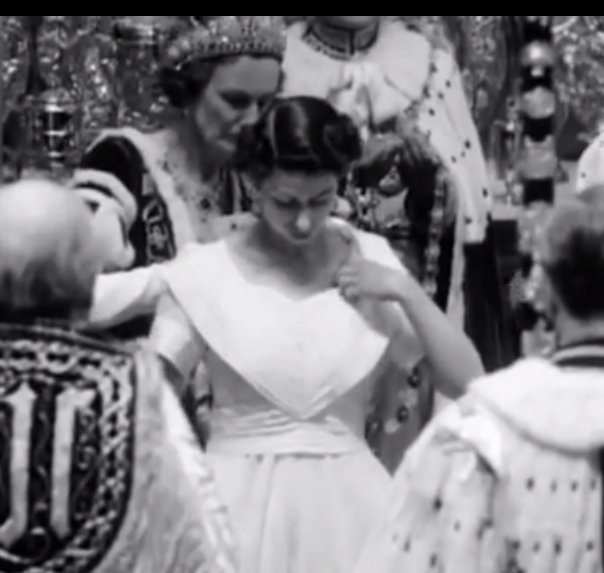
After the “disrobing” and the plain gown of purity and sacred anointing, the Investiture began. This was not haute couture as we think of it, but it was very “high” fashion for those few on earth ever called to wear it.
The first piece was as simple as the anointing gown that had just been removed. A white linen-lawn garment, the Colobium Sidonis, was the under-tunic. It calls to mind King David’s dance of joy before the Lord God. Sovereigns are most often clothed with humility before the cloth of gold and ermine and jeweled robes. Thus was the case with Her Majesty. Like a funeral sheath, it went on over the ornate Coronation Gown, a symbol that this Queen had been made ready to receive all the garments and royal instruments to come.
Whatever we wear of glory, of majesty, of the reflection on this earth of the love and mercy and the very Person of Jesus Christ, we are anointed beforehand by the Holy Spirit: He Himself is our new life, and we wear humility beneath every honor and all power. In baptism we are buried with Christ before our works of faith begin, and this garment symbolized the burial beneath the beauties and the brilliance to come.
We are told to “put on Christ” (Romans 13:14,) and to “clothe ourselves with humility” (1 Peter 5:5.) The priests of the Lord are clothed with salvation.
Beneath garments that would weigh close to forty-five pounds when they were all in place, Elizabeth knew with certainty that she wore a humble linen shift; she wore purity of heart, and the utter end of life as she had known it.
White anointing gown,
Wikipedia


 Cor Unum Abbey